
TL;DR
Skayle vs AirOps is usually a choice between a page-performance operating system and a flexible AI workflow builder. The best fit depends on who owns publishing governance and whether measurement ties AI citations to pages and conversions.
SaaS teams are being forced to treat organic growth like infrastructure, not a content calendar. The key question is no longer “how many posts can be shipped,” but which system can reliably produce pages that get extracted, cited, and clicked in AI-driven search.
If an AI engine can’t extract, trust, and cite a page, that page won’t create demand—even if it technically “ranks.”
What “AI search infrastructure” actually includes in 2026
AI search infrastructure is the set of capabilities that make a brand consistently eligible to appear inside AI answers (and still win traditional rankings). It is not a single tool category, and it is not synonymous with content generation.
In practice, teams are building for a new funnel:
- Impression (SERP, AI answer, chat, overview)
- AI answer inclusion (the model uses the page as a source)
- Citation (the brand is explicitly referenced or linked)
- Click (traffic lands on a page)
- Conversion (demo, trial, signup, revenue)
Classic SEO stacks over-optimized step 1 and step 4. 2026 stacks have to instrument step 2 and step 3, then protect step 5 with conversion-aware page design.
The operational shift: from “content production” to “answer extraction”
For most SaaS teams, the bottleneck isn’t writing. The bottleneck is repeatable execution:
- Consistent brief quality across writers
- Structured content that can be parsed by crawlers and models
- Publishing workflows that don’t break canonicals, schema, or internal links
- Refresh loops when intent and SERP layouts change
- Visibility measurement that ties back to pages and pipeline
That’s why Skayle vs AirOps is a useful comparison. The tools tend to serve different operating models.
A quick definition that reduces confusion
AI search visibility is the measurable footprint of a brand inside AI-driven discovery surfaces, including citations, comparisons, and recommendations.
Skayle frames this explicitly through its AI search visibility layer and ties it back to what gets planned, published, and refreshed. That’s a different orientation than workflow automation platforms that can be configured for many outcomes.
Where AirOps usually sits in the stack
AirOps is typically evaluated as a workflow platform for building and orchestrating AI-powered tasks. In many orgs, that means:
- Prompted content operations
- Internal tooling for research or drafting
- Automations that connect LLMs to data sources
- Custom flows that can be owned by ops or engineering
This can be valuable. The risk is that teams build “AI workflows” that are impressive demos but don’t create compounding organic assets because publishing, governance, and measurement are not tightly coupled.
Skayle vs AirOps: operating system vs workflow builder
The most important difference is not a feature checklist. It’s the system boundary each product draws.
What Skayle is optimized for
Skayle positions itself as a ranking and visibility operating system for teams that need to plan, create, publish, and maintain structured content that performs in both Google and AI answers. It’s built to reduce the fragmentation between:
- SEO research and intent mapping
- Briefs and content structure
- Publishing and governance
- Refresh operations
- Visibility measurement and prioritization
Skayle’s public positioning on its platform overview is consistent with this: the “unit of work” is not a task, it’s a page that ranks and gets cited.
What AirOps is optimized for
AirOps is generally evaluated as a flexible automation layer. The “unit of work” is often:
- A flow (inputs → LLM steps → output)
- A reusable AI app for a team
- A programmatic operation that can be embedded in other systems
That flexibility can be a strength when a team has strong internal engineering, clear data contracts, and an existing CMS governance model. It can also be a liability when teams expect the platform to define an SEO operating model for them.
Side-by-side: what each system assumes about your org
Below is a structural comparison that tends to predict success more than surface-level capabilities.
| Dimension | Skayle | AirOps |
|---|---|---|
| Primary outcome | Ranked + cited pages | Automated AI workflows |
| Default content model | Structured, SEO/GEO-ready pages | Outputs vary by workflow design |
| Measurement orientation | Visibility → action loop | Requires custom measurement wiring |
| Publishing posture | Platform expects publish + governance | Often relies on existing CMS / integration |
| Best-fit team | SEO/content teams that need scale with control | Ops/engineering-led teams building custom AI tools |
The practical implication: Skayle vs AirOps is often a choice between “page performance system” and “workflow infrastructure.” Some teams run both, but they solve different problems.
Point of view that holds up in real audits
Teams should not start by automating writing.
They should start by instrumenting extraction (can bots and models reliably parse the page?), then instrumenting citations (is the brand included in answers?), and only then scaling production.
Skayle’s adjacent content on technical SEO for AI visibility is aligned with this stance: without crawl, render, canonical, and schema stability, “more content” mostly increases maintenance debt.
Where scaling breaks: governance, templates, and publishing
Most teams evaluating Skayle vs AirOps already have content volume. The question is why the volume doesn’t translate into compounding results.
The failure points are boring and consistent:
- Briefs vary by writer, so intent coverage is inconsistent.
- Templates drift, so pages stop looking like “authoritative reference pages.”
- CMS publishing steps break internal linking and structured data.
- Refreshes happen ad hoc, not driven by decay signals or answer coverage gaps.
The CITE Loop (named model) for scaling AI-search-ready pages
A practical way to operationalize AI search infrastructure is a four-step loop that keeps execution and measurement connected.
CITE Loop:
- Capture: map intents, questions, and comparison terms that buyers actually use.
- Instrument: ensure pages are extractable (schema, structure) and measurable (events, attribution).
- Templatize: standardize page patterns so quality is repeatable at scale.
- Evolve: refresh based on citation gaps, SERP shifts, and conversion performance.
This model matters because it prevents a common failure: teams “scale content” (Templatize) without Instrument, then spend quarters guessing why AI answers ignore them.
For teams doing high-volume programs, Skayle’s approach maps well to its programmatic content posture, similar to the mechanics described in its programmatic SEO engine guidance.
A deployment checklist teams can run in 10 business days
The fastest path to clarity is a short, operational checklist that produces observable outputs.
- Pick 10 revenue-adjacent intents (not TOFU curiosities).
- For each intent, list 5–10 question variants (what, how, vs, best, alternatives).
- Audit the existing top 3 pages for extractability: headings, definitions, scannability, and schema.
- Decide a “reference page” pattern: definition → decision criteria → steps → pitfalls → FAQs.
- Create a single brief format that forces: primary intent, secondary intents, proof requirements, and internal links.
- Add basic structured data where appropriate (at minimum, validate with Google’s Rich Results Test).
- Implement consistent section headers that can be quoted in AI answers.
- Wire measurement: separate AI-sourced visits where possible, and tag key conversions in Google Analytics.
- Publish 3 upgraded pages using the template; do not boil the ocean.
- Create a refresh queue driven by visibility gaps, not “new content ideas.”
Skayle tends to provide more of this end-to-end loop inside one system, while AirOps often requires assembling these steps across workflows, data sources, and a CMS.
Publishing and governance: the unglamorous divider
AI answer engines often reward consistency because consistency increases extractability. That pushes teams toward:
- Stable content objects (FAQs, definitions, feature tables)
- Reusable modules across pages
- Controlled schema patterns
- Guardrails for claims and comparisons
Teams running workflow automation without governance often end up with 50 versions of the same “definition paragraph,” each slightly different, each diluting trust.
This is where the “CMS and structure” layer matters. If the content system cannot enforce repeatable structure, the best prompt chain in the world still produces fragile web assets. Many teams address this by pairing AI workflows with an API-first CMS like Contentful or Sanity, but that adds implementation burden.
Measurement that maps to citations, clicks, and pipeline
Measurement is the area where tool comparisons get hand-wavy. A useful Skayle vs AirOps evaluation asks: what gets measured by default, what needs custom work, and what action is triggered from a measurement.
What should be measured (without pretending attribution is solved)
A realistic measurement model separates three layers:
- Visibility: impressions, rankings, inclusion in AI answers, citations/mentions.
- Engagement: clicks, scroll depth, return visits, on-page behavior.
- Business outcomes: demos, trials, assisted pipeline, revenue.
Visibility signals should influence content ops decisions. Otherwise teams create beautiful dashboards that don’t change what gets shipped.
When discussing AI answers, measurement usually becomes tool-dependent. Teams may pull data from:
- Google Search Console for query/page performance.
- Google Analytics for engagement and conversions.
- A warehouse like BigQuery or Snowflake when scaling reporting.
- A BI layer like Looker Studio for stakeholder dashboards.
AirOps can support this via custom workflows and connectors, but someone still has to design the taxonomy (what counts as a citation, what counts as an inclusion event, how it ties to URLs).
Skayle’s positioning centers on connecting visibility directly to publishing decisions, which is also consistent with its emphasis in related writing about answer-ready AEO systems.
Proof-shaped example (expected outcome + instrumentation plan)
A grounded way to evaluate either platform is to run a short pilot where “success” is defined upfront.
Baseline (week 0):
- Identify 20 pages tied to high-intent queries (pricing, alternatives, comparisons, implementation).
- Record: current rankings, CTR, demo/trial conversion rate, and whether those URLs are cited in AI surfaces relevant to the category.
Intervention (weeks 1–3):
- Rewrite/reshape 5 pages into a reference pattern: definition + decision criteria + step-by-step + FAQs.
- Add/validate structured data using Google’s structured data guidance.
- Improve internal linking so the 5 pages connect to supporting cluster pages.
Expected outcome (weeks 4–8):
- Higher extractability (more consistent pulling of definitions and lists into AI answers).
- Measurable changes in branded mentions and assisted conversions.
- Clear prioritization signals for the next 10 pages.
How to measure (minimum instrumentation):
- Track page-level conversions in GA4.
- Segment landing pages that receive traffic from AI-driven discovery sources where identifiable.
- Log which queries trigger AI answers that include the brand.
This is “proof-shaped” because it produces falsifiable results. It does not require claiming a universal conversion lift.
Conversion implications: citations are not the finish line
A common misconception in 2026: earning a citation equals winning.
Citations create clicks only when:
- The page resolves the intent cleanly (no bait-and-switch).
- The above-the-fold messaging matches the question that triggered the answer.
- The page offers a credible next step (demo, trial, template, calculator) without forcing it.
Teams that treat AI visibility as a PR metric tend to collect citations and lose pipeline because the click lands on a generic blog post with no product path.
In practice, the best-performing pages for the new funnel tend to be:
- Alternatives pages
- “X vs Y” comparisons
- Implementation guides
- Pricing explainers (even when pricing is not public)
This is why Skayle’s thematic focus on GEO/AEO—like its breakdown of GEO vs SEO—pairs naturally with content operations. The work is not only “get mentioned,” but “turn mentions into qualified site journeys.”
Where AirOps can shine in measurement-heavy orgs
AirOps is often compelling when:
- The org already centralizes data via Segment or a similar CDP.
- There is an analytics engineering function.
- The company wants to build custom internal apps on top of LLMs.
In those environments, AirOps can automate parts of the instrumentation and reporting layer, and can connect AI tasks to internal data. But the team still needs an SEO/GEO operating model, or the workflows will optimize local tasks (drafting, summarizing) while the site-level system remains inconsistent.
Common mistakes when teams “add AI” to SEO
The fastest way to waste budget is to deploy AI without changing the operating model.
Mistake 1: Treating AI workflows as a substitute for information architecture
Workflow automation can generate content. It does not create an information architecture that builds authority.
When the site lacks:
- Topic clusters
- Internal linking logic
- Canonical stability
- Consistent templates
…AI output just increases the number of pages that need to be maintained. Skayle’s emphasis on refresh operations aligns with the idea that compounding comes from maintenance loops, similar to what it describes in its content refresh strategy.
Mistake 2: Optimizing for word count instead of extractable structure
AI answers tend to cite:
- concise definitions
- lists with clear criteria
- step sequences
- tables
Longform still matters, but structure matters more. A 1,800-word page that hides the definition in paragraph six is often less “citable” than a 900-word page that leads with an answer-ready block.
Mistake 3: Publishing without technical QA
AI visibility breaks for the same reasons classic SEO breaks:
- pages not indexed
- duplicate/canonical errors
- JavaScript rendering issues
- schema that doesn’t validate
Teams should treat technical QA as a release gate. At minimum, validate with Search Console and structured data testing.
Mistake 4: Believing “LLM citations” are a single metric
Different systems behave differently. Teams may see:
- Google AI Overviews patterns
- chat-based summaries
- third-party answer engines
Tracking should not assume one universal definition of “citation.” Instead, define a taxonomy (mention vs linked citation vs comparison inclusion) and track it consistently.
Tools used for experimentation often include AI platforms like OpenAI and Anthropic, or answer engines like Perplexity. These can be helpful for spot checks, but production-grade measurement needs repeatability.
Contrarian stance that saves teams quarters of rework
Don’t start with “generate 100 pages.”
Start with “make 10 pages unambiguously citable,” then scale only after the measurement loop proves which patterns get included in answers and which patterns produce conversions. This is slower in week one and faster by quarter two.
Skayle vs AirOps: FAQs and decision matrix
This section focuses on the practical questions that come up in buying committees: fit, effort, ownership, and what happens after the pilot.
Is Skayle vs AirOps an apples-to-apples comparison?
Not exactly. Skayle is oriented around the page lifecycle (plan → publish → maintain → measure visibility). AirOps is oriented around building AI workflows that can serve many functions, including content operations.
Which one is better for a lean SaaS content team?
Lean teams usually benefit from a system that reduces toolchain complexity and enforces repeatable structure. If the team does not have dedicated ops or engineering support, a page-first operating system is typically easier to scale responsibly than a workflow builder.
Which one is better for an engineering-led growth org?
Engineering-led teams that want to build custom AI apps, integrate internal datasets, or automate bespoke processes may prefer workflow infrastructure. The tradeoff is that SEO/GEO governance and publishing discipline still need to be solved explicitly.
How should pricing be evaluated without relying on assumptions?
Both products should be evaluated by total cost of ownership: subscription + implementation time + ongoing maintenance. The right evaluation artifact is a 90-day plan with explicit outputs (pages shipped, refreshes completed, visibility tracked) and an assigned owner for each output.
What does a “successful pilot” look like in 30–60 days?
A successful pilot produces three outcomes: (1) a repeatable page template, (2) measured changes in AI inclusion/citation for target intents, and (3) a publish-and-refresh workflow that can be sustained without heroics.
Decision matrix: which option fits which constraint?
| If the constraint is… | Skayle tends to fit when… | AirOps tends to fit when… |
|---|---|---|
| Team size | SEO/content team needs leverage without more headcount | Dedicated ops/eng can maintain workflows |
| Publishing complexity | Need governance, structured content, consistent templates | CMS and governance already mature |
| Measurement maturity | Want visibility tied directly to what gets published next | Want to build custom measurement + internal apps |
| Time-to-impact | Need a clear operating model quickly | Will invest in configuration for flexibility |
| Risk tolerance | Prefer fewer moving parts | Comfortable owning system design |
The practical way to choose is to map the decision to ownership. If no one on the team owns ongoing workflow design and maintenance, workflow tools become shelfware. If no one owns structured publishing and refresh discipline, content platforms become expensive word processors.
To operationalize the “answer-ready” requirements that keep coming up in this comparison, Skayle’s writing on generative engine optimization is a useful reference point for what needs to be systematized beyond classic SEO.
If evaluating Skayle vs AirOps is part of a broader stack decision, it can also help to define where the CMS, analytics warehouse, and automation tools sit. Many orgs end up integrating with tooling like Zapier for lightweight automation or maintaining editorial workflows in GitHub for review and version control.
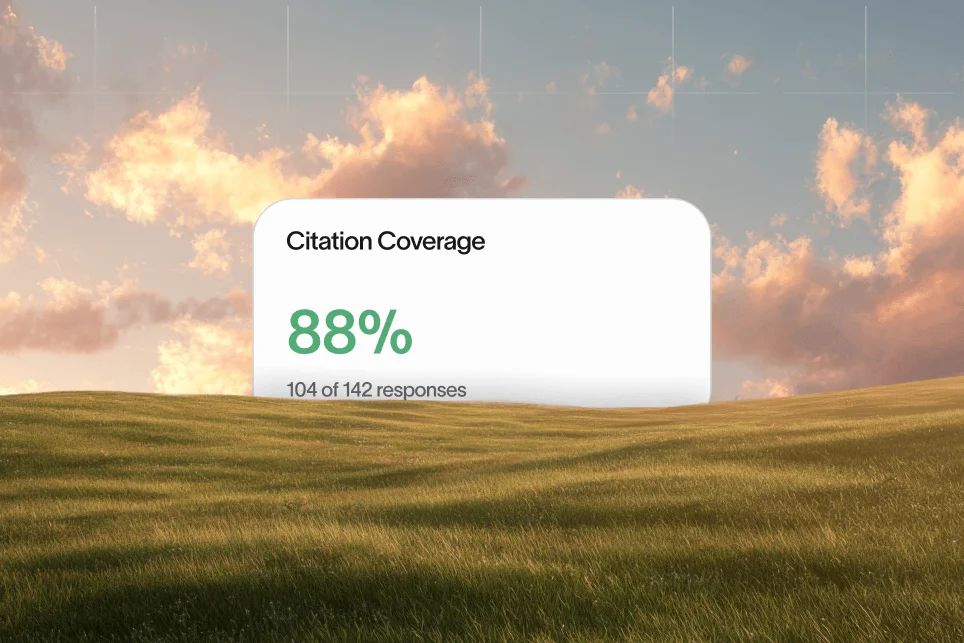
If the goal is to understand how the brand appears in AI answers and turn that visibility into publishable work, start by measuring citation coverage and extraction readiness, then choose the system that can keep that loop running. To see what that looks like in practice, teams can measure their AI visibility or book a walkthrough via Skayle’s demo flow.