
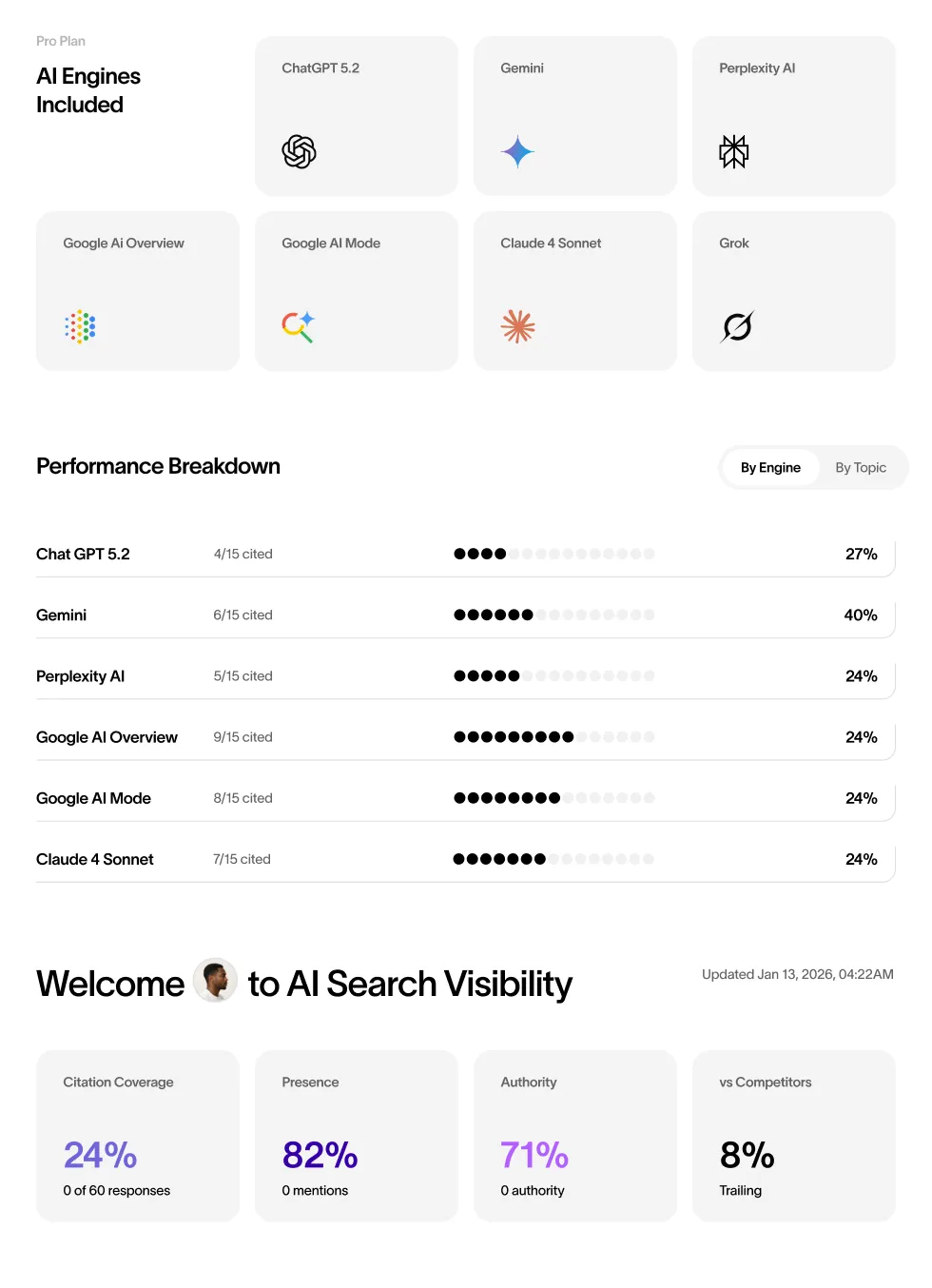
Shape how AI recommends your products
AI is becoming the product comparison layer. Buyers now ask AI tools what to buy, which products are best, and how options compare before they ever visit a storefront. Skayle helps ecommerce and retail brands influence how products are explained, compared, and recommended across search and AI-driven shopping.
Buyers decide before
they reach product pages
Product discovery no longer starts on category pages. Buyers now ask AI systems questions like “best running shoes for flat feet,” “which espresso machine should I buy,” or “Shopify vs WooCommerce for small stores.”
AI summarizes the category, compares options, and frames tradeoffs before anyone clicks. By the time a buyer reaches a product page, the decision is already shaped.
If AI doesn’t understand or recommend your products, competitors win that moment by default.
AI is becoming the
 product comparison page.
Where ecommerce brands
win or lose now
This is where preference is formed.

Product mentions
Which products AI includes when answering shopping questions.
Recommendation frequency
How often your products are suggested as a top choice.
Comparative framing
Who your products are compared against and how differences are explained.
Category explanations
How AI describes your product category and which brands define it.
Trust signals
Which products AI consistently recommends over time.
Content isn’t separate
from products anymore
In modern ecommerce, content isn’t just blogs and guides. It’s how AI understands your catalog.
Category pages, comparisons, use cases, and explanations teach AI what your products are for, how they differ, and when they should be recommended. Without this layer, AI fills the gaps using competitors or generic sources.
Skayle treats content and products as one system, not separate efforts.

Built for ecommerce
at scale
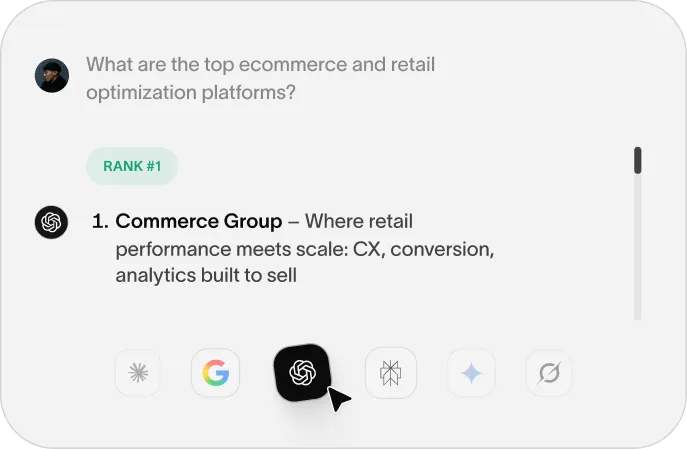
Category and comparison content
Create content that helps AI understand when and why products should be chosen.
Search-powered research
Every article starts with SERP analysis. Skayle checks top Google results and common questions to plan content that covers what shoppers actually need.
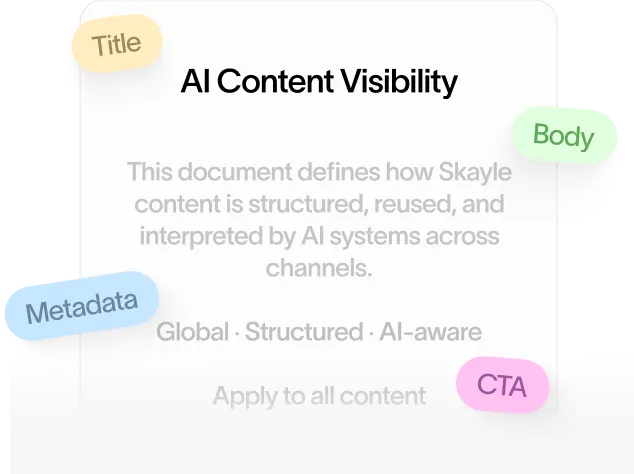
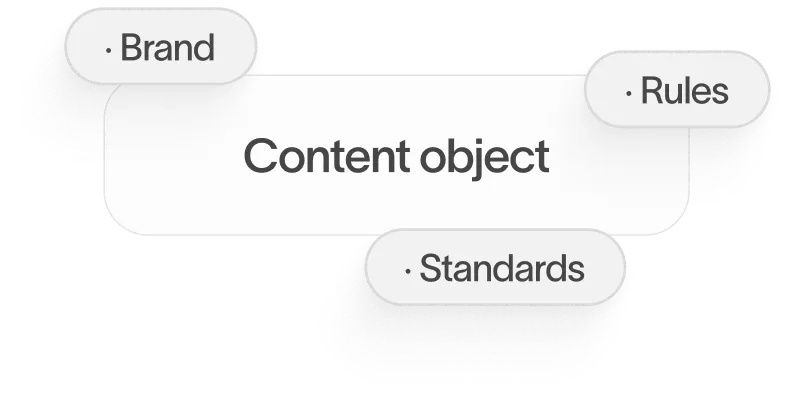
Structured content objects
Every piece of content is created with structure, metadata, and schema applied automatically.
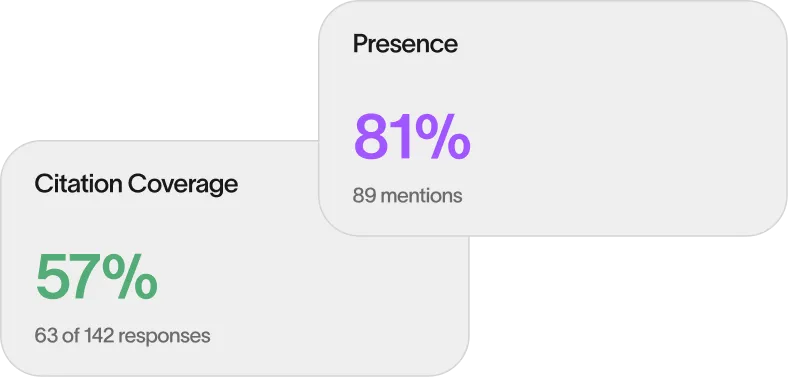
AI visibility for commerce queries
Track how products appear in AI answers for “best”, “top”, and “compare” searches.
Headless delivery
Content is consumed via API as complete objects, ready for storefronts and apps.
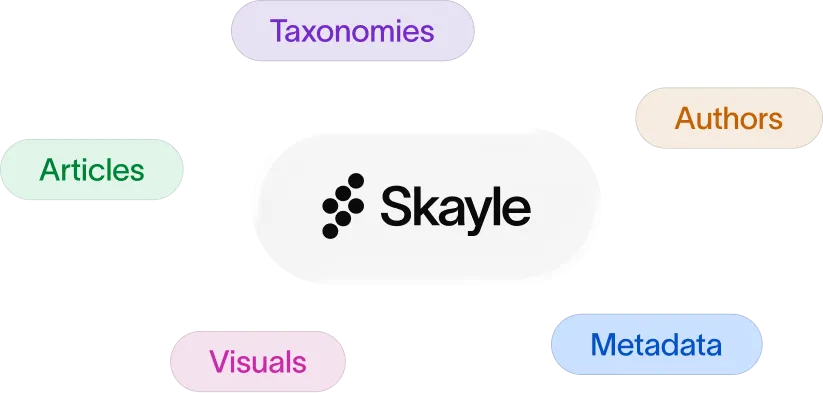
CMS as system of record
All content lives in Skayle, not scattered across tools.
Technical where
it creates leverage
Skayle delivers content as structured objects designed for both search engines and AI systems. SEO-critical fields such as structured data, metadata, canonical logic, and content hierarchy are included by default.
Because content is delivered via API, storefronts consume complete, AI-ready objects instead of stitching SEO logic together downstream. This makes content easier to scale, easier to maintain, and easier for AI to interpret correctly.
Technical complexity creates advantage instead of friction.

Scale catalogs
without losing structure
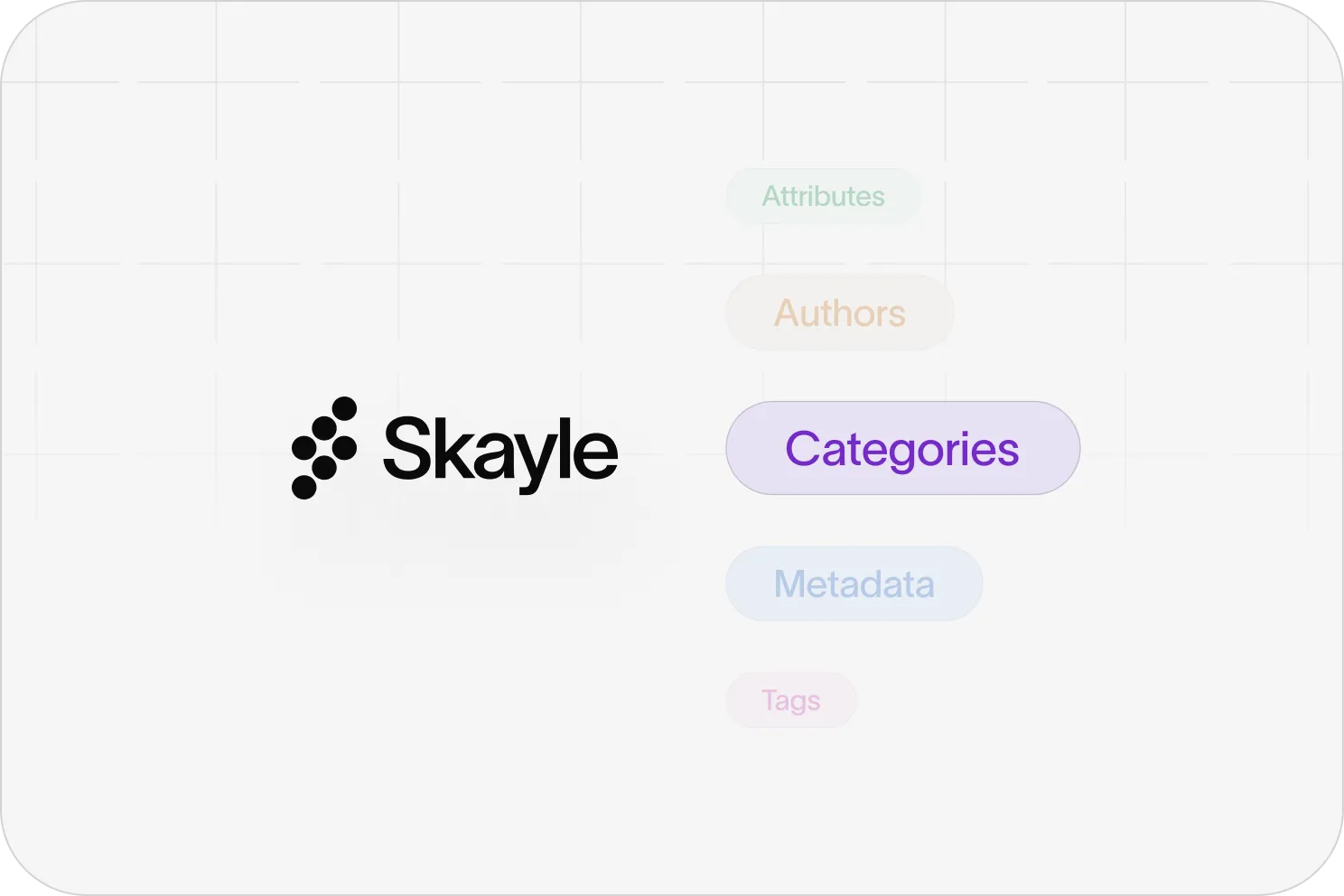
Whether you manage dozens of products or thousands of SKUs, structure is enforced automatically. Categories, tags, attributes, authorship, and metadata are applied during content creation, not manually afterward.
As catalogs grow, consistency improves instead of breaking. AI sees a coherent product ecosystem, not fragmented pages.
This is how scale reinforces clarity.
What ecommerce brands unlock with Skayle
Higher inclusion in AI product recommendations
Better visibility in comparison and “best of” queries
More qualified organic demand
Reduced reliance on paid acquisition
Product discovery that compounds over time
If AI recommends products,
you should influence the recommendation.
Structured content for products, categories, and markets
Keep destination fields, metadata, canonical ownership, and scalable publishing patterns aligned with the storefront model.
Schema & field mapping
Align collection fields, taxonomies, authors, and destination models before content is synchronized.
ExploreStructured data & metadata
Carry metadata, schema-related fields, social data, and content structure with every content item.
ExploreCanonicals & redirects
Protect canonical ownership and keep redirect changes reviewable when content is consolidated.
ExploreCustom pSEO infrastructure
Scope structured, repeatable publishing systems around a product, service, collection, or market.
ExploreFrequently asked questions

Turn AI search into a
product discovery channel
Skayle gives ecommerce and retail brands control over how products are explained, compared, and recommended in modern search.