See the domains
shaping AI trust in your category.
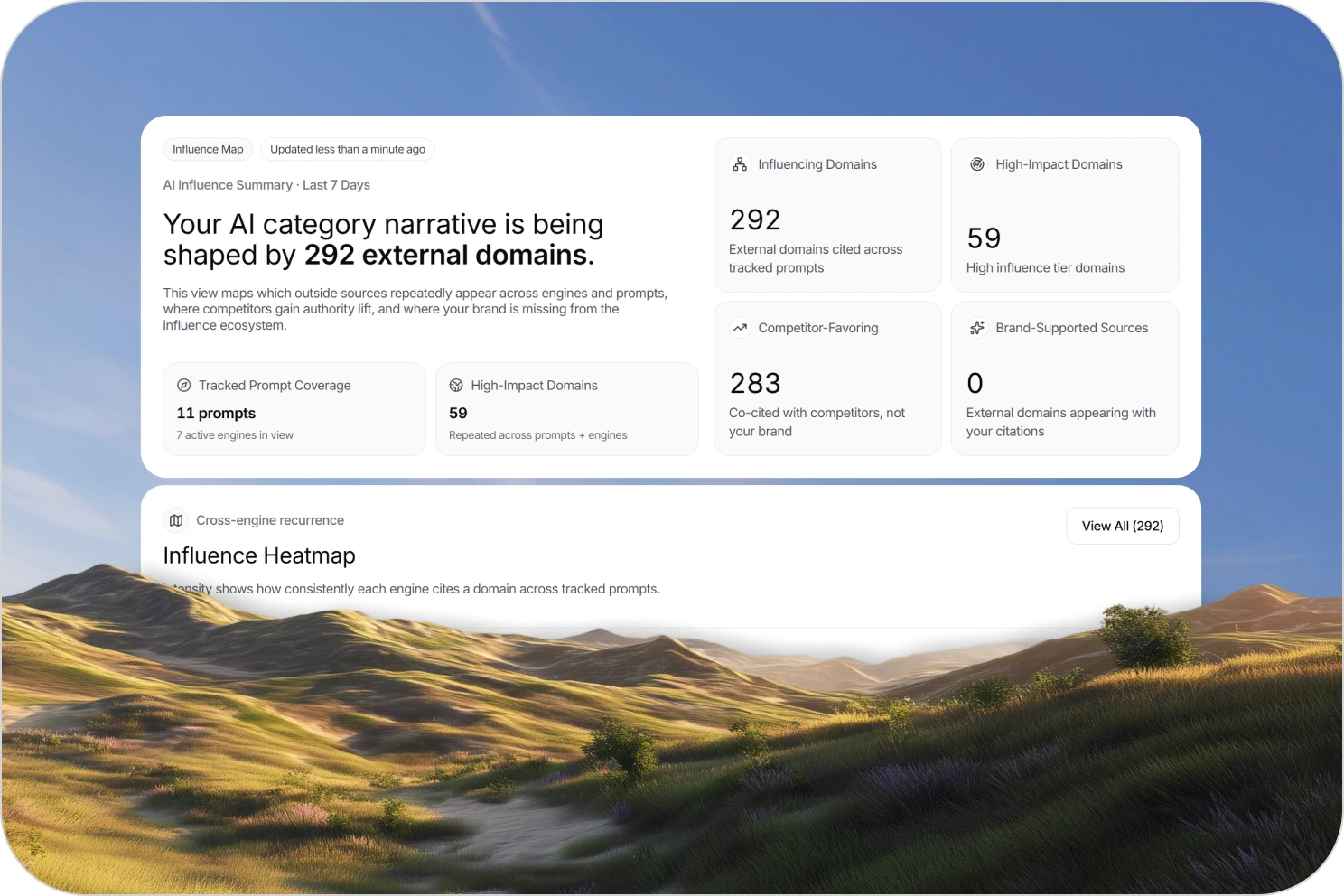
Rankings do not tell the whole story. Influence Map reveals which external domains repeatedly shape AI-generated answers, where competitors get reinforced, and where your brand is still missing from the authority layer.
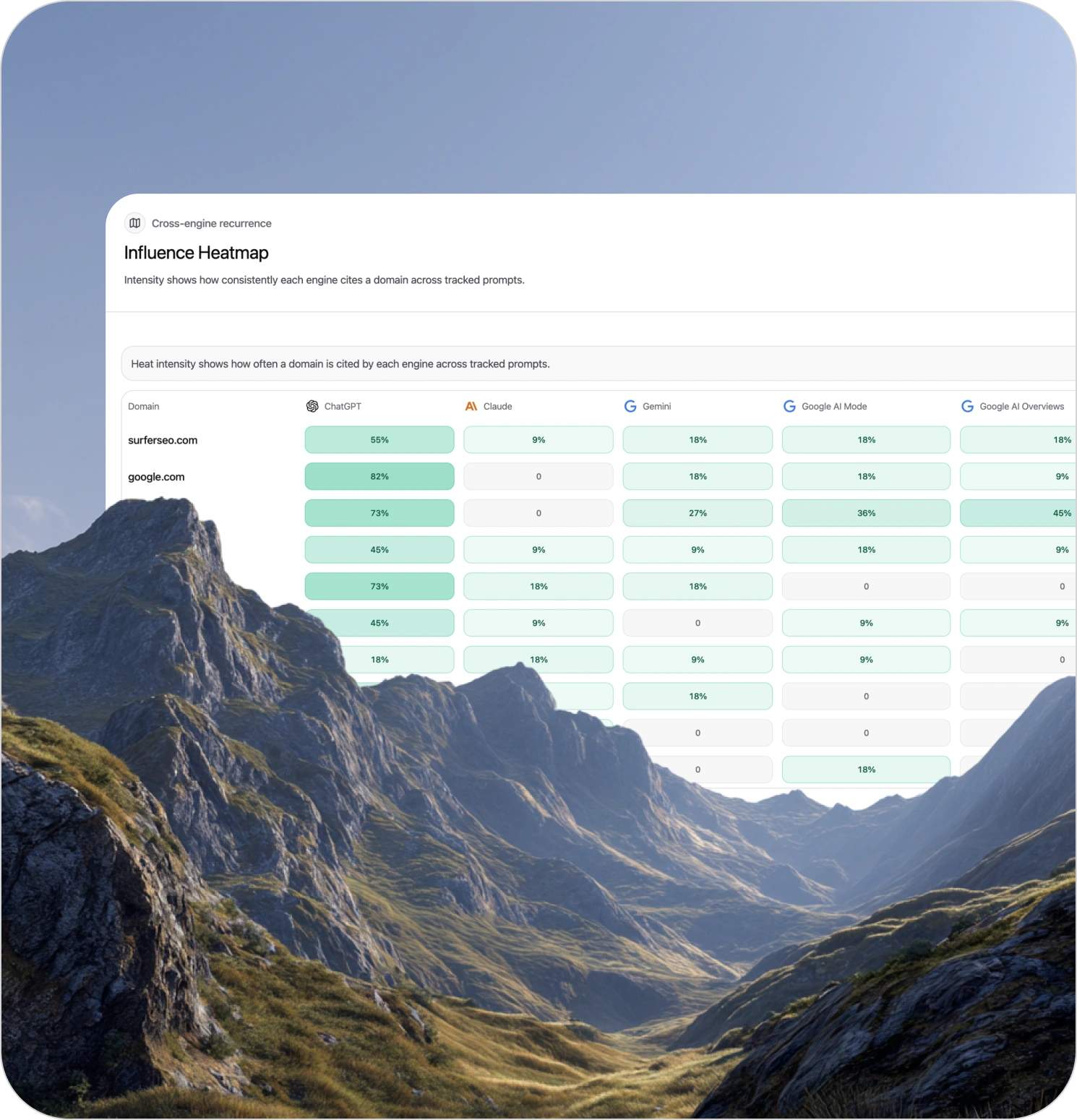
AI engines do not invent authority from nowhere
They inherit it from recurring sources. That means your real competitive landscape is bigger than your own site and bigger than traditional rankings. A competitor can lose positions in search and still keep winning influence in AI answers if third-party domains keep reinforcing them more strongly than they reinforce you.
That is what Influence Map makes visible.
It shows which external domains shape the category narrative, which sources repeatedly support competitors, and where your brand is missing from the trust layer behind AI-generated answers.
What this page should show
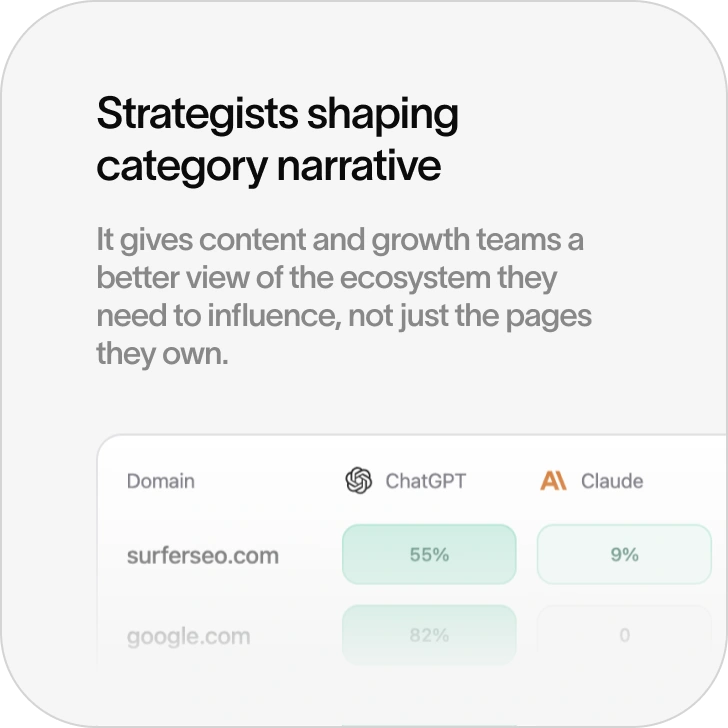
High-impact external domains
See which domains keep showing up across tracked prompts and repeatedly influence how AI engines answer questions in your category.
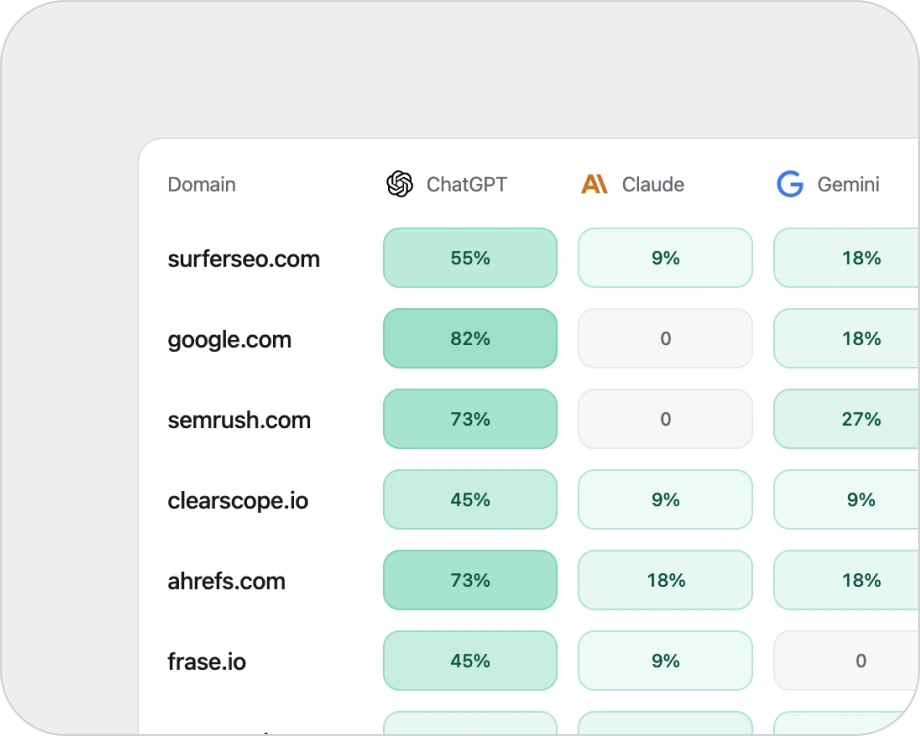
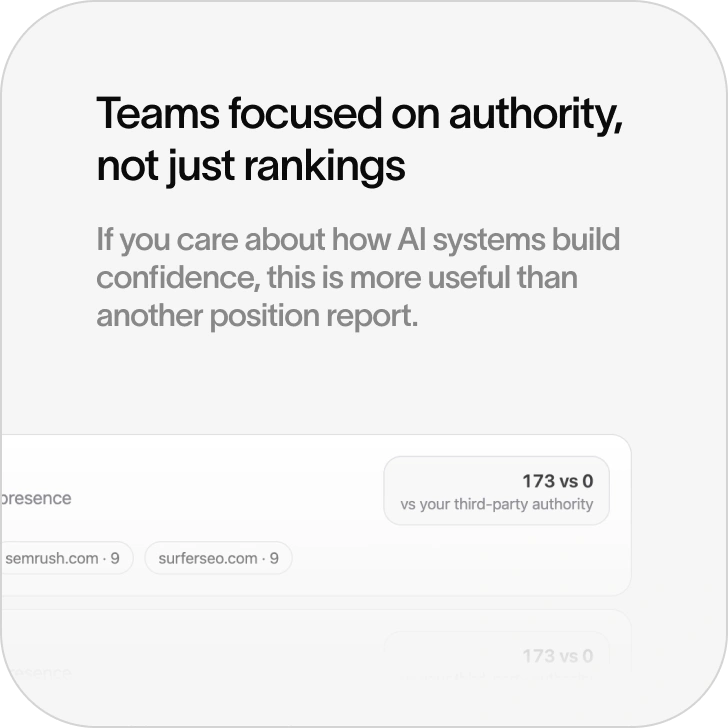
Competitor-favoring sources
Find the domains that reinforce competitors more often than they reinforce you.
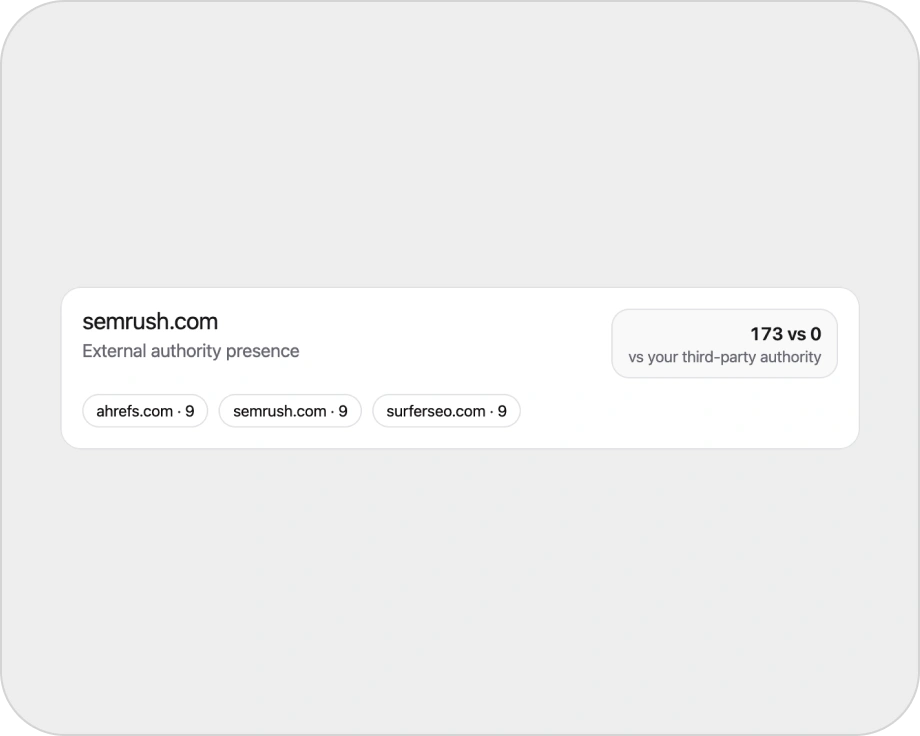
Brand-supported sources
Understand where your brand already has third-party support and where that support is strong enough to matter.
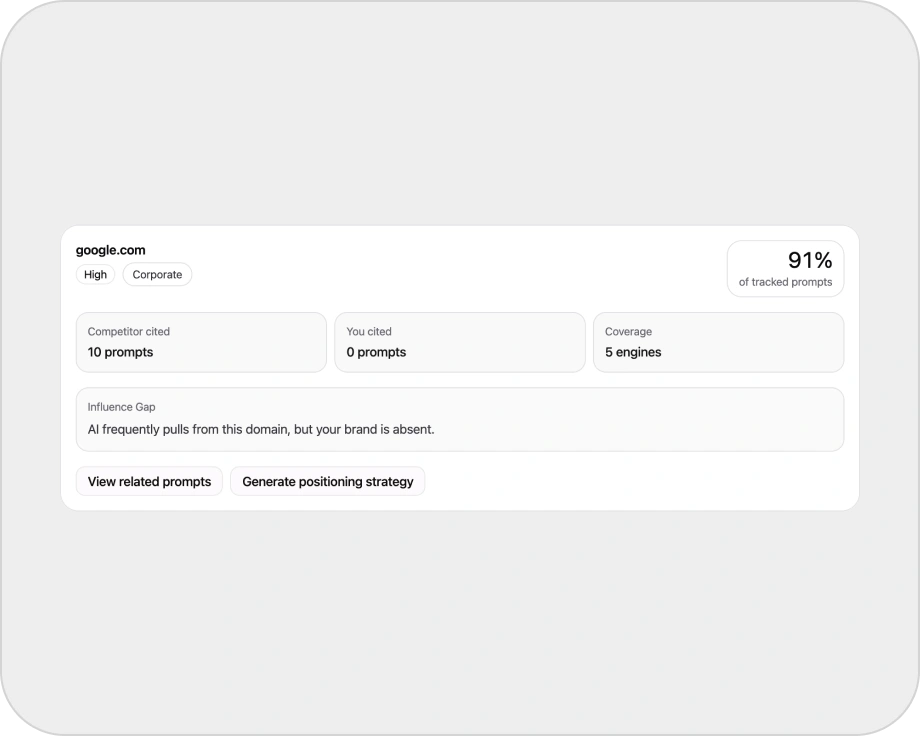
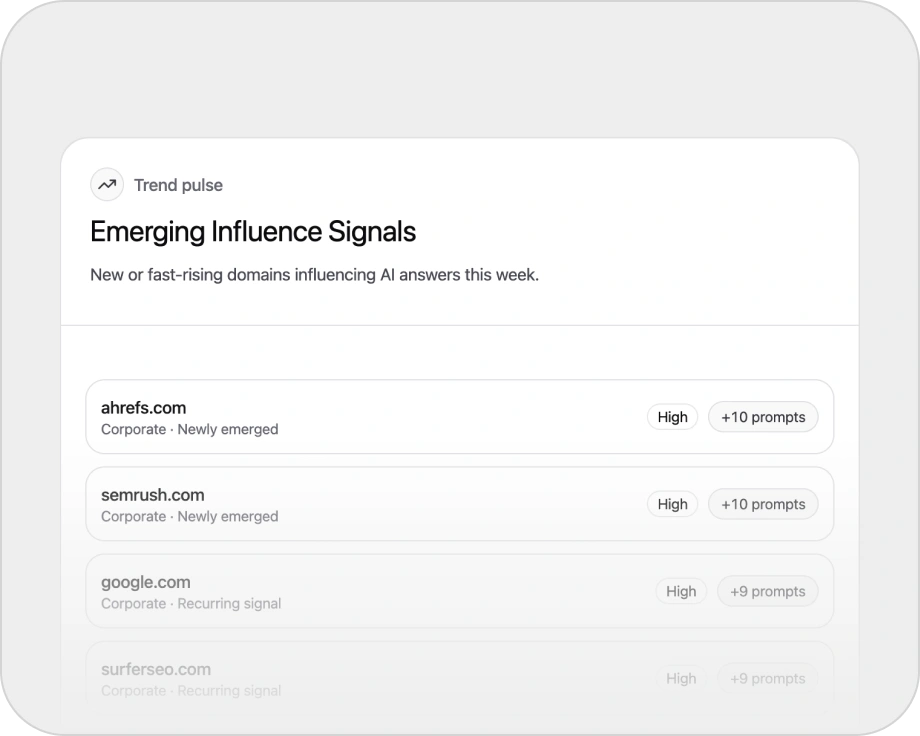
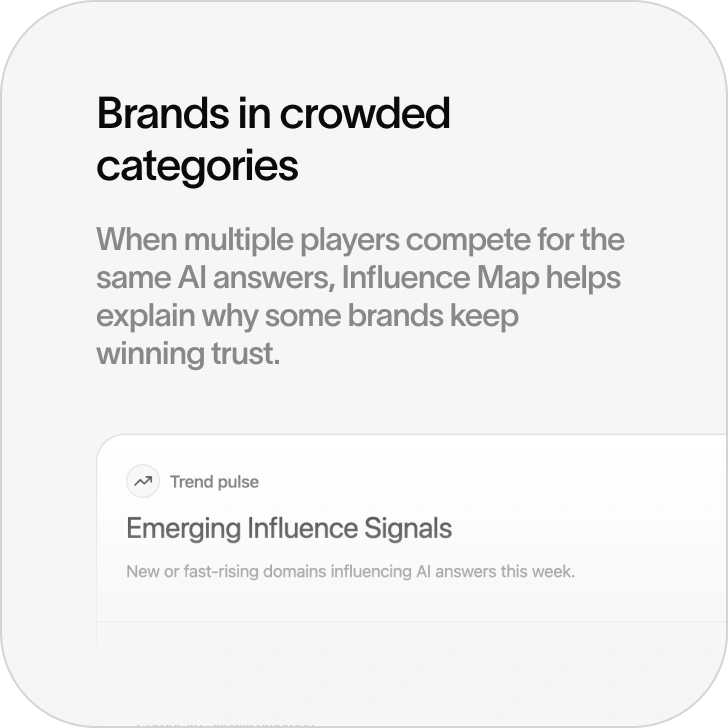
Emerging influence signals
Spot domains that are becoming more important before they become obvious to everyone else.
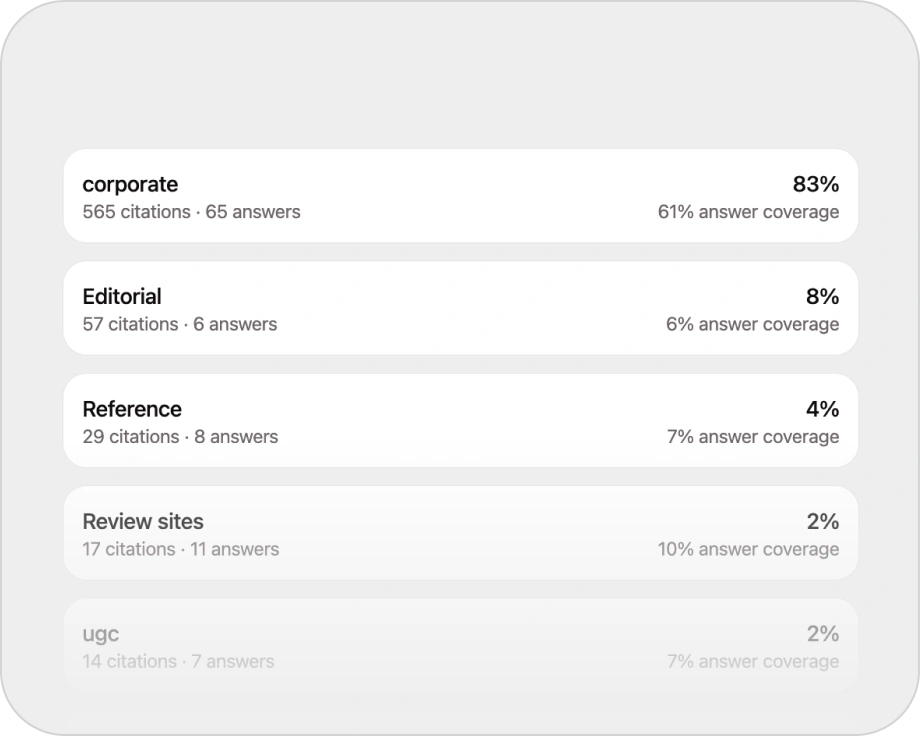
Source trust ecosystems
See influence as a system, not a list. The value is in understanding the trust layer surrounding a topic.
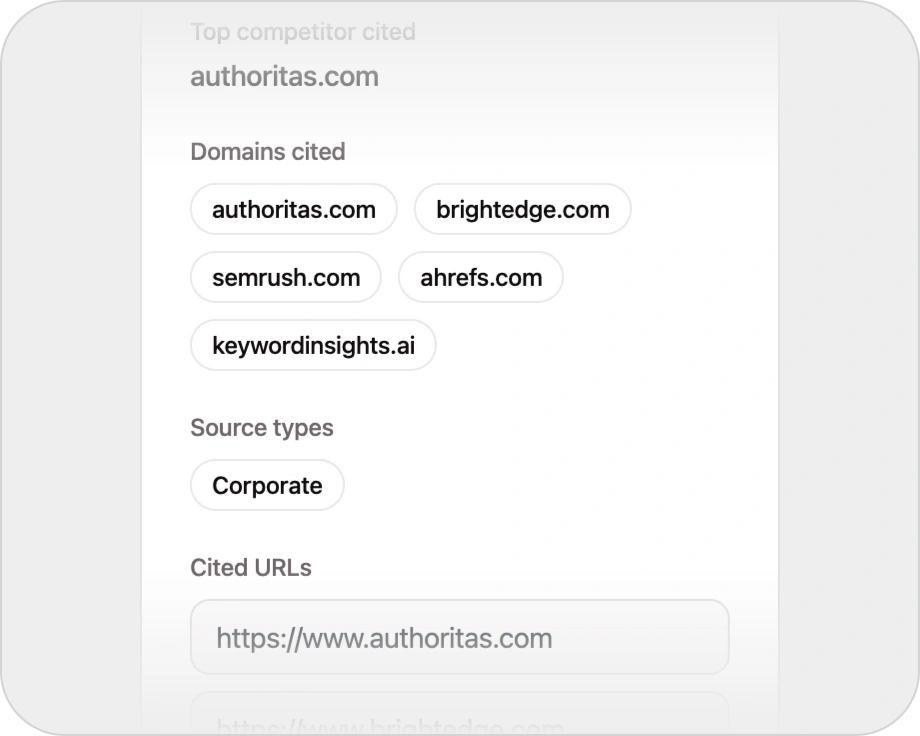
Prompt-level evidence
Tie domain influence back to the actual prompts and answer sets that produced those patterns.
Why it matters
The fight is not only over your content. It is also over who shapes the narrative around your category.
A brand can publish solid content and still lose AI visibility because external sources keep validating someone else more clearly. That is why Influence Map matters. It gives teams a view into the ecosystem behind AI answers, not just the output on the screen.
This page should make one point very clear:
Authority is not only owned. It is reinforced. Once you can see the domains shaping trust, you can make better decisions about what to create, what to strengthen, and where your visibility strategy is too narrow.
How it works
Analyze recurring sources across tracked prompts
Skayle looks across the answer sets your team tracks and identifies which external domains repeatedly shape the response landscape.
Separate signal from noise
Not every domain matters equally. Influence Map surfaces the sources that actually affect authority patterns over time.
Show where influence favors competitors
The page should highlight where the trust layer is clustering around competitors and where your brand has weak external reinforcement.
Feed action back into the system
Use those insights to guide what content to publish, which authority gaps to close, and where your category narrative needs stronger support.
Best fit
Frequently asked questions
Map the trust layer behind AI answers.
Influence Map shows which domains shape authority in your category, where competitors get reinforced, and where your brand needs stronger support.