
TL;DR
An AI engine authority score helps you measure how likely ChatGPT, Gemini, and Perplexity are to recognize, trust, and cite your brand. The best audit looks beyond mentions to check accuracy, recommendation quality, feature recall, and citation sources, then uses those insights to refresh the pages and signals shaping AI perception.
A lot of teams think they have strong brand authority because they rank on Google for a few head terms. Then they check ChatGPT, Gemini, or Perplexity and realize their brand barely shows up, gets miscategorized, or is mentioned without a click-worthy reason to choose them. That gap matters more than most teams realize.
Your AI engine authority score is not just about visibility. It is a practical measure of how likely an AI system is to recognize, trust, and cite your brand when buyers ask for recommendations.
If you’re a SaaS company, this is now part of your acquisition stack. The path is no longer just impression to click. It is impression to AI answer inclusion to citation to click to conversion.
Why brand authority in AI is now a growth problem
Most content teams still audit authority the old way. They check rankings, backlinks, domain authority, and maybe branded search volume. Those still matter, but they do not tell you how an AI engine interprets your company.
That distinction is important. As noted by AI Rank Checker, AI engines do not use a traditional internal domain authority score the way many SEO teams think about Google-era authority metrics. In plain terms: a strong domain can help, but it does not guarantee that an answer engine will surface your brand.
What actually changes in AI search is the unit of trust. Instead of only ranking pages, these engines evaluate whether your brand, your pages, and the surrounding web evidence make you a reliable answer.
I have seen this happen in audits again and again:
- A company ranks well on Google, but AI tools recommend a better-known competitor
- A startup has useful content, but no clear entity footprint, so AI answers skip it
- Product pages mention features, but AI engines keep citing review sites instead
- Messaging is broad, so the brand gets mentioned for the wrong use case
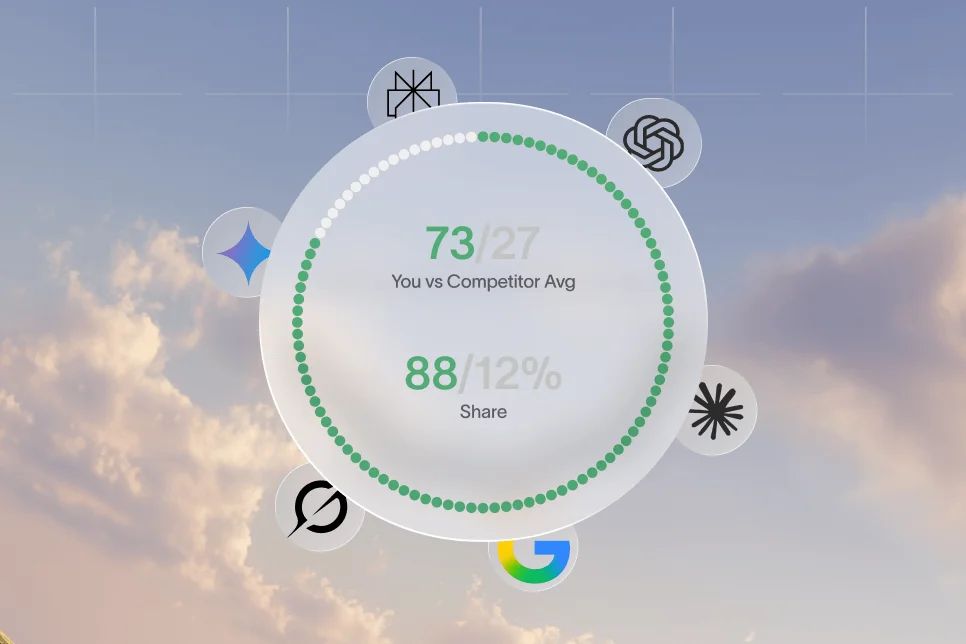
That is why an AI engine authority score is useful. It gives you a working lens for how answer engines may perceive your software.
What an AI engine authority score actually means
An AI engine authority score is a practical way to assess how strongly AI systems associate your brand with a topic, how trustworthy your supporting evidence looks, and how likely your pages are to be cited in answers.
Different vendors score this differently, but the underlying inputs are becoming consistent. According to FAII’s AI Authority Rank methodology, AI authority can be modeled using weighted signals such as crawlability, chunk quality, and entity-level signals. Their published framework highlights crawlability at 20% and chunk quality at 40%, which is a useful reminder that readable, well-structured content matters as much as reputation.
That aligns with what many teams are seeing in the field. If your content is hard to parse, vague, or thin, your authority gets discounted even if your brand is legitimate.
The point of view I would use in 2026
Don’t chase a vanity score. Audit whether each AI engine understands who you are, what category you belong to, which jobs you solve, and why your brand should be recommended.
That means your audit should not stop at mentions. It should look at recommendation quality, feature recall, sentiment, and citation patterns.
The four-part audit I use to assess AI authority
When we review authority across answer engines, we use a simple model: visibility, accuracy, preference, and proof.
It is memorable for a reason. You can run it quarterly, compare engines side by side, and tie it back to content and conversion decisions.
- Visibility: Does the engine mention your brand at all for commercial and category prompts?
- Accuracy: Does it describe your product, market, and features correctly?
- Preference: Does it recommend you, and in which situations?
- Proof: What sources, citations, or surrounding signals appear to support that recommendation?
This is the part many teams miss. They ask, “Are we in the answer?” They should ask, “Are we in the answer for the right reason, with the right evidence, and in a way that creates clicks?”
A realistic baseline before you start
Before changing any page, document the current state. You do not need a complicated dashboard on day one.
Start with:
- 20 to 30 prompts tied to your category, alternatives, use cases, and competitor comparisons
- A spreadsheet with columns for engine, prompt, brand mention, position in answer, feature mentions, sentiment, and citation source
- A weekly snapshot process so you can compare drift over time
- Web analytics to track referral traffic from AI products where available
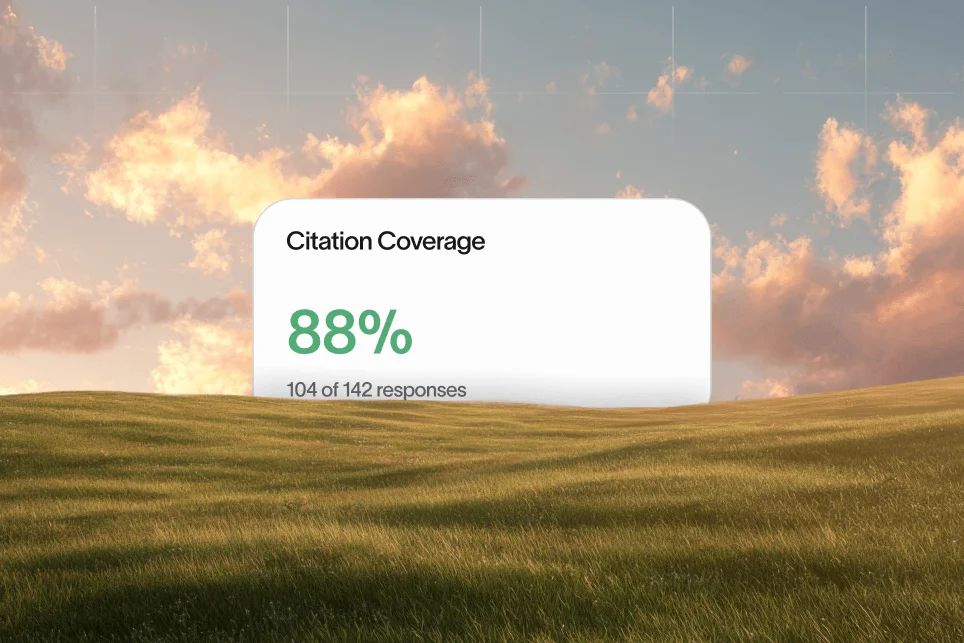
If you want a cleaner operating system for that work, platforms like Skayle can help companies rank higher in search and appear in AI-generated answers while giving teams a way to track visibility and citation coverage in one workflow. The key is not the dashboard itself. The key is connecting visibility data to execution.
The action checklist that keeps this audit grounded
Here is the checklist I would actually hand a team:
- Export your top non-brand and brand-intent prompts.
- Test them in ChatGPT, Gemini, and Perplexity using the same wording.
- Record whether your brand appears, how it is described, and which features get mentioned.
- Save the cited URLs and classify them as first-party, third-party, marketplace, review site, or editorial mention.
- Flag every factual error, category mismatch, or missing use case.
- Compare your result against three direct competitors.
- Identify the pages or sources most likely shaping each engine’s perception.
- Refresh content, entity signals, and supporting pages based on those gaps.
- Re-run the same prompt set every two to four weeks.
- Tie changes to traffic, demo intent, and assisted conversion trends.
It sounds basic. That is the point. The teams that win here are not the ones with the most theory. They are the ones who measure the same things consistently.
ChatGPT, Gemini, and Perplexity do not see your brand the same way
One of the biggest mistakes I see is treating answer engines like a single channel. They are not. Each one tends to reveal a different version of your authority.
If you use the same prompt set across all three, patterns show up fast.
ChatGPT
ChatGPT is often strong at synthesis, but that can cut both ways. If your brand positioning is muddy across the web, it may collapse your product into a generic category or blend your differentiators with a competitor’s.
What I look for in ChatGPT audits:
- Does it name your category correctly?
- Does it mention your strongest use case first?
- Does it recall specific product capabilities or only broad claims?
- Does the answer imply trust, hesitation, or uncertainty?
A common issue is partial recall. For example, a SaaS company may have strong pages on reporting, integrations, and compliance, but ChatGPT only mentions “analytics” because that is the clearest repeated phrase across citations.
That is not a small wording problem. It affects conversion because the AI answer shapes pre-click intent.
Gemini
Gemini often reflects a broader entity understanding and can be sensitive to how clearly your brand is represented across the web. As explained by Search Engine Land, entity authority in AI search depends heavily on signals from trusted knowledge bases and broader recognition across credible sources.
In practice, Gemini audits tend to expose these issues:
- Your company exists, but your category association is weak
- Review sites outrank your own product pages as the source of truth
- Feature comparisons are shallow because your first-party content is not explicit enough
- Brand confusion happens when your naming overlaps with a common term or another company
If Gemini gets your company wrong, do not just update one landing page. Usually the problem is bigger. You need stronger entity consistency across your site, product pages, editorial content, profiles, and third-party mentions.
Perplexity
Perplexity is useful because it makes source patterns easier to inspect. It often shows you which pages are doing the work.
That makes it good for tactical audits. You can see whether your authority is being built by:
- Your homepage
- Product or solution pages
- Comparison pages
- Review platforms
- Industry articles
- Documentation-style explainer pages
Perplexity also exposes a painful truth: sometimes the content driving your AI visibility is not your best-converting page. It might be an old article, a third-party directory, or a competitor comparison written by someone else.
That is why your AI engine authority score should include recommendation quality, not just mention frequency.
What the side-by-side comparison usually reveals
When you line these engines up, you usually find one of three patterns:
- High visibility, low precision: your brand is mentioned often but described loosely
- Low visibility, high accuracy: your brand is understood correctly when found, but it rarely appears
- Competitor shadowing: the engines repeatedly mention a better-known competitor before or instead of you
Each pattern requires a different fix. That is why generic advice like “publish more content” is not enough.
What to measure when you audit recommendation quality
If you only track whether your brand was mentioned, your audit will miss the business outcome.
What matters is whether the answer positions you in a way that leads to the right click and the right buyer expectation.
The scoring sheet that helps teams avoid vague reporting
Use a simple weighted review for each prompt-engine pair:
- Brand inclusion: mentioned or not mentioned
- Placement: first recommendation, later recommendation, or passing mention
- Category accuracy: correct, partly correct, or incorrect
- Feature recall: top features named correctly, partly, or not at all
- Use-case fit: aligned to your best buyer jobs or generic
- Sentiment: positive, neutral, mixed, or skeptical
- Citation quality: first-party pages, strong editorial mentions, or weak sources
- Click potential: would a buyer actually want to learn more after reading the answer?
This is where tools focused on answer-engine visibility can be helpful. HubSpot’s AEO Grader frames AI visibility around measures like share of voice and brand recognition, which is closer to how teams should think about answer-engine reporting than legacy rank trackers alone.
A mini case study structure you can use internally
Here is a clean way to document progress without inventing vanity numbers:
Baseline: Your brand appears in Perplexity for comparison prompts, but not in ChatGPT for category prompts. Gemini mentions you, but frames you as a general AI writing tool rather than a ranking and visibility platform.
Intervention: You rewrite key product and solution pages around explicit category language, add clearer feature explanations, strengthen comparison content, tighten internal linking, and refresh supporting pages so they are easier to parse and cite. You can pair this with our guide to AI search fundamentals so the team has a shared model for how search and answer engines now overlap.
Expected outcome: Within one to two content refresh cycles, category accuracy improves, feature recall becomes more specific, and the brand starts appearing in more commercial prompts with stronger first-party citation support.
Timeframe: Recheck every two to four weeks, then review trend direction over a quarter.
That is honest proof. It is specific, measurable, and grounded in observable changes.
The contrarian stance: don’t optimize for mentions, optimize for recommendation confidence
A lot of teams celebrate any brand mention in AI answers. I would not.
If the answer includes you as a vague alternative, cites a weak source, and misstates your product, that mention can do more harm than good. It creates low-intent clicks and confused pipeline.
So don’t optimize for mention count alone. Optimize for recommendation confidence. You want the engine to say, in effect, “This brand is relevant for this use case, and here is why.”
The fixes that move authority fastest
Once the audit is done, the work becomes clearer. You do not need to overhaul everything at once. You need to remove ambiguity from the places AI engines rely on most.
Fix the pages that define who you are
Start with:
- Homepage
- Product page
- Solution or use-case pages
- Comparison pages
- Pricing page
- High-traffic educational articles
On those pages, tighten four things:
- Category clarity: say what you are in plain English
- Use-case specificity: state who it is for and what jobs it solves
- Feature evidence: explain capabilities in concrete terms, not slogans
- Internal linking logic: help both users and crawlers move between related proof pages
This is where a lot of AI slop causes damage. Pages stuffed with generic claims are hard for buyers to trust and hard for AI systems to cite. If your team is fighting that problem, our editing guide is worth using before you publish another refresh cycle.
Improve chunk quality, not just page length
FAII’s methodology is useful here because it forces teams to think beyond word count. If chunk quality matters materially to AI authority, then your content has to be easier to extract and quote.
That means:
- Direct definitions near the top of important pages
- Clear section headers with one main idea each
- Tight paragraphs that answer one question at a time
- Comparison tables where they help decision-making
- FAQ sections with natural, answer-ready language
This is not about writing for robots. It is about removing avoidable ambiguity.
Build stronger external confirmation
Your first-party content is not enough on its own. According to QuestionDB’s brand authority score explainer, AI-focused brand authority can be influenced by mentions, sentiment, and recognition patterns. That tracks with what many teams see in answer engines: if the broader web barely validates your brand, recommendation confidence stays low.
So audit your external footprint:
- Review platform profiles
- Industry directories
- Partner pages
- Editorial mentions
- Founder and company profile consistency
- Trusted knowledge-base style references where relevant
This is also why old-school authority work still has value. Better backlinks and stronger editorial mentions can reinforce AI perception, even if they are not translated into a single legacy score. SalesHive argues that AI-assisted link analysis can improve authority outcomes, and while the exact impact will vary, the broader takeaway is sound: external validation still matters.
The mistakes that quietly wreck AI authority audits
Some errors are obvious. Others are subtle enough that teams repeat them for months.
Mistaking Google strength for AI authority
A brand can dominate organic search for a few queries and still be weak in AI answers. That usually means your category understanding, entity clarity, or citation footprint is thinner than your SEO dashboard suggests.
Testing prompts once and calling it a trend
AI engines change. Prompt phrasing also changes outcomes.
Run repeated prompt sets. Keep the wording stable. Then compare drift over time instead of declaring victory from one clean result.
Measuring visibility without conversion implications
If an answer mentions the wrong feature, the wrong audience, or the wrong use case, that is not success. It is visibility debt.
I have seen teams push comparison content that increased mentions but lowered lead quality because the AI answers started surfacing them for adjacent, low-fit use cases.
Publishing generic content that cannot be quoted
If your page reads like every other page in the category, it gives the engine no reason to cite you. AI answers pull from sources that feel trustworthy and uniquely useful. You need a clear point of view, distinct proof, and structure that makes extraction easy.
Ignoring the refresh cycle
Authority is not a one-time project. Competitor pages change. AI overviews change. Product positioning changes.
If your top pages are stale, your authority decays quietly. That is exactly why refresh work matters, especially when AI answers begin replacing clicks on older informational queries. We broke down that recovery process in our playbook on AI Overviews traffic loss.
Which engine should you prioritize first?
This depends on your buyers, but most SaaS teams should not pick just one. They should sequence the work.
ChatGPT
Prioritize ChatGPT first if:
- Your audience actively uses it for software research
- Brand framing is inconsistent across the web
- You need cleaner category and use-case recall
Gemini
Prioritize Gemini first if:
- Your entity footprint is weak
- You have naming ambiguity
- You depend on broader web recognition to establish trust
Perplexity
Prioritize Perplexity first if:
- You want faster source-level diagnosis
- Your team needs to inspect citation patterns directly
- You are actively testing which pages earn recommendation support
A practical sequencing rule
If you are early, start where feedback is easiest to inspect. For many teams, that means using Perplexity to diagnose citation sources, then tightening first-party pages for ChatGPT-style synthesis, then expanding entity consistency for Gemini.
That sequence is not perfect, but it is practical.
The FAQ teams ask when they start measuring AI authority
Is there one universal AI engine authority score?
No. There is no single industry-standard score used by all AI engines. Treat an AI engine authority score as an operating metric for your team, not a universal truth.
What is a good authority score?
A good score is one that improves over time and maps to real outcomes: more inclusion in relevant prompts, better feature recall, stronger citation quality, and better conversion from AI-assisted visits. A static benchmark without context is not very useful.
Does domain authority still matter?
It still matters indirectly because strong domains often have better links, trust, and discoverability. But as AI Rank Checker explains, AI engines do not appear to use a traditional internal domain authority score in the same way many SEO teams expect.
How often should we run an audit?
For most SaaS teams, every two to four weeks is enough for prompt tracking, with a deeper review each quarter. If you are in a fast-moving category, run a tighter cadence during major launches or content refresh cycles.
What should we do if AI engines recommend the wrong features?
Fix the pages that define your positioning first. Rewrite category language, clarify use cases, and make feature explanations more explicit. Then strengthen supporting evidence through internal links, comparison content, and better third-party corroboration.
What this means for your next quarter
If I were leading this audit for a SaaS brand in 2026, I would keep it simple. I would build a prompt set, compare ChatGPT, Gemini, and Perplexity weekly, score visibility and recommendation quality, and refresh the pages most responsible for category understanding.
The payoff is not just more mentions. It is better pre-click education, cleaner buyer expectations, stronger citation coverage, and more authority compounding over time.
That is also the right way to think about Skayle. Not as a generic content generator, but as a ranking and visibility platform that helps teams connect content execution with search performance and AI answer presence. The win is not producing more pages. The win is building a system that makes your authority measurable and easier to improve.
If your team wants a clearer picture of how your brand appears in AI answers, start by measuring your citation coverage, recommendation quality, and category accuracy across the major engines. From there, the content roadmap gets much less fuzzy.
References
- FAII — AI Authority Rank
- QuestionDB — Free AI Brand Authority Score
- AI Rank Checker — Impact of Domain Authority on AI Ranking
- Search Engine Land — Why entity authority is the foundation of AI search visibility
- HubSpot — AEO Grader 2026
- SalesHive — Domain Authority: AI Tools to Boost It
- How’s Your AEO? A Discoverability Diagnostic for the AI Era