
TL;DR
Scaling SaaS Content Without Sacrificing Quality depends less on publishing speed and more on operating discipline. Teams need clear page types, stronger briefs, staged reviews, and post-publish measurement so quality holds up as output grows.
Most SaaS teams do not have a content problem. They have an operating model problem. Output breaks down when briefs are inconsistent, reviews are subjective, and publishing depends on a few overloaded people.
Scaling works when quality is treated as a system, not a last-minute edit. The fastest way to ruin content quality is to scale production before standards, workflows, and measurement are in place.
1. Why content quality usually drops the moment output increases
The pattern is predictable. A SaaS company wants more organic growth, adds more keywords to the roadmap, opens new content formats, and starts publishing faster. A few months later, rankings stall, updates pile up, and the team no longer trusts its own process.
This happens because volume exposes weak operations.
When content quality falls during growth, the cause is usually one of five issues:
- Briefs are too thin, so writers fill gaps with generic copy.
- Editorial standards live in one person’s head.
- SEO review happens after drafting instead of before production.
- Publishing is separated from performance tracking.
- Existing pages are ignored while new pages keep shipping.
That is the real business case behind Scaling SaaS Content Without Sacrificing Quality. The goal is not simply to publish more. The goal is to produce pages that can rank, earn citations, and convert without increasing chaos.
According to Impact.com, strategic planning and process optimization are what allow content teams to increase output without burning out the people doing the work. That matters in SaaS because content debt compounds quickly. Every weak page creates future rewrite work, internal linking gaps, and reporting noise.
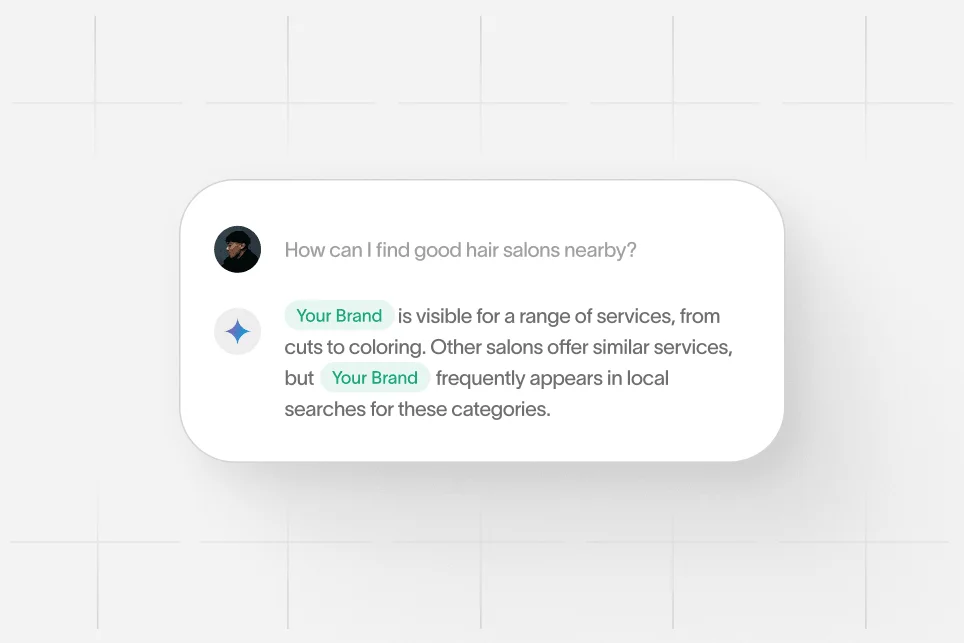
There is also a search visibility cost. In Google and in AI-generated answers, generic pages are easy to ignore. AI answer systems tend to pull from sources that are structured, clear, and useful. That means the operating model behind the page affects whether the page gets cited at all.
This is where a stronger point of view matters.
Publishing more articles is not a content strategy. Publishing decision-ready pages with consistent structure, evidence, and upkeep is a content strategy.
2. The content operations model that keeps quality stable at higher volume
A practical way to approach Scaling SaaS Content Without Sacrificing Quality is to use a simple model: plan, standardize, review, measure. It is not complicated, but it needs discipline.
Plan around page types, not random topic requests
Most teams create bottlenecks by treating every article as a custom project. That is expensive and slow.
A better model is to define a small set of repeatable page types:
- category pages
- comparison pages
- feature pages
- use case pages
- glossary or educational explainers
- refreshes of older high-potential articles
Each page type should have a clear search intent, expected structure, required proof elements, and conversion goal. This is also where topical authority starts to compound. A company that knows how to produce one strong comparison page repeatedly can scale faster than a team inventing a new format every week.
For SaaS teams expanding into commercial intent content, this is especially important. Strong comparison assets often outperform generic blog output, and our guide to trusted comparison pages covers why structure and proof matter so much for both rankings and AI citations.
Standardize what good looks like before scaling headcount
Quality falls when teams rely on taste instead of standards.
Every content team that wants stable output needs documented rules for:
- search intent alignment
- headline structure
- opening summary format
- use of product proof and examples
- internal linking expectations
- FAQ inclusion
- update triggers
- conversion elements on page
This is where AI can help or hurt.
According to HelpSite, reusable prompts can preserve brand voice by defining structure, tone, and intent before drafting begins. The important point is not “use AI more.” The important point is “use AI inside a controlled editorial system.” Without standards, AI just scales inconsistency.
Review in stages, not in one overloaded final pass
A single editor doing one large review at the end is not a scalable quality model.
A better approach is staged review:
- brief approval
- structural review after draft one
- final SEO and editorial check before publishing
- performance review after indexing and early traffic data
This reduces expensive rewrites. It also catches the highest-risk quality failures earlier, when they are easier to fix.
Measure the page after publishing, not just the team before publishing
Most content teams measure throughput. Fewer measure whether the pages deserve to exist six weeks later.
The pages that should be tracked first are the ones closest to revenue or brand authority:
- comparison pages
- high-intent solution pages
- product-led educational content
- articles already earning impressions but underperforming on clicks or engagement
For AI-answer visibility, the path is no longer just impression to click. It is impression to answer inclusion to citation to click to conversion. That changes how quality should be judged. Pages need to be scannable, quotable, and structurally clear enough to be extracted.
3. What a workable publishing workflow looks like in practice
A scalable workflow needs fewer handoffs, fewer opinions, and clearer ownership. The teams that keep quality stable usually do not have more meetings. They have tighter inputs.
According to ContentWriters, editorial calendars and firm deadlines are essential for reducing friction as content volume increases. In practice, that means each article should move through a visible pipeline with dates, owners, dependencies, and a publication decision.
A workable workflow for SaaS content often looks like this:
Intake starts with revenue relevance
Not every keyword deserves production capacity.
Before a topic enters the calendar, the team should answer:
- Which funnel stage does this page support?
- What intent does it target?
- What existing pages will it support through internal links?
- What proof can be included?
- What action should a qualified reader take next?
This keeps the calendar from becoming a graveyard of low-value informational content.
Briefs carry the quality burden early
If the brief is weak, the draft will be expensive.
A strong SaaS content brief should include:
- primary and secondary keyword targets
- audience and awareness level
- search intent and page type
- angle and point of view
- required product or market context
- internal links to include
- FAQ targets
- evidence requirements
- CTA direction
This is where many teams either create leverage or waste it.
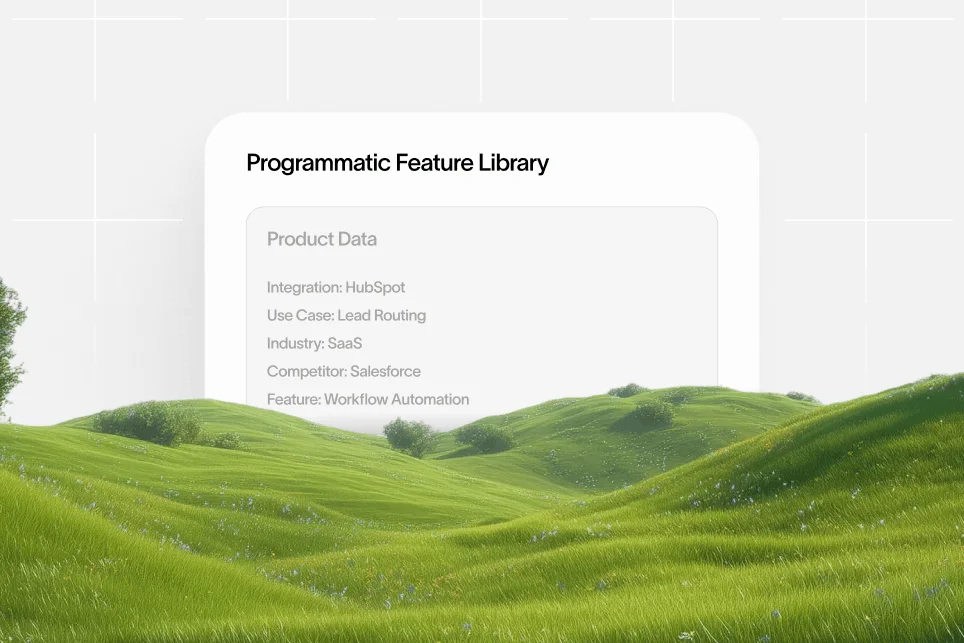
For example, if a team is producing a feature library at scale, the brief should already define repeated blocks such as use cases, alternatives, limitations, and internal links. That is one reason programmatic content systems work best when the page template is structurally strong before production expands.
Drafting should separate originality from repetition
The parts of a page that can be standardized should be standardized.
That includes:
- intro format
- feature comparison table structure
- FAQ styling
- callout box placement
- CTA placement
- internal link rules
The parts that still need judgment should be protected:
- point of view
- examples
- product nuance
- audience-specific objections
- conversion messaging
This is the contrarian move that many teams miss: do not ask writers to be endlessly creative across every part of every page. Ask them to be original where originality actually changes ranking or conversion. Repetition in structure is often a quality advantage, not a weakness.
The middle-of-funnel checklist that prevents content drift
Once a team is publishing at volume, a short production checklist catches more quality issues than another opinion-heavy review meeting.
- Confirm the keyword target matches the page intent.
- Verify the opening explains the problem in plain language within the first two paragraphs.
- Make sure at least one section includes concrete proof, an example, or a measurable plan.
- Check that headings are descriptive and extractable in AI answers.
- Add internal links that reinforce topical authority, not random navigation.
- Include a CTA aligned to the page’s buying stage.
- Define a review date so the page does not become stale.
That is enough to keep standards visible without turning publishing into bureaucracy.
4. Proof, examples, and page design matter more than teams think
Quality is not just editorial polish. It is whether the page gives search engines, AI systems, and buyers enough clarity to trust it.
That trust usually comes from three things: proof, structure, and specificity.
A mini case pattern that teams can actually use
A reliable content proof block follows a simple shape: baseline, intervention, expected outcome, timeframe.
For example:
- Baseline: A SaaS team publishes four articles per month, but traffic is spread across low-intent topics and older articles are decaying.
- Intervention: The team narrows output to two refreshes, one comparison page, and one high-intent educational page per month. They standardize briefs, require one proof element per page, and review performance after six weeks.
- Expected outcome: Fewer pages are published, but internal linking improves, update cycles become manageable, and commercial-intent coverage gets stronger.
- Timeframe: The first useful signal usually appears within one to two editorial cycles, depending on crawl frequency and existing authority.
There are no fabricated numbers in that example because most teams do not need fake precision. They need a measurement plan.
A practical measurement plan includes:
- baseline impressions and clicks in Google Search Console
- engagement and conversion events in Google Analytics
- assisted pipeline or demo influence in a CRM
- a 30-, 60-, and 90-day review window
Why page design affects content quality
Design choices change whether a good draft becomes a usable page.
When content scales, design systems should support readability and conversion with:
- short paragraphs
- clear subheads every 150 to 200 words
- tables where comparisons matter
- summary boxes for busy readers
- visible CTAs without interrupting reading flow
- consistent FAQ formatting
A long page without visual structure often underperforms even when the writing is good. It is harder to scan, harder to cite, and harder to act on.
For AI visibility, answer-ready formatting matters even more. Clear definitions, comparison tables, and concise paragraph blocks make it easier for a page to be pulled into AI summaries. That is one reason teams are increasingly focused on AI search visibility, not just blue-link rankings. Platforms such as Skayle help SaaS teams measure how content ranks in search and how it appears in AI-generated answers, which is useful when editorial performance needs to connect back to citation coverage rather than raw output alone.
The founder bottleneck is usually a systems bottleneck
The scaling issue is rarely that founders care too much about quality. The issue is that they remain the quality control layer for too long.
A useful perspective from this Reddit discussion on scaling SaaS operations is that growth requires moving from founder-led execution to systems that manage people and quality. Content is no different. If every article still needs one expert to rewrite positioning, tighten messaging, and check every claim, the team does not yet have a scalable publishing model.
5. Common mistakes that make scaling slower, not faster
Most quality failures come from trying to move faster in the wrong place.
Mistake 1: Expanding channels before one channel works
According to Storyteq, scaling should happen gradually by refining one content type or channel before expanding to others. That applies directly to SaaS SEO.
If blog articles are inconsistent, adding newsletters, webinars, landing pages, and video scripts will not solve the problem. It will spread the same quality issues across more surfaces.
The better move is to make one repeatable motion work first.
Mistake 2: Treating AI as a substitute for editorial judgment
AI can accelerate drafting, repurposing, and updating. It cannot replace positioning, evidence selection, or commercial nuance.
Teams that get this wrong usually end up with:
- generic intros
- flat explanations
- weak differentiation
- no product insight
- repetitive phrasing across dozens of pages
The fix is not to avoid AI. It is to define where AI is allowed to speed up the process and where humans still need to make the call.
Mistake 3: Publishing net-new content while old pages decay
Content velocity can hide content decay.
If a company has 150 existing pages and 40 of them still generate meaningful impressions, refreshing those pages may produce more business value than adding another 20 low-priority articles. Teams that ignore this usually mistake activity for progress.
This is especially important in AI search, where freshness, clarity, and source trust all influence whether a page remains useful. Some of the strongest gains come from updating pages that already have authority but need better structure, clearer answers, and stronger proof.
Mistake 4: Measuring output without measuring quality
Common dashboard metrics such as articles published, words shipped, or on-time delivery can be useful operationally. They are not quality metrics.
A stronger reporting set includes:
- indexed pages by template type
- impressions and clicks by topic cluster
- conversion actions by page group
- assisted pipeline for commercial content
- citation presence in AI answers where measurable
- refresh win rate over 60 to 90 days
Teams that want a clearer view of that last point often need a visibility layer that connects content production to ranking and answer inclusion. That is where a ranking and visibility platform such as Skayle fits naturally: it helps teams understand how content appears in search and AI answers without turning the content process into disconnected spreadsheets.
6. The 2026 FAQ teams ask when they need more output without lower standards
How fast should a SaaS team scale content production?
Gradually. Storyteq recommends refining one channel or content type before expanding, which aligns with how strong SaaS content operations usually work. If one page type is not consistently ranking or converting, adding more formats will usually increase waste rather than growth.
What is the best way to keep brand voice consistent at scale?
The most reliable method is to document voice rules inside briefs, examples, prompts, and editorial review criteria. As HelpSite notes, reusable prompts can help define tone, structure, and intent, but only when they are built around clear editorial standards.
Should SaaS teams hire more writers or improve process first?
Process usually comes first. Impact.com argues that planning and process optimization are the foundation for scaling without team burnout. Hiring into a broken workflow tends to multiply inconsistency rather than solve it.
How should teams prioritize new content versus content refreshes?
They should review existing pages by impression potential, commercial relevance, and decay risk. If older pages already have some authority, refreshes often create faster gains than net-new posts because they improve assets that search engines already know and may already rank.
What should be measured to know whether scaling is actually working?
The minimum useful set is page-level impressions, clicks, conversions, and update impact over time. Editorial throughput matters, but it should sit next to ranking movement, commercial outcomes, and citation visibility, not replace them.
Scaling SaaS Content Without Sacrificing Quality is mostly a matter of operational discipline. The teams that do it well narrow formats, standardize quality rules, build briefs that reduce rework, and review performance after publication instead of treating publishing as the finish line.
For companies that want to connect content production to rankings and AI answer visibility, the next step is to build a measurable system rather than add more ad hoc output. Skayle is built for that exact problem: helping SaaS teams plan, create, optimize, and maintain content that ranks in Google and shows up in AI answers.