
TL;DR
Most SaaS partner ecosystems underperform because the pages are thin, generic, and disconnected from real user workflows. Audit them for coverage, clarity, proof, and routing, then measure success by citations, qualified clicks, and downstream conversion, not just traffic.
Most SaaS teams treat partner pages like side quests. Then they wonder why AI answers mention competitors, why integration searches go nowhere, and why their marketplace traffic never turns into pipeline.
I’ve seen this up close: the product team ships dozens of integrations, the partnerships team announces them, and the marketing site ends up with thin pages that barely explain who the integration is for or what problem it solves. In 2026, that’s a visibility leak you can actually fix.
Why partner pages now carry more weight than most teams realize
Here’s the short version: AI search visibility depends on whether your partner ecosystem pages clearly explain real use cases, prove relevance, and connect to commercial intent.
That matters because the old playbook was mostly about ranking a landing page for an integration keyword and hoping the right buyer found it. The new path is different: impression -> AI answer inclusion -> citation -> click -> conversion.
If your integration pages are vague, duplicated, or disconnected from actual product workflows, they’re hard for both search engines and AI systems to trust. You might still get indexed. You probably won’t get cited.
That’s a big miss for SaaS SEO.
According to Marketer Milk, SaaS SEO in 2026 is still fundamentally about driving organic traffic to your marketing site. I’d go one step further: your partner ecosystem is part of your marketing site, whether your team treats it that way or not.
And if you’re in B2B SaaS, that traffic should not be judged by vanity metrics alone. As Power Digital Marketing notes, SaaS SEO success ties back to organic visibility and qualified lead generation. A partner page that gets clicks but never influences demos is not doing its job.
My point of view on partner ecosystem SEO
Most teams over-invest in shipping integration inventory and under-invest in making that inventory discoverable.
Don’t build more partner pages until you can explain, page by page, who the integration is for, what job it helps them do, and why your page deserves to be cited instead of ignored.
The audit model I use
I use a simple four-part review for partner ecosystems: coverage, clarity, proof, and routing.
- Coverage asks whether the right integrations, marketplaces, and related use cases exist as indexable pages.
- Clarity checks whether each page explains the user problem in plain English.
- Proof looks for evidence, specificity, and product reality.
- Routing checks whether the page leads users and crawlers to the next relevant destination.
That model is simple enough to reuse, and practical enough to hand to content, SEO, partnerships, and demand gen without causing a two-week Slack debate.
Step 1: Find the pages that exist, the pages that should exist, and the pages that waste crawl budget
The first mistake is assuming your ecosystem is already visible because there’s a directory somewhere on the site. It usually isn’t.
Start with an inventory. Pull every indexable page tied to integrations, partners, marketplaces, app listings, solution pages, partner blog posts, and help center articles that explain setup or workflows. Then sort them into three buckets:
- Pages that already target a meaningful integration or partner intent
- Pages that exist but add little value
- Pages that should exist but don’t
This sounds basic, but it’s where most audits get real fast.
A typical example: a SaaS company has 85 published integration pages, but only 20 of them explain a use case beyond “connect X to Y.” Another 30 are near-duplicates generated from a template. The rest are buried in the navigation and have almost no internal links.
That’s not a partner ecosystem. That’s an archive.
What to review on the inventory pass
Look at:
- Indexability
- Canonicals
- Title tags and H1s
- Page depth from the homepage
- Internal links pointing in
- Organic clicks and impressions
- Non-brand query coverage
- Conversion paths
- Whether the page is still relevant to your product
You do not need a deep engineering review here. You need a working map.
If a page has no clear search intent, no traffic, no links, and no business value, it’s a candidate to merge, redirect, or deindex. Thin ecosystem pages dilute authority.
This is also where a lot of teams realize their structure is upside down. They have an integrations hub, but no category pages for common jobs like CRM sync, ticket routing, attribution, or billing automation. They have partner logos, but not partner intent coverage.
That’s bad for SaaS SEO because search demand often maps to tasks and workflows, not just brand-to-brand combinations.
If you’re revisiting your broader organic approach, our guide to SEO in 2026 explains why ranking now depends on authority and answer visibility, not just classic keyword placement.
Step 2: Rewrite the intent target around customer problems, not partner names
A lot of partner pages are written for internal stakeholders, not buyers.
You get lines like “Seamlessly integrate with your favorite tools” or “Connect your workflows across platforms.” That language says nothing. It sounds polished, but it gives search engines and AI systems almost nothing useful to extract.
The better question is: what was the user trying to do when they looked for this integration in the first place?
A useful partner page usually maps to one of these intent types:
- Setup intent: how two tools connect
- Workflow intent: how a job gets done across both tools
- Comparison intent: when to use native integration vs Zapier-like workarounds
- Troubleshooting intent: how to fix syncing, attribution, or routing issues
- Commercial intent: whether this setup is right for a team with a specific stack
That shift matters. A behavior-driven approach usually outperforms generic SEO targeting because it aligns the page with actual user actions, not just keyword labels. That’s consistent with the view in Linkflow’s SaaS SEO guide, which argues for behavior-based targeting over basic SEO tactics.
A concrete example of the rewrite
Bad version:
“Connect Salesforce and Slack to improve collaboration.”
Better version:
“Send qualified pipeline updates from Salesforce to Slack so sales and CS teams can act without waiting for a dashboard refresh.”
The second version gives you more than better copy. It gives you a citation-worthy explanation of the workflow, the user, and the outcome.
I’ve seen teams refresh integration pages this way and get better results from the same page inventory because the pages stop sounding like placeholders and start sounding like answers.
And yes, this is where AI slop can quietly kill performance. Generic partner page copy is one of the easiest places to publish a lot of words that say almost nothing. If your refresh process keeps producing flat, interchangeable paragraphs, fix that first with a stricter editing workflow.
Step 3: Check whether each page proves anything real
AI systems don’t cite pages because they exist. They cite pages that feel specific, trustworthy, and useful.
That means your audit needs a proof pass.
Most partner pages fail here. They describe the integration, but they don’t prove the integration matters. There’s no evidence of the workflow, no detail about the use case, no screenshots, no setup notes, no limitations, and no signal that the page came from people who understand the product.
What proof looks like on a strong partner page
You do not need inflated case studies on every page. You do need enough specificity to make the page worth citing.
Good proof signals include:
- A real user scenario tied to a team or function
- A short walkthrough of how the workflow works
- Notes on common setup choices or limitations
- Links to supporting docs or adjacent use cases
- Clear ownership of what is native, partner-built, or third-party managed
- Concrete language about outcomes, even when you are not using hard numbers
Here’s the before-and-after shape I like:
- Baseline: partner page says the tools connect and lists broad benefits
- Intervention: page is rewritten around one high-intent workflow, adds setup context, clarifies ownership, and links to related use cases
- Expected outcome: better non-brand relevance, stronger AI extractability, and more qualified clicks
- Timeframe: first measurement window at 6-8 weeks after reindexing and internal link updates
Notice what I’m not doing there: inventing a conversion lift. If you don’t have real numbers, don’t fake them. Set a measurement plan instead.
This is also where user pain matters. Sure Oak emphasizes that strong SaaS SEO connects to user pain points. That principle applies directly to ecosystem pages. The page should explain not just what integrates, but what friction disappears when the tools work together.
The contrarian take
Don’t make every integration page look perfectly uniform.
Do make every integration page structurally consistent.
Those are different things. Uniform design is helpful. Uniform copy is not. If every page uses the same bland paragraph block with a swapped logo and product name, you’ve created scalable sameness. That’s easy to publish and hard to cite.
Step 4: Audit the path from citation to click to conversion
A lot of teams stop at discoverability. That’s only half the job.
If an AI answer cites your page and a buyer clicks through, what happens next? Too often, they land on a page that has no clear CTA, no useful next step, and no bridge from informational intent to commercial action.
That’s a conversion problem, not just an SEO problem.
The page elements I look for every time
A partner page should make the next move obvious. In practice, that usually means checking for:
- A clear above-the-fold explanation of what the integration does
- A workflow section that shows who it helps and when to use it
- Supporting links to setup docs, templates, or related solutions
- A CTA matched to page intent, such as start free, book demo, or view documentation
- Internal links to product areas, use cases, and comparison content
If the page only says “Learn more,” you’re making the buyer do unnecessary work.
I also look at whether the conversion ask matches the page. A product-led tool can often route to a free trial or install flow. An enterprise tool may need a demo CTA plus a technical doc path for evaluators. The wrong CTA doesn’t just hurt conversion. It can distort how the page is interpreted by search systems because the page lacks a coherent job.
Directive Consulting makes a useful point here: SaaS SEO should move away from vanity metrics and focus on outcomes tied to revenue. For partner ecosystems, that means you should measure influenced demos, assisted signups, or partner-source SQLs when possible, not just pageviews.
A mini case pattern worth copying
One common fix is splitting a vague integration page into two assets:
- a commercial integration page for buyers evaluating the setup
- a supporting workflow article for users asking a specific how-to question
That creates a cleaner intent match.
The commercial page can stay focused on fit, capabilities, and CTA. The workflow article can answer the detailed task. Together, they give you a better shot at both ranking and citation.
If your organic traffic from AI summaries has started flattening or dropping, the recovery work often starts here. We’ve covered similar fixes in this AI Overviews playbook.
Step 5: Fix the internal linking so your ecosystem stops behaving like an orphaned microsite
This is where otherwise decent partner programs quietly lose visibility.
The pages exist. The copy is decent. But the internal linking is so weak that search engines and AI systems struggle to understand how these pages fit into the larger site.
A healthy ecosystem should not feel disconnected from your main SaaS SEO architecture.
What strong internal linking looks like
Your integration pages should connect to:
- The integrations hub
- Relevant product pages
- Use case pages
- Industry or role-based solution pages
- Help docs when they add setup clarity
- Blog posts that answer adjacent workflow questions
And those same sections should link back into your ecosystem where relevant.
For example, if you have a page about revenue attribution, it should naturally link to the integrations that support that use case. If you have a customer support automation page, it should point to integrations like ticketing, chat, and CRM sync pages.
What you want is topical reinforcement, not random cross-linking.
The common mistake
Teams often link only from the integrations directory to the partner pages. That creates a thin hierarchy and weak context.
The better move is to link from problem-led pages into integration pages and from integration pages back into problem-led pages. That gives both users and crawlers a clearer story about why the page exists.
This is also one of the easiest places to operationalize at scale. If you’re using a platform like Skayle, it helps teams coordinate content creation, refreshes, and visibility tracking in one system so partner pages do not drift into a stale corner of the site. That matters when your goal is not just publishing more URLs, but showing up in search and AI answers with measurable coverage.
Step 6: Review structured content cues that make pages easier to extract and cite
You do not need to explain search engine internals to improve citation odds. But you do need to make the page easier to parse.
That starts with structure.
The strongest ecosystem pages I’ve seen are easy to skim, easy to quote, and easy to route. They answer direct questions in direct language. They use headings that reflect actual user needs. They avoid burying useful detail in long, abstract intros.
What to tighten on every page
Check whether the page includes:
- A direct summary near the top
- Clear H2s around use cases, setup, limitations, and FAQs
- Bullets where a list is more useful than prose
- FAQ-style answers written in plain language
- Distinct copy that avoids template duplication
- Supporting schema where appropriate
This is one reason generic page templates underperform. They can be fine for layout, but they often flatten meaning.
According to the discussion on Reddit’s r/SaaS thread about getting started with SEO, a practical starting point is publishing content that answers real user problems. That advice may sound simple, but it’s exactly what many ecosystem pages fail to do.
A good extractable paragraph looks like this
“HubSpot-Slack integration works best for revenue teams that need fast visibility into lead status changes, handoff points, and pipeline movement without asking reps to check another dashboard.”
That paragraph gives a model enough context to understand audience, workflow, and job-to-be-done in one pass.
A weak paragraph looks like this
“Our seamless integration empowers teams to unlock connected efficiency across their go-to-market stack.”
That sounds expensive. It says nothing.
Step 7: Measure ecosystem performance like a revenue asset, not a content side project
This is the last step, and it’s the one that determines whether the audit changes anything.
You need a simple measurement plan tied to business outcomes.
The scorecard I’d use for the next 90 days
For each key integration or partner page, track:
- Organic impressions for non-brand partner and workflow queries
- Clicks from search to the integration page
- Referral visibility from AI answer surfaces, where measurable
- Assisted conversions, demo starts, or signups from the page path
- Internal click-through rate to product or sales pages
- Indexed status and page health after updates
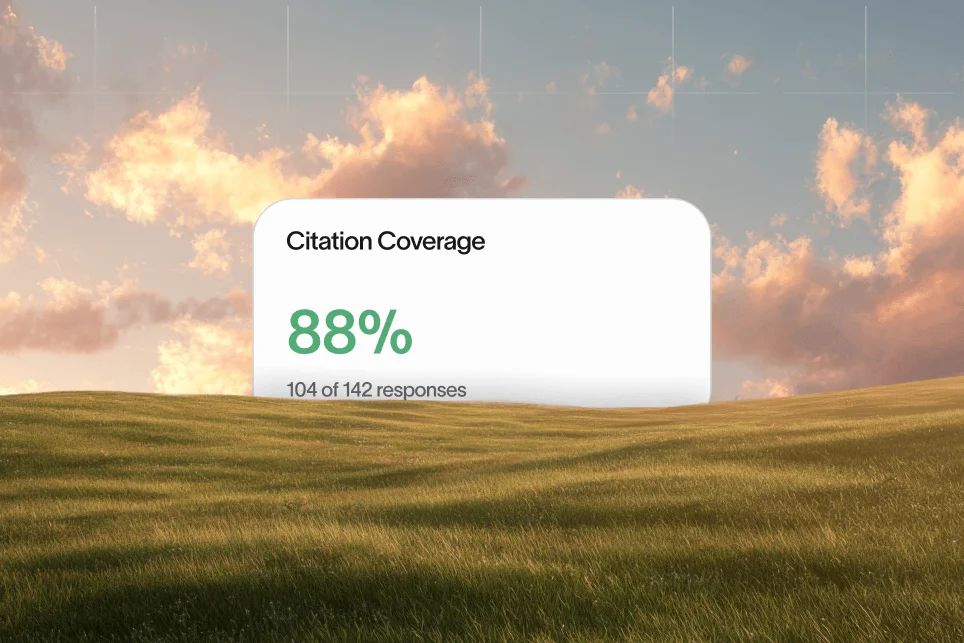
- Citation coverage for priority partner topics
This is where many SaaS teams finally see the real issue. The ecosystem may be generating some traffic, but the pages with the strongest commercial intent often have the weakest content. Meanwhile, low-intent pages absorb maintenance time without contributing much.
As Yes Optimist argues, SaaS SEO should be built around growth, not isolated publishing activity. That’s exactly how to treat partner ecosystems: as growth infrastructure.
What to prioritize first
Don’t try to fix 200 pages at once.
Start with:
- Your most commercially important partners
- Your highest-volume or highest-intent integration queries
- Pages already getting impressions but underperforming on clicks
- Pages already getting clicks but failing to assist conversion
Then work in waves.
A realistic 90-day rollout looks like this:
- Weeks 1-2: inventory, scoring, and triage
- Weeks 3-6: rewrite top-priority pages and repair internal links
- Weeks 7-8: add FAQs, workflow detail, and proof elements
- Weeks 9-12: review indexing, query movement, and conversion impact
That cadence is fast enough to matter and controlled enough to manage.
The mistakes that usually ruin partner ecosystem visibility
I’ve made some of these mistakes myself, especially when trying to scale content production too quickly.
Here are the patterns that show up over and over:
Treating partner pages like database entries
A page is not valuable because it exists. It’s valuable because it solves an information need better than the alternatives.
Letting templates erase meaning
Templates should speed up structure, not remove substance. When every page sounds identical, none of them feel cite-worthy.
Ignoring commercial routing
If the page has no job after the click, you’ll get weak conversion even if visibility improves.
Measuring traffic without measuring influence
Traffic can tell you a page is visible. It cannot tell you whether the page helps pipeline unless you connect it to downstream actions.
Publishing partner pages with no maintenance plan
Integration ecosystems change constantly. Features shift, native connections break, ownership changes, marketplaces evolve. A stale page loses trust fast.
Questions SaaS teams usually ask during this audit
How many integration pages should a SaaS company have?
There is no ideal number. You should only publish pages for integrations, marketplaces, and partner workflows that matter to customer demand, product reality, or pipeline influence. A smaller set of high-intent, well-maintained pages usually outperforms a bloated directory.
Are marketplace listings enough for AI search visibility?
Usually not. Marketplace listings help, but they rarely give you enough room to explain use cases, workflow fit, limitations, and conversion paths. Your own site is still the better place to build authority and capture demand.
Should every partner page target the partner brand keyword?
No. Brand-pair terms matter, but they are not the whole opportunity. Many of the best pages also target workflow, problem, or role-based intent tied to how the integration gets used.
What if an integration has low search volume?
That does not automatically make it unimportant. In SaaS SEO, low-volume pages can still matter if they support high-intent buyers, enterprise deals, or strategic partner channels. Judge the page by revenue relevance, not just keyword volume.
How often should partner pages be refreshed?
Review high-priority pages at least quarterly, and review the rest on a scheduled cadence tied to product and partnership changes. If the workflow, UI, ownership, or positioning changed, the page should probably change too.
What a strong partner ecosystem looks like in 2026
A strong ecosystem is not just a directory with logos. It is a connected set of pages that explains real workflows, supports commercial intent, and earns trust from both humans and machines.
That is the real shift in SaaS SEO right now. Brand is your citation engine. If your partner content sounds generic, AI systems have no reason to reuse it. If it carries a clear point of view, useful structure, and product truth, it becomes much easier to extract, cite, and convert.
If you want a practical way to measure how your brand appears in AI answers and where your ecosystem content is missing coverage, Skayle helps teams track that visibility and turn the findings into an execution system. The useful part is the clarity: you can see what’s showing up, what isn’t, and where to tighten the content.
If you’re cleaning up a messy integration library, start with ten pages, not a hundred. Fix intent, add proof, repair routing, and measure what changes. That’s how partner ecosystems stop being content clutter and start acting like growth assets.