
TL;DR
The best answer to how to avoid ai slop is not better prompting alone. SaaS teams need better source material, a clear editorial angle, concrete evidence, and a final trust-focused edit so pages can rank, earn citations, and convert.
Robotic content is now easy to spot. It reads smoothly, says very little, and weakens trust the moment a serious buyer lands on the page.
For SaaS teams, the problem is not using AI. The problem is publishing content that sounds like no one with real product knowledge, market context, or editorial judgment touched it.
A simple way to define the issue: AI slop is content that is technically readable but strategically empty.
Why AI slop is now a growth problem, not just an editorial problem
The old risk of low-quality content was mostly ranking loss. In 2026, the risk is broader: weak pages fail to earn trust from readers, fail to convert qualified traffic, and fail to become useful source material for AI-generated answers.
That matters because the funnel has changed. The page is no longer optimized only for impression to click. It now needs to support impression -> AI answer inclusion -> citation -> click -> conversion.
If a page sounds generic, it creates friction at every step.
- Search engines struggle to see clear differentiation.
- AI systems have less reason to cite it.
- Readers do not find a strong point of view.
- Conversion intent drops because the page feels replaceable.
This is why “good enough” AI copy underperforms. It may fill a page, but it does not build authority.
For SaaS companies, the cost is cumulative. A team may publish dozens of pages that look complete in a content calendar, yet none of them become citation-worthy assets. The result is a library that is expensive to maintain and weak in both SEO and AI visibility.
That is also why the strongest teams treat AI as a drafting layer, not an authority layer. As argued in Medium’s quick guide to avoiding AI slop, generative AI works best when it augments human expertise rather than replacing it.
This is the practical point of view that matters: do not ask AI to create authority from nothing; use it to accelerate pages that already have judgment, evidence, and editorial direction behind them.
For teams trying to build pages that rank and also appear in AI answers, this overlaps with the structural work covered in our guide to content trust and our feature page blueprint. The same qualities that make a page feel human also make it easier to extract, cite, and trust.
What usually makes SaaS content feel robotic
Most AI slop is not caused by one obvious mistake. It is usually the result of several weak decisions stacking on top of each other.
The most common patterns
Vague inputs. When the prompt lacks audience, goal, tone, format, and page purpose, the output defaults to generic internet language. A useful takeaway from the Reddit PromptEngineering discussion is that ambiguity in the input almost guarantees ambiguity in the output.
No proprietary raw material. If the model only sees public summaries, the page will echo public summaries. According to The Marketing Cloud, starting with proprietary material is one of the clearest ways to break the slop loop.
No editor between draft and publish. Teams often move straight from generation to formatting. That misses the stage where someone should remove repetition, sharpen claims, add evidence, and decide what the page should actually say.
Over-smoothed language. Robotic pages often avoid specifics. They favor polished but empty phrasing such as “streamline workflows,” “enhance efficiency,” or “unlock growth” instead of naming a real pain, tradeoff, or outcome.
Flat information density. Every paragraph sounds equally important. There are no sharp definitions, no quotable lines, no examples, and no sections a buyer would bookmark and share internally.
What qualifies as AI slop
AI slop is not simply content written with AI. It is content that shows one or more of these traits:
- It could fit almost any company in the category.
- It avoids concrete examples and real constraints.
- It repeats common advice without adding a point of view.
- It sounds polished but not informed.
- It gives the reader no reason to trust the writer.
That definition matters because many SaaS teams are solving the wrong problem. They try to “humanize” copy at the sentence level while leaving the page generic at the strategic level.
A page can use contractions, shorter sentences, and more casual wording and still be slop. The deeper test is whether the page contains information that a real operator, buyer, or domain expert would recognize as useful.
The four-part page review that removes slop before publish
The most reliable answer to how to avoid ai slop is not “write better prompts.” Better prompts help, but they do not replace editorial control. A more durable approach is a simple four-part review: source, angle, evidence, and polish.
This is a named model because it is easy to reuse across briefs, landing pages, blog posts, comparison pages, and refreshes.
1. Check the source material
Before editing a line, inspect what the draft is built from.
Ask:
- Did the draft use product docs, support transcripts, sales objections, call notes, win-loss themes, or internal SME input?
- Or did it mostly remix existing web content?
If the source material is thin, the page will be thin. The fastest fix is not rewriting every paragraph. It is adding better raw material first.
Useful source inputs for a SaaS page include:
- Common objections from demos
- Product screenshots and workflow notes
- Internal terminology buyers already use
- Customer outcomes with proper context
- Notes from support or implementation teams
This is where many teams save time in the wrong place. They ask AI to fill the knowledge gap instead of feeding it actual company knowledge.
2. Tighten the angle before editing the prose
Every strong page needs a clear editorial stance. Without one, the content settles into consensus language.
A practical angle can be framed in one line:
- What is the reader trying to decide?
- What does the company believe that weaker pages miss?
- What tradeoff should be made clear?
For example, a robotic draft might say: “AI content tools help SaaS teams scale faster.”
A stronger angle says: “Scaling content faster only matters if the pages become trusted sources in search and AI answers; otherwise the team just scales maintenance debt.”
That second version gives the article a direction. It also creates a sentence that can be quoted or cited.
3. Add evidence that only this company can say
This is where many pages either gain authority or lose it.
Evidence does not have to mean invented statistics or dramatic case studies. In fact, fabricated precision is one of the fastest ways to lose credibility. The better move is to add process evidence and measurable context.
A good proof block follows this shape:
- baseline
- intervention
- outcome or expected outcome
- timeframe
- measurement method
Here is a realistic example for a SaaS content team:
Baseline: A comparison page had traffic but weak engagement. Average time on page was low, demo clicks were inconsistent, and the copy sounded interchangeable with competitor pages.
Intervention: The team replaced generic feature summaries with buyer objections from sales calls, added a short “when this is a fit / when it is not” section, inserted product-specific workflow detail, and rewrote the intro around one hard tradeoff.
Outcome: The page became easier to use in sales follow-up, gave the content team a stronger refresh baseline, and created cleaner signals to track in Google Analytics or Amplitude: time on page, scroll depth, assisted conversions, and demo clicks over a 30- to 60-day window.
That kind of evidence is honest, useful, and operationally clear.
4. Remove the language patterns that signal “machine first”
This is the surface-level clean-up, but it still matters.
Cut or rewrite:
- repetitive sentence openings
- padded transitions
- generic superlatives
- abstract verbs with no object
- paragraphs that summarize instead of explain
Replace them with:
- concrete nouns
- real buyer language
- short definitions
- examples with context
- direct tradeoffs
According to Nate’s Newsletter, one effective way to improve output is to define quality concretely and use AI to help filter weak passages before a human editor applies attention where it matters most. The key idea is not endless prompting. It is selective scrutiny.
A step-by-step process teams can use this week
Teams do not need a full editorial overhaul to reduce AI slop. They need a repeatable review process that fits normal publishing speed.
Step 1: Start every draft with constraints, not vibes
A draft brief should specify:
- target reader
- stage of awareness
- page goal
- desired conversion action
- key objections to address
- evidence available
- internal links to support the page
This aligns with the prompt guidance surfaced in the PromptEngineering discussion on Reddit: explicit context reduces generic output.
A weak instruction says, “Write a blog post about AI content quality.”
A stronger instruction says, “Write for SaaS content leads evaluating whether AI-written pages hurt trust. The page should explain what AI slop is, how to spot it, and how to fix it. Use a direct tone, define terms clearly, and include examples tied to conversion and AI citations.”
Step 2: Bring in raw material before the first full draft
Use internal material that a competitor cannot copy from SERPs alone.
Good raw material includes:
- sales call snippets
- support issues that repeat
- onboarding friction points
- implementation objections
- wording customers use in reviews or interviews
- screenshots or product walkthrough notes
The Marketing Cloud’s guidance on breaking the slop loop emphasizes proprietary raw material and stronger human-in-the-loop controls, which is especially relevant for SaaS teams publishing category content and solution pages.
Step 3: Force at least three moments of specificity per page
A page should contain at least three things a generic draft would never invent correctly.
Examples:
- a precise buyer objection
- a workflow detail from the product
- a tradeoff section explaining when the solution is not ideal
- a measurement plan with named metrics and timeframe
- a small but concrete scenario
For instance, instead of saying “AI content can improve productivity,” a stronger sentence says: “A team producing three comparison pages a month may use AI to reduce first-draft time, but if no editor adds category nuance and product truth, those pages often increase refresh work rather than reduce it.”
That sentence is more useful because it introduces a scenario, a condition, and a tradeoff.
Step 4: Edit for trust, not just readability
Readability matters, but trust matters more.
A trust edit asks:
- Does this sentence sound observed or assembled?
- Is this claim supported, qualified, or clearly framed as guidance?
- Would a buyer learn something specific from this paragraph?
- Is the page saying anything another vendor would avoid saying?
This is also the stage to improve answer extraction. Add short definition blocks, clean subheads, concise summaries, and FAQ phrasing. Those choices help both human readers and AI systems identify the page’s strongest material.
Step 5: Measure whether the cleaned-up page actually performs better
Do not rely on “this feels more human” as the success metric.
Track a before-and-after window using tools such as Google Analytics and Amplitude. The exact setup will vary, but a reasonable plan includes:
- Baseline metric: average engagement time, scroll depth, organic clicks, assisted conversions, branded search lift, or demo CTA clicks
- Target metric: a directional improvement based on page type
- Timeframe: 30, 60, or 90 days depending on traffic volume
- Instrumentation: annotate the publish date, compare the previous period, and segment by channel where possible
That measurement discipline matters because teams often overfocus on draft speed while ignoring whether the new pages actually perform.
For companies that want a tighter operating layer across SEO and AI visibility, Skayle fits naturally here as a platform that helps teams rank higher in search and appear in AI-generated answers while keeping content workflows, optimization, and updates in one system. The practical value is not “more content.” It is better control over what gets published, refreshed, and measured.
Common mistakes that keep showing up on AI-assisted pages
Most teams do not publish obvious nonsense. They publish content that looks acceptable at a glance and fails under scrutiny.
Mistake 1: Fixing tone before fixing substance
Changing punctuation, adding contractions, and making the copy “sound more human” will not rescue a page with no original material.
Do not start with voice polish. Start with information advantage.
This is the contrarian stance that matters most. Many teams think AI slop is a style problem. It is usually a source-material problem.
Mistake 2: Treating every page like a top-of-funnel blog post
Comparison pages, feature pages, and bottom-funnel articles need decision support, not broad education.
If the page never addresses objections, fit, limitations, or implementation realities, it will feel evasive. That weakens conversions even if the prose looks clean.
Mistake 3: Publishing without a point of view
The fastest way to sound robotic is to avoid judgment.
A useful page should make choices. It should say what matters most, what teams should stop doing, and what tradeoffs they should accept. Safe language often reads as machine language because it refuses to commit.
Mistake 4: Letting AI summarize competitors instead of clarifying differentiation
Generic comparison content usually reads like a compressed vendor grid.
A better approach is to compare models, workflows, and fit. For example, some tools emphasize monitoring, some emphasize automation, and some emphasize publishing systems. The useful distinction is not feature volume. It is what operational gap each model closes.
Mistake 5: Skipping the AI visibility layer
A page can be decent for a human reader and still weak for citation.
To improve citation potential, include:
- short standalone definitions
- structured lists
- directly phrased section headers
- clean FAQ answers
- proof and examples close to the relevant claim
That is also why pages built for extraction tend to outperform vague essays. The article needs sections that can survive being pulled into an AI answer without losing meaning. For readers working on that layer specifically, our GEO case study coverage expands on how teams compare visibility across AI surfaces.
A realistic before-and-after example for a SaaS page
Consider a common draft opening on a SaaS blog:
“AI is transforming content marketing by helping teams produce better content faster. Businesses that embrace AI can streamline workflows, improve efficiency, and scale output.”
There is nothing factually outrageous in that paragraph. It is also forgettable.
A stronger rewrite would look like this:
“AI reduces first-draft time, but it does not create expertise. On SaaS pages, the content starts to feel robotic when the draft is built from public summaries instead of real buyer objections, product detail, and editorial judgment.”
Why the second version works better:
- it names the tradeoff
- it sets a clear boundary around what AI can and cannot do
- it introduces the real cause of the problem
- it sounds like an operator made a decision
Now extend that change through a page.
Baseline: A feature article explains benefits in broad terms and repeats category language already visible on competitor sites.
Intervention: The editor inserts one-sentence definitions, adds a short table of objections gathered from sales, rewrites the subheads around decisions buyers are actually making, and includes one section on where the feature is not the best fit.
Expected outcome within 30 to 60 days: Better engagement quality, stronger sales enablement use, and clearer movement in page-level conversion metrics. If the page is also structured cleanly, it becomes more extractable for AI answer systems.
This does not require dramatic prose. It requires clearer thinking.
That same discipline matters for feature pages in particular, where vague copy often kills both rankings and citations. A more extractable layout usually includes concise definitions, proof, and direct Q&A blocks, which is why this feature page structure is increasingly important for SaaS teams.
Five questions teams ask when trying to avoid AI slop
How can a team avoid AI slop without slowing down production?
Use AI for draft acceleration and summarization, but insert a fixed editorial review before publish. The review should check source material, angle, evidence, and language patterns so speed does not come at the cost of authority.
What is the 30% rule for AI?
There is no single universal industry rule, and teams use the phrase differently. In practice, it usually refers to keeping a meaningful share of the final page under direct human judgment, especially the parts that shape argument, evidence, differentiation, and final editing.
What qualifies as AI slop on a SaaS website?
It is content that sounds polished but generic, avoids specifics, and could belong to almost any company in the category. If a page has no unique examples, no buyer nuance, and no clear point of view, readers will often perceive it as slop even if the grammar is clean.
Do AI detectors help fix the problem?
Not much. AI slop is primarily a quality and trust issue, not a detection issue.
A better test is editorial: would a serious buyer learn something specific, and would an AI system find enough clear, useful, distinct material to cite?
How do teams keep YouTube or content feeds from recommending more AI slop?
At the platform level, that is a user preference and recommendation issue rather than a SaaS content strategy issue. The practical lesson for publishers is different: if the market is saturated with low-value material, the only durable advantage is to publish pages with more specificity, more evidence, and clearer judgment than the feed-driven average.
What to do next if the current content library already feels generic
Most teams do not need to scrap everything. They need to triage.
Start with pages that sit closest to revenue:
- comparison pages
- feature pages
- solution pages
- high-traffic educational posts with weak conversion paths
- older posts that still rank but no longer sound credible
Then review each page using the four-part check: source, angle, evidence, and polish.
If a page lacks proprietary input, add it. If it lacks a point of view, sharpen the lead. If it lacks proof, add process evidence and a measurement plan. If it sounds assembled, cut the padded language until only useful sentences remain.
This is also where a connected system matters. Fragmented teams often know a page is weak but cannot tie refreshes to rankings, citations, and conversion impact. A ranking and visibility platform can help close that gap by connecting research, content updates, and AI visibility tracking in one operating layer.
The practical goal is simple: publish fewer pages that say more.
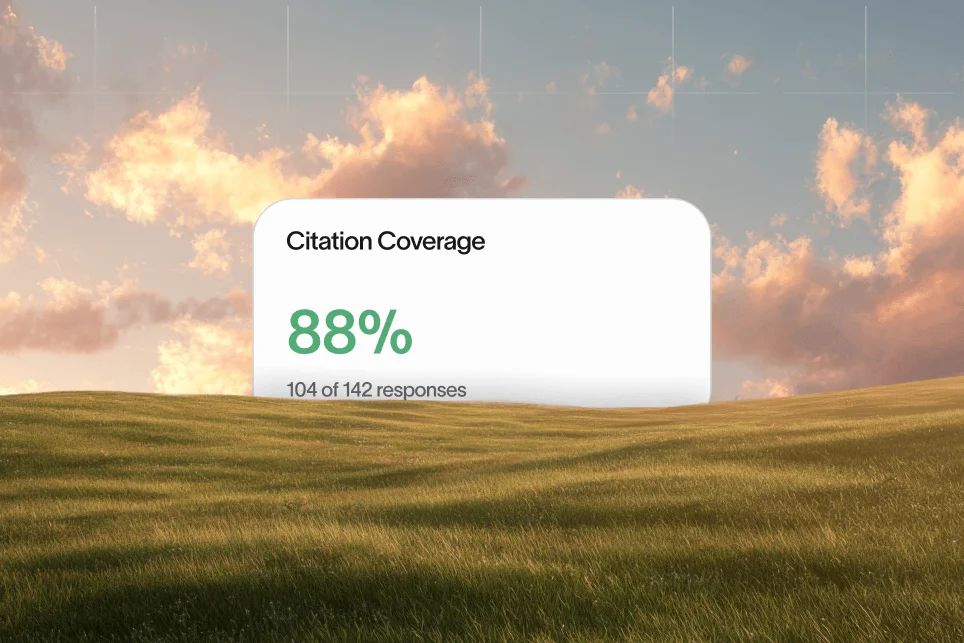
Teams that want a clearer view of how their content appears in search and AI answers can use Skayle to measure AI visibility, understand citation coverage, and tighten the workflow between content creation and ranking performance.