
TL;DR
AI drafts save time, but they rarely rank without strong editing. The pages that perform best are rebuilt around intent, evidence, structure, and conversion so they rank in Google and are easier for AI systems to cite.
AI can produce a fast first draft. It cannot publish a strong page on its own. Optimizing AI Content for Google Rankings is the editorial work that turns generic output into a page Google can rank and AI systems can cite.
The shift matters more in 2026 because search performance is no longer just a blue-link problem. As reported by The Wall Street Journal, brands are now competing for visibility across both traditional search results and AI-generated answers.
1. Why raw AI content rarely ranks on its own
Most AI drafts fail for a simple reason: they sound complete before they are actually useful. They often cover a topic broadly, but they do not satisfy the exact search intent, prove expertise, or help a reader take the next step.
A draft may be grammatically clean and still be weak in three places:
- It does not answer the main query fast enough.
- It repeats common advice without adding evidence or point of view.
- It lacks the structure that helps search engines and AI systems extract clear answers.
A concise way to frame the problem is this: AI drafts are usually good at producing language, but weak at producing editorial judgment.
That distinction matters because Google has made its position clear. According to Google Search Central, content should deliver unique value for people, offer a strong page experience, and remain accessible to search systems. The issue is not whether AI helped write the draft. The issue is whether the final page is genuinely useful.
This is also where many teams misread the opportunity. They try to optimize the prompt when the bigger win is optimizing the page. Prompt quality matters, but ranking gains usually come from editing discipline: intent matching, structure, specificity, internal linking, and proof.
The practical stance
Do not publish AI content because it looks finished. Publish it only when a human editor has made it more specific, more credible, and easier to extract than competing pages.
That is also why brand matters in an AI-answer environment. AI systems tend to pull from sources that feel trustworthy, direct, and distinct. A recognizable point of view, original examples, and clean page structure make a page easier to cite and more likely to convert after the click.
2. The 4-step editorial pass that improves rankings and citations
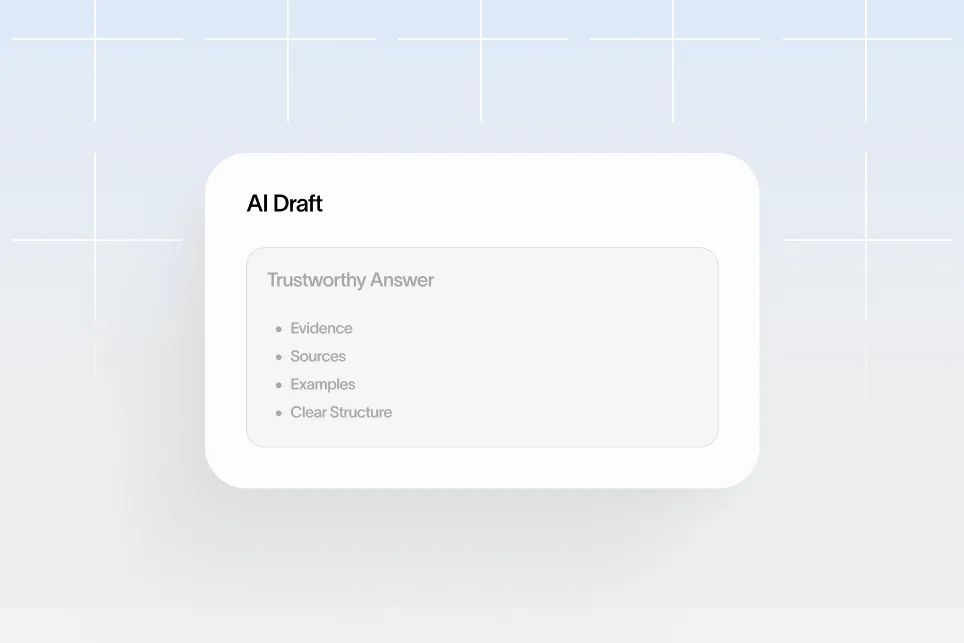
A useful way to edit AI output is a simple four-step model: intent, evidence, structure, and conversion. It is not a clever framework name. It is the minimum review pass that separates publishable content from disposable content.
Start with intent, not wording
The first question is not whether the copy sounds polished. It is whether the page matches the reason someone searched.
For this topic, the reader does not want a philosophical debate about AI writing. The reader wants practical editing steps that improve rankings. That means the page should quickly explain what to change in an AI draft, why those changes matter, and how to measure whether the edits worked.
This is where many weak articles drift. They spend 600 words defining AI content, then bury the usable guidance. Search performance suffers because the page delays the answer.
As noted by Conductor, pages that perform well for AI Overviews tend to lead with a direct, concise answer early. 20 North Marketing makes a similar point: clear headings and direct responses improve extractability.
Add evidence the model could not invent safely
The second pass is about replacing generic lines with material that carries weight.
That can include:
- A real example from a content refresh
- A specific workflow used by an editorial team
- A before-and-after rewrite
- Product screenshots or page elements described clearly
- Original observations from audits, sales calls, or SERP reviews
This article cannot claim fabricated benchmark lifts, so the better standard is process evidence. A credible page can say: baseline ranking position, intervention, target metric, timeframe, and tracking method. That is far more trustworthy than vague promises.
For example:
- Baseline: article ranks on page two for a mid-intent query and has weak engagement.
- Intervention: rewrite the introduction to answer the query in 60 words, add comparison tables, tighten headings, add FAQ, and improve internal links.
- Expected outcome: stronger click-through relevance, better extraction into AI answers, and improved movement into top results over the next 6 to 8 weeks.
- Measurement: track impressions, average position, clicks, and assisted conversions in Google Search Central documentation-aligned reporting practices and the site’s analytics stack.
Rebuild the page so answers are easy to extract
AI-assisted discovery rewards pages that are easier to parse. That means fewer vague paragraphs and more answer-ready blocks.
Useful elements include:
- Clear section headers phrased around real questions
- Short opening paragraphs that define the point quickly
- Lists and numbered steps where appropriate
- FAQ blocks with conversational wording
- Summary lines that can stand alone in search features or AI answers
According to Americaneagle.com, formatting choices such as bullet points and FAQs can improve a page’s chance of being pulled into AI-generated summaries. That does not guarantee inclusion, but it increases extractability.
Edit for conversion after the click
Many SEO teams stop at ranking signals. That is incomplete. The better path is impression to AI answer inclusion to citation to click to conversion.
That means the page should not only answer the query. It should also show why the brand behind the page deserves trust.
Practical edits here include:
- A sharper subheading under the intro that states the outcome
- Product or service examples tied to the problem being solved
- A stronger next-step CTA that offers clarity, not pressure
- More visible proof elements such as examples, comparisons, or refresh dates
For companies trying to scale this work, platforms like Skayle fit naturally here because they help teams manage the full ranking workflow, from planning and optimization to measuring how content appears in AI answers.
3. What to change in an AI draft before it goes live
This is the part most teams need: the exact editorial review moves that raise the quality ceiling.
Replace padded openings with direct answers
Weak AI drafts often start with generic context. They say the topic is important, fast-changing, or transformative. None of that helps the reader.
A stronger opening answers the query in plain language within the first 40 to 80 words. That aligns with what both users and search systems need.
Do not open with scene-setting. Open with the answer.
Bad version:
“In today’s rapidly changing digital environment, AI-generated content has become an important part of modern SEO workflows.”
Better version:
“AI content ranks when editors reshape it around search intent, add original evidence, and format the page so Google and AI systems can extract clear answers.”
That second version can stand alone in an AI answer. The first cannot.
Cut repetition aggressively
AI drafts repeat themselves because prediction models often restate a point with minor wording changes. That inflates word count without increasing usefulness.
A practical editing pass is to remove any paragraph that does one of these things:
- Restates the previous section without adding detail
- Uses abstract language instead of an example
- Defines a concept the audience already understands
- Adds throat-clearing before the real point
A leaner article usually performs better because the core answer is easier to find.
Add specificity at the paragraph level
Specificity does not require confidential data. It requires concrete language.
Instead of writing “optimize your headings,” write “rewrite the H2s so each one mirrors a real sub-question a buyer or operator would ask.”
Instead of writing “improve content quality,” write “replace generic advice with one real workflow example, one before-and-after edit, and one measurable success metric to track over 30 to 60 days.”
The difference is practical usefulness. Specific content gets bookmarked, cited, and reused.
Tighten heading logic
Headings are not decoration. They are retrieval signals.
A page with vague headings like “Best Practices” and “Conclusion” wastes opportunities to match intent. A page with headings such as “Why raw AI content rarely ranks on its own” and “What to change in an AI draft before it goes live” gives both readers and machines more precise cues.
This article follows that principle intentionally. It uses explicit headings so sections can be scanned, quoted, and extracted.
Use internal links to deepen authority
Internal links help users move deeper into a topic cluster, but they also clarify relevance. If a page discusses comparison pages, feature libraries, or AI visibility, linking to related resources strengthens topical context.
For example, teams refining product-led SEO content can borrow ideas from this comparison page guide and pair them with programmatic content planning when scaling long-tail coverage.
4. A practical checklist for editing AI content before publish
A strong editorial process needs a repeatable checklist. Not a bloated QA sheet. A short publish gate.
- Confirm the primary intent. State the main query and what the reader wants in one sentence.
- Rewrite the first paragraph. Make the answer visible within the opening 80 words.
- Remove generic filler. Cut every sentence that does not add meaning or evidence.
- Insert one original proof element. Add an example, workflow, observation, or measurable plan.
- Rebuild the headings. Make each H2 or H3 reflect a real question or decision point.
- Improve extractability. Add bullets, lists, and summary-ready passages where useful.
- Add FAQ coverage. Include the questions readers ask in Google and AI tools.
- Check conversion paths. Make sure the page leads naturally to the next step.
- Refresh links and references. Use current sources and strengthen internal linking.
- Set measurement before publishing. Track impressions, rankings, clicks, engagement, and conversions.
A mini case pattern teams can reuse
A common scenario looks like this:
- Baseline: an AI-written article covers a useful topic but sits outside the top results and brings low-quality traffic.
- Intervention: editors cut 25 to 35 percent of repetitive copy, move the answer to the top, add a concise FAQ, rewrite headings around search intent, and insert one product-relevant example.
- Expected outcome: better alignment with query intent, higher extractability for AI summaries, and stronger conversion quality over a 4 to 8 week window.
- Measurement plan: compare pre- and post-refresh performance in clicks, average position, engagement time, assisted signups, and citation appearances where tracked.
The value of this pattern is not that it guarantees a ranking jump. It creates a defensible testing loop. Teams learn which edits change visibility and which ones just change wording.
5. Common mistakes that keep AI-written pages stuck
The most expensive mistakes are usually not technical. They are editorial.
Publishing drafts that sound polished but say nothing
This is the standard failure mode. The page reads smoothly, but every paragraph could have appeared on 20 other sites.
That is exactly the kind of content that struggles in both search rankings and AI citations. Microsoft notes in its article on optimizing content for inclusion in AI search answers that visibility depends on producing content that stands out as useful in AI search environments, not just content that exists.
Chasing volume over authority
A contrarian but practical position is this: publishing more AI content is often the wrong answer; publishing fewer, better-edited pages is usually the right one.
The tradeoff is obvious. Volume can expand coverage, but low-distinction pages rarely build authority. In many SaaS markets, a smaller set of high-utility pages will outperform a large batch of thin AI drafts.
This is especially true for product-led searches, comparison pages, and bottom-funnel educational content where credibility matters. Skayle’s own content direction reflects this bias toward ranking systems and measurable visibility, not content volume for its own sake.
Ignoring design and readability signals
A page can contain strong information and still underperform because it is tiring to read. Dense paragraphs, weak subheads, and cluttered layouts reduce usability.
Good design choices support search outcomes indirectly by helping readers complete the page, find the answer, and trust the source. That means:
- 1 to 3 sentence paragraphs
- visible section hierarchy
- bullets where steps need to be scanned
- tables for comparisons
- FAQ blocks near the end
These are not cosmetic touches. They help readers process information faster, and they help AI systems identify answer-worthy segments.
Measuring rankings without measuring business impact
A page that climbs from position 18 to 9 but attracts poor-fit traffic is not a real win. The better review asks whether the content improves qualified traffic and conversion quality.
That requires tying content metrics to business outcomes. At minimum, teams should monitor:
- impressions and clicks
- average position for the target cluster
- engagement depth
- assisted conversions
- demo, trial, or lead quality from organic sessions
Treating AI visibility as separate from SEO
That split is becoming less useful. Socium Media argues that optimization now needs to account for both Google AI search behavior and discovery across tools such as ChatGPT. The practical takeaway is simple: pages should be written to rank and to be cited.
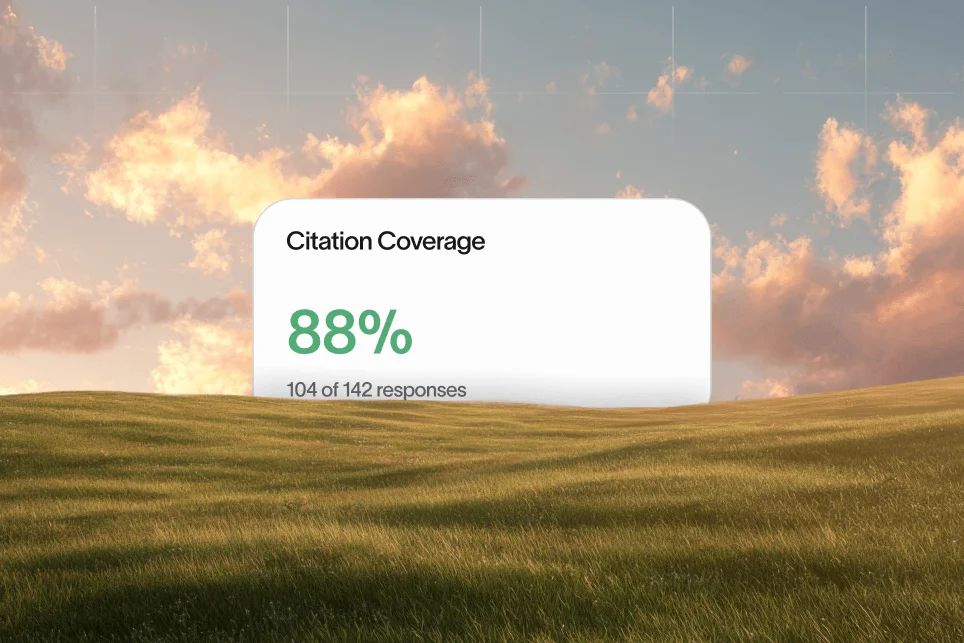
That means clear definitions, structured answers, and source-worthy specificity. Teams that want a more direct view into this shift should measure how often their brand appears in AI-generated responses and where coverage gaps exist.
6. The questions teams ask when refining AI-assisted content
How much of an AI draft should be rewritten?
There is no fixed percentage. If the draft matches intent and has a usable structure, the editor may only need to tighten the opening, add evidence, and improve headings. If the draft is generic, the rewrite may be substantial.
A good rule is that every published section should contain something more useful than what a generic model could generate from public summaries.
Does Google penalize AI-generated content?
Google’s public guidance focuses on content quality, originality, and usefulness rather than whether AI assisted in drafting. As explained by Google Search Central, the main issue is whether the content serves people well and offers unique value.
What makes AI-written content more likely to appear in AI Overviews?
Pages are more likely to be extracted when they answer the question directly, use clear heading structure, and present information in concise, well-formatted blocks. Sources such as Conductor, 20 North Marketing, and Americaneagle.com all emphasize direct answers, strong formatting, and FAQ-style clarity.
Should teams prioritize freshness or depth when updating AI content?
For most SaaS topics, depth and clarity beat shallow freshness updates. A changed date alone rarely improves rankings. A better update rewrites outdated sections, adds missing subtopics, improves internal linking, and reflects the current SERP.
How should performance be measured after optimization?
The cleanest method is before-and-after tracking across one defined window, usually 30 to 60 days. Record baseline impressions, clicks, average position, conversions, and any available AI visibility signals before publishing the refresh.
FAQ
What is the main goal of optimizing AI content for Google rankings?
The main goal is to turn a fast but generic AI draft into a page that matches search intent, offers unique value, and is easy for Google to understand and rank. In 2026, that also means making the content easy for AI systems to cite in generated answers.
What should editors fix first in an AI draft?
The first fix is usually the introduction. Most AI drafts bury the answer, so editors should move the core response into the first paragraph, then clean up heading structure and remove repetition.
Can AI-written content rank without human editing?
It can, but it is unreliable. Pages that rank consistently usually have stronger intent alignment, clearer structure, better internal linking, and more specific examples than raw AI output provides.
Are FAQs still useful for SEO and AI visibility?
Yes, when they answer real questions in direct language. FAQs can improve coverage of conversational queries and make information easier for AI systems to extract, especially when the answers are concise and specific.
How often should AI-generated content be refreshed?
That depends on the topic and competition level, but most important pages should be reviewed on a regular schedule. Refresh when rankings stall, citations drop, product details change, or the SERP starts favoring a different angle.
Raw AI output is a starting point, not a ranking asset. The pages that win are edited for intent, evidence, structure, and conversion, then measured against both search performance and AI visibility.
For teams building a repeatable process around Optimizing AI Content for Google Rankings, the next step is to make visibility measurable. Skayle helps SaaS teams plan, optimize, and maintain content that ranks in Google and shows up in AI answers, with a clearer view into citation coverage and execution quality.
References
- The Wall Street Journal: AI Is Rewriting the Old Rules of Google Search and SEO
- Google Search Central: Top ways to ensure your content performs well in Google’s AI experiences
- Microsoft Advertising: Optimizing Your Content for Inclusion in AI Search Answers
- Conductor: How to Optimize Content for Google’s AI Overviews
- 20 North Marketing: How to Optimize Content for AI Overviews
- Americaneagle.com: How to Optimize Your Content to Rank in Google AI Overviews
- Socium Media: 2025 SEO Strategy: How to Optimize for AI Search LLMs
- AI Visibility vs Google Rankings Are We Optimizing for the …
- Frase — The Agentic SEO & GEO Platform