
TL;DR
LLM-ready feature pages are built for extraction: clear questions, entity-rich sections, proof in steps/tables, and schema that matches visible Q&A. Use a consistent page template, add FAQPage schema where appropriate, then measure citations → clicks → conversions over a 6-week window.
Most SaaS feature pages are written for humans skimming, then shipped with markup that makes extraction harder than it should be. In 2026, that mismatch costs visibility in AI answers and weakens conversion because prospects arrive with half the context missing.
An LLM-ready feature page is a product page whose structure and schema let AI systems extract what the feature does, who it’s for, and what makes it different—without guessing.
What “LLM-ready” means for a SaaS feature page in 2026
A feature page used to have one job: rank for a feature-adjacent keyword and push a demo CTA. That’s still true, but it’s incomplete.
Now the page also needs to succeed at an earlier step: being understood by systems that generate answers.
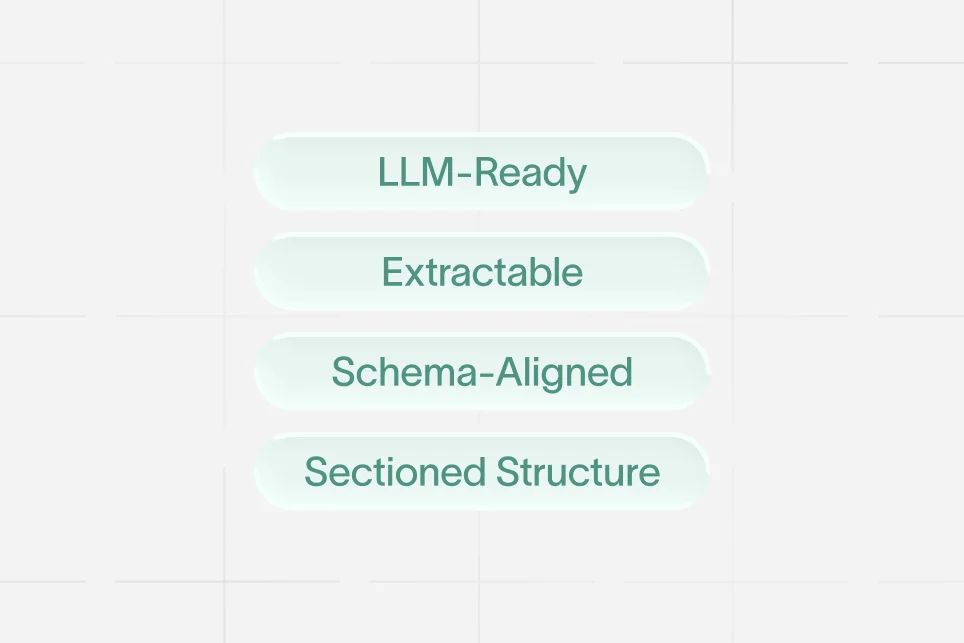
In practice, “LLM-ready feature pages” means the page is:
Extractable: clear section boundaries, consistent headings, short paragraphs, lists, and tables.
Unambiguous: the feature name maps to a concrete capability, not a slogan.
Entity-complete: it names the jobs-to-be-done, integrations, user roles, and constraints that people actually ask about.
Machine-signaled: schema matches the content that’s visible on the page.
This is not “write for robots.” It’s “publish in a format that can be quoted accurately.”
Point of view: feature pages should be written like specs, not narratives
Feature pages that win AI citations tend to read like a concise product brief: what it does, how it works, limits, setup, and comparison points.
The contrarian move is to stop optimizing for impression and start optimizing for extraction. The tradeoff is less “brand poetry” and more explicitness—but explicitness is what gets cited.
Why this matters now: the funnel starts before the click
A growing share of discovery happens inside answers.
The new path to design for is:
impression → AI answer inclusion → citation → click → conversion
If the page doesn’t support inclusion and citation, it loses the highest-leverage impression: the one where a model is deciding what sources to trust.
The minimum technical baseline (so AI systems can read the page)
A feature page can have great copy and still be “LLM-hostile” because it’s noisy or poorly structured.
Several LLM optimization guides converge on the same foundation: clear heading hierarchy, short blocks, bullet lists, and tables for comparisons. The guidance in Averi AI’s LLM-optimized content guide and Flow Agency’s LLM SEO best practices is consistent on this point.
Separately, content also needs to be cleanly processable: avoid templated noise, keep text encoded and readable, and reduce repeating elements that bury the main content. That data-prep angle is emphasized in Scrape.do’s guide to LLM-ready data.
The Feature Page Extraction Ladder (a model teams can reuse)
To make feature pages consistently “understandable,” it helps to use a simple model that can be applied across dozens of pages.
The Feature Page Extraction Ladder has four rungs:
Define the question the page should answer.
Name the entities that make the answer specific.
Prove the claims with constraints, steps, and examples.
Signal the structure with schema that mirrors the page.
A team can ship beautiful pages that rank and still fail rung #1 and #2. Those pages show up in search, but AI systems paraphrase them badly or skip them.
Rung 1: define the “one question” the page owns
A feature page should own one primary question and a small set of follow-ups.
Examples:
“How does automated invoice matching work in practice?”
“What does SOC 2 evidence collection actually look like day-to-day?”
“How do routing rules differ from sequences?”
This is not the same as a keyword. It’s the answer the feature page must provide clearly.
Rung 2: name the entities that stop the model from hallucinating
Models default to generic summaries when a page is vague.
Feature pages that get cited tend to be entity-rich in a practical way:
User roles: admin, analyst, sales ops, finance controller.
Objects: tickets, invoices, leads, events, tables.
Integrations: CRM, data warehouse, email provider.
Constraints: rate limits, permissions, audit logs, deployment modes.
Alternatives: manual process, spreadsheets, incumbent tool category.
This is also where internal linking matters. If a “Workflow Automation” feature page mentions Salesforce, it should link to a deeper integration page or a short explanation hub so the entity has context on-site.
Rung 3: prove claims with steps, boundaries, and comparisons
A feature page that says “automate everything” is not cite-worthy.
A cite-worthy version shows:
What the feature does and does not do
The simplest “happy path” setup
A short example workflow
A comparison table against the common alternative
This maps to extractable formats like steps, FAQs, and tables, which Averi AI calls out as proven patterns.
Rung 4: signal the structure with schema (but only if it’s true)
Schema is a signal, not a magic trick.
The goal is alignment: if the page contains Q&A, mark it as Q&A. If the page is describing a product capability, ensure the organization and product identity are clear.
Flow Agency explicitly warns that incorrect or misleading schema can backfire. The same principle applies to LLM-ready feature pages: schema should help extraction, not create contradictions.
Step 1: Define the extraction target (jobs, entities, and comparisons)
This step is where most teams rush. They pick a feature name, write copy, and only then think about what questions buyers ask.
Flip it.
1) Pick the primary “buyer question” and two secondary questions
Use real sales calls, support tickets, and competitor comparisons.
A tight set looks like:
Primary: “How does event-based routing work?”
Secondary: “What data does it need?” and “How is this different from round-robin?”
This aligns with the Q&A-based approach recommended by Wildcat Digital’s LLM-friendly formats writeup, which emphasizes question-first structuring for extraction.
2) List the entities the model must not get wrong
Before writing, create a short “entity list” for the page.
Example for a feature like “Audit Logs”:
Roles: admin, auditor
Objects: events, user actions, API calls
Outputs: export CSV, filters
Constraints: retention period, PII redaction
Adjacent features: SSO, RBAC
If these entities aren’t on the page, the model will either omit them or infer them.
3) Decide the comparison the market will force anyway
Every feature page is compared, even when the page doesn’t mention competitors.
Good comparison anchors include:
Manual process vs feature
“Basic feature” vs “advanced mode”
Adjacent category that buyers confuse it with
A short table often does more work than an extra 400 words of benefit copy.
4) Write a one-paragraph “definition block” to anchor citations
This is the paragraph that AI systems can quote.
Template:
[Feature] is [capability] that helps [role] achieve [outcome] by [mechanism]. It works best when [conditions] are true and is not designed for [non-goal].
Keep it short and precise. The “40–60 word answer” pattern is recommended in 1702 Digital’s LLM-ready content guide.
Step 2: Build the page in extractable chunks (headings, bullets, and tables)
If a page is hard to skim, it’s hard to extract.
The mechanical goal: make each section a clean unit that can be lifted into an answer without requiring the rest of the page.
Use a strict heading hierarchy (and don’t waste H2s)
Heading structure is not cosmetic. It’s an extraction map.
Both Averi AI and Flow Agency stress descriptive H1→H2→H3 hierarchy as a core best practice.
For a feature page, a practical hierarchy looks like:
H1: Feature name + concrete outcome
H2: What it does
H2: How it works (steps)
H2: What you can build with it (examples)
H2: Limits and requirements
H2: Comparison table
H2: FAQs
Avoid clever headings like “Power, unleashed.” They read well, but they don’t delimit meaning.
Keep paragraphs short and place lists where decisions happen
Chunking is not just about readability. It’s about reducing the chance that a model blends two ideas together.
A practical rule from Averi AI’s chunking guidance: keep paragraphs to 3–5 sentences and use bullets and tables for structured information.
Where lists matter most on feature pages:
Supported inputs and outputs
Required permissions
Setup steps
Pricing gating (what plan includes it)
“Works with” integrations
Add at least one “decision table” per feature
Feature pages often fail because they don’t help the buyer decide.
A table gives the buyer and the model a crisp representation.
Example table structure (keep it simple):
Question | Option A | Option B |
|---|---|---|
Best for | … | … |
Setup time | … | … |
Requires admin | … | … |
Auditability | … | … |
Tables are repeatedly called out as an extractable format by Flow Agency because they reduce ambiguity.
Put the “how it works” in numbered steps, even if the UI is complex
Many feature pages describe outcomes but hide the mechanism.
Mechanism is what gets cited.
A strong “how it works” block:
Define the trigger (event, schedule, webhook).
Normalize the input (fields, validation).
Apply rules (routing, enrichment, scoring).
Write outputs (ticket update, CRM field, notification).
Log the result (audit trail).
This is also where Skayle’s broader technical guidance can matter: when rendering, canonicals, and schema validation are off, extraction suffers even if the copy is good. For deeper technical checks, see crawl and extract fixes.
Common mistakes that make feature pages “uncitable”
These problems show up repeatedly in audits:
Multiple features on one URL: models can’t separate the capabilities.
Scrolling animations that hide text until interaction: content isn’t reliably present for all parsers.
Headings that don’t describe the section: extraction boundaries fail.
Testimonials as the only proof: they don’t explain mechanism.
Screenshots without labels: images become opaque blobs to many pipelines.
To make visuals more machine-friendly, Scrape.do notes that structured representations (captions, labels, relationships) improve downstream usability.
Step 3: Implement schema + Q&A blocks that earn citations
A feature page can be cleanly written and still lose citations if it doesn’t provide answer-shaped blocks that match real prompts.
This step focuses on two levers: Q&A formatting and schema alignment.
Use Q&A blocks that mirror how buyers ask questions
A strong FAQ section on a feature page is not “What is X?” repeated five times.
It is:
“Does [feature] work with [integration]?”
“What permissions does it require?”
“How is data stored and retained?”
“What breaks if this is turned off?”
“What’s the fastest way to set it up?”
1702 Digital recommends placing FAQs after the main content and writing concise answers that can be lifted into snippets and AI summaries.
Add FAQPage schema only when the Q&A is real and visible
There is one external benchmark worth using carefully: Wildcat Digital cites a July 2025 Relixir study where pages with FAQPage schema achieved a 41% citation rate versus 15% without schema.
That is not a guarantee, and it’s not a reason to spam schema. It is a reason to:
Create Q&A that matches real questions.
Keep answers short and unambiguous.
Mark up the same content with FAQPage schema.
JSON-LD example: FAQPage for a feature page
This snippet is intentionally minimal. The content in the schema must match what is visible on the page.
{
  "@context": "https://schema.org",
  "@type": "FAQPage",
  "mainEntity": [
    {
      "@type": "Question",
      "name": "Does Audit Logs include API activity?",
      "acceptedAnswer": {
        "@type": "Answer",
        "text": "Audit Logs typically record key user actions and, when enabled, can also record API calls. Check whether your plan includes API event retention and whether sensitive fields are redacted before export."
      }
    }
  ]
}
For a deeper structured-data approach tied to AI citations, Skayle has a practical guide to schema for citations.
Don’t misuse Product schema on a feature page
Many SaaS sites mark every feature page as a Product.
That can be misleading if the “product” is the overall SaaS, not the individual capability. When schema doesn’t match the user-visible meaning of the URL, it creates contradictions.
Instead, keep the feature page focused on:
Clear organization/product identity
Q&A markup when appropriate
How-to style steps (in-page, even without HowTo schema)
This “match schema to content type” principle is consistent with the schema cautions in Flow Agency’s LLM SEO best practices.
Ship checklist (use this before publishing)
Use this to standardize LLM-ready feature pages across a site:
One feature per URL, with one primary buyer question.
A definition block that fits in ~60 words.
H2s that describe meaning (not marketing).
A “how it works” section with numbered steps.
At least one decision table.
Requirements and limits stated explicitly.
An FAQ section with 5–8 real questions.
FAQPage schema that matches the visible Q&A.
Internal links to integration pages, docs, and adjacent features.
A measurement plan for citations, clicks, and conversions.
If the page fails any one of these, it often still ranks—but it is less likely to be cited accurately.
Step 4: Design for citations, then measure from citation to demo
Citation is not the finish line. A cited feature page that doesn’t convert is still a loss.
This step focuses on two outcomes:
Higher likelihood of inclusion/citation.
Higher conversion quality once the click happens.
Put “proof of capability” above the fold (not just benefits)
AI systems cite sources that look authoritative. Buyers convert on pages that reduce risk.
Feature pages should show proof early:
Supported systems (integrations, file types, APIs)
Data handling boundaries (retention, exports, logging)
Setup requirements (roles, permissions)
This is also where short, structured “capability bullets” outperform long paragraphs. Both Averi AI and 1702 Digital emphasize concise, answer-shaped formatting.
Make the click worth it: align the page to the question that triggered the citation
When a user clicks a citation, they arrive with a very specific intent.
If the citation was about “role-based permissions,” the landing section should not be a hero about “delighting teams.” It should immediately confirm:
Yes, RBAC exists.
Here is what roles can do.
Here is how to configure it.
Here is what is logged.
That alignment reduces pogo-sticking and improves conversion quality because the visitor’s mental model matches the page.
Measurement plan: track prompts, citations, and downstream behavior
Because the platform landscape shifts, the safest “proof” to rely on is measurement.
A concrete plan for LLM-ready feature pages:
Baseline: pick 20–50 prompts tied to high-intent feature questions (setup, limits, comparisons).
Visibility: record whether the brand is mentioned and whether the feature page is cited.
Click-through: track entry sessions to that feature URL.
Conversion: track demo starts, trial starts, or qualified lead events from those sessions.
Iteration window: re-check weekly for 6 weeks after major edits.
This is where teams often discover a gap: ranking does not guarantee citation. Skayle covers the mechanics of finding those gaps in citation coverage analysis.
Troubleshooting: why a clean feature page still doesn’t get cited
When a page is well-written but still isn’t included, the cause is often structural.
Common blockers:
The page answers the question indirectly (too much positioning, not enough mechanism).
The page hides key details behind tabs or accordions that don’t render reliably.
The page’s Q&A exists but answers are long and hedged.
Schema is present but mismatched to the visible content.
The site has crawl/extraction issues at the template level.
On the technical side, rendering, canonicals, and structured data validation can determine whether the content is eligible to be extracted at all. Skayle’s technical checklist for AI Overviews eligibility pairs well with feature page work.
Internal linking opportunities that improve extraction
Feature pages should not be islands.
Practical internal links that help both humans and models:
From feature → relevant integration (anchors the entity)
From feature → use case (anchors the job-to-be-done)
From feature → docs/how-to (anchors setup steps)
From feature → comparison page (anchors market category)
The key is consistency: use predictable anchor text and avoid link clusters that look like navigation noise.
A proof pattern that doesn’t require invented numbers
A usable proof block for a feature page can be built without fabricated stats.
Structure it like this:
Baseline: the page ranks for feature keywords but is not cited for tracked prompts; visitors bounce after reading the hero.
Intervention: add a definition block, a numbered “how it works,” one decision table, and an FAQ section with FAQPage schema.
Outcome (measured): monitor whether citations appear on tracked prompts and whether entry-session conversion events increase.
Timeframe: evaluate after 2, 4, and 6 weeks.
This is more credible than “conversion doubled,” and it creates a repeatable measurement discipline.
FAQ
What’s the fastest way to make an existing feature page LLM-ready?
Start by rewriting headings so each H2 describes a concrete section (“How it works,” “Requirements,” “Limits”), then add a 40–60 word definition block and a short FAQ. Averi AI recommends restructuring and adding extractable formats before rewriting everything.
Should every SaaS feature page have FAQPage schema?
Only if the page contains real Q&A that is visible to users and directly answers buyer questions. The Relixir benchmark cited by Wildcat Digital suggests schema can improve citation rates, but mismatched schema can also create trust issues.
How long should answers be in a feature-page FAQ?
Keep each answer to roughly 40–60 words when possible and lead with the direct response in the first sentence. That snippet-ready approach is recommended by 1702 Digital.
What content formats get cited most on feature pages?
Clear definitions, numbered steps (“how it works”), comparison tables, and concise Q&A tend to be easiest for models to lift accurately. These formats are highlighted as extractable in both Flow Agency and Averi AI.
Do screenshots help or hurt LLM readability?
Screenshots help humans but can become noise for machine pipelines if they lack captions and surrounding explanation. For better machine usability, Scrape.do recommends clean text and structured descriptions so visuals don’t replace critical information.
Feature pages are now part of the citation layer of the funnel, not just the conversion layer. To see where AI engines already cite competitors and where feature pages are missing, teams can measure their AI visibility and then prioritize fixes that improve extraction, citations, and qualified clicks.