
TL;DR
A strong content refresh strategy helps SaaS teams catch AI Overview traffic declines before rankings collapse. The main signals are weakening clicks on high-value pages, intent drift, thin proof, weak formatting, stale examples, stronger competitors, and disconnected reporting.
Search declines rarely happen all at once. In 2026, the first signs usually show up in pages that still rank decently in Google but stop getting cited, summarized, or clicked when AI Overviews begin answering the query before the visit.
That is why a content refresh strategy now has to do more than update dates and swap screenshots. It has to identify which pages are losing relevance, clarity, and citation value before the traffic line falls far enough to trigger panic.
A practical definition helps here: a content refresh strategy is the process of updating existing pages to preserve rankings, improve citation quality, and maintain visibility in both classic search and AI-generated answers.
The business case is straightforward. Refreshing old winners is often a better use of time than publishing another net-new article that has to earn authority from zero. As noted by Marketing Rewired, refreshing existing content can outperform new campaigns on ROI because the page already has history, relevance signals, and some level of authority.
For SaaS teams, that matters because AI answers change the funnel. The page is no longer competing only for a blue-link click. It is competing for a path that looks more like this: impression, AI answer inclusion, citation, click, conversion. If the page stops being easy to summarize or trust, the click opportunity shrinks even when rankings appear stable.
A useful way to diagnose this is the refresh signal review: look at performance decline, intent drift, evidence gaps, formatting weakness, and citation loss. If two or more show up on the same page, the page should move to the top of the refresh queue.
Why aging pages lose AI visibility before they lose rankings
Many teams still treat search decline as a rank-tracking problem. That misses what has changed. A page can hold a respectable position and still lose traffic because the search result now satisfies more of the query directly.
This is the core shift in 2026: search visibility and click visibility are no longer the same thing.
According to Sitebulb’s guide on improving search and AI visibility, content refreshes now play a direct role in protecting and improving visibility in AI-driven search environments. That aligns with what SaaS operators are seeing in practice: pages decay as answer sources before they disappear as ranked URLs.
Several patterns usually cause that decay:
- The page is still relevant to the keyword but no longer the clearest answer.
- Competitors have added fresher examples, stronger definitions, or tighter formatting.
- The content lacks proof, so AI systems favor other pages that feel more trustworthy.
- The search intent has narrowed, but the page still reads like a broad explainer.
- The article has not been restructured for extractable answers, so it gets skipped in summaries.
This is where a modern content refresh strategy differs from a cosmetic update. The goal is not just to make the article newer. The goal is to make it easier to trust, easier to quote, and easier to click.
That is also why teams should avoid the lazy response of publishing duplicate articles around the same keyword. Don’t create a second page to chase lost traffic. Refresh the existing page if it already has authority. Splitting topical equity across overlapping URLs often weakens both pages.
For a broader look at how search has shifted, Skayle has covered the bigger picture in its guide to SEO. The important point here is simple: authority compounds, but neglected authority decays.
1. Traffic falls on pages that used to carry weight
The first and clearest trigger is a decline on URLs that have already proven they can rank and attract visits. These are not random blog posts with low baseline performance. They are pages that once pulled steady impressions, clicks, leads, or assisted conversions.
As JS Interactive notes, teams should prioritize assets that already carry weight rather than trying to refresh every page. That is the right triage logic. A page with existing authority can often recover faster than a new page can grow.
What this looks like in practice
A SaaS company has a comparison page ranking in the top five for a valuable mid-funnel query. For six months, it drove a consistent stream of demo-assist traffic. Then clicks decline over eight weeks, even though average position only moves slightly.
That pattern usually points to a visibility shift above the click. In other words, the page may still be discoverable, but it is no longer winning the summary layer.
What to check first
- Compare clicks, impressions, and average position over the last 90 days.
- Look for a bigger click decline than ranking decline.
- Review whether branded queries, non-branded queries, or both have weakened.
- Check if the page supports pipeline or trial starts, not just traffic.
What a strong refresh should change
The page needs sharper definitions, updated examples, clearer subheadings, and evidence that it is still current. If the page once converted but now underperforms, the refresh should also tighten the click-to-conversion path. That may mean improving CTA placement, cleaning up the opening section, or replacing generic claims with actual product-specific context.
A practical measurement plan looks like this: baseline click-through rate, baseline assisted conversions, baseline query set; then track 30, 60, and 90 days after refresh. The expected outcome is not instant rank movement. It is restored click efficiency and better citation likelihood.
2. Query intent has shifted, but the page still answers the old question
Search demand changes quietly. The keyword may remain the same, but what users want from the result can move from educational to comparative, from broad to narrow, or from SEO-only to AI-visibility-focused.
When that happens, an article that once matched intent starts to feel one version behind the market.
This is especially common in SaaS SEO topics. A page written to explain content optimization in 2024 may still bring impressions in 2026, but if searchers now expect guidance on AI Overviews, answer citations, or content freshness signals, the old angle underperforms.
Signs of intent drift
- The top results now include more recent examples and AI visibility language.
- The old page has high-level education but weak decision support.
- Time on page falls because the answer arrives too late.
- The page title still targets the keyword, but the body no longer matches what the SERP rewards.
The contrarian move
Many teams respond by adding a few new paragraphs at the bottom. That is usually not enough. Do not bolt on an AI section to an outdated article. Rebuild the page around the current search intent.
That means revising the opening, changing the order of sections, updating the examples, and making the article useful for the real query behind the term.
This is also where internal linking matters. If the page touches AI answer visibility, it can naturally point readers to this playbook on recovering AI Overviews traffic. The link works because it extends the topic instead of forcing a detour.
3. The page has facts, but no proof worth citing
AI systems prefer content that feels reliable, concrete, and easy to quote. That does not require original research on every page, but it does require stronger evidence than vague advice.
A common failure pattern is the page that says the right things in generic language:
- update your content regularly
- improve your headings
- add relevant keywords
- keep information current
None of that is wrong. It is just weak.
What stronger proof looks like
A page becomes more citable when it includes:
- one-sentence definitions that stand alone
- concise lists that map directly to a question
- before-and-after examples
- dated source attributions where factual claims appear
- scenario-based explanations tied to outcomes
Content Writers notes that content refreshes can introduce new keywords that improve search rankings and reader visibility. That matters, but the important editorial takeaway is broader: a refresh should add information density, not just freshness signals.
Mini case shape to use during refreshes
Baseline: a page ranks and earns impressions but its click-through rate drops.
Intervention: tighten the intro, add an explicit definition, update screenshots, include a current example, and restructure weak sections into scannable answer blocks.
Expected outcome: the page becomes easier for search engines and AI answer systems to interpret, summarize, and cite over the next one to three crawl cycles.
Timeframe: review 30 to 90 days after republication, depending on crawl frequency and page authority.
This is also where teams should guard against thin AI-written updates. If a refresh adds volume but lowers trust, it can make the page worse. Skayle’s perspective on avoiding low-quality outputs is useful in this piece on AI slop.
4. Formatting is readable for humans, but not extractable for answer engines
A surprising number of traffic losses come from pages that are “good enough” editorially but weak structurally. They are long, dense, and thoughtful, but they bury the answer.
In classic search, a well-written essay could still win. In AI-assisted search, pages need extractable units of meaning.
The refresh elements that increase extractability
As documented by Virayo’s content refresh checklist, a strong refresh often includes updated text, new keywords, and optimized headlines or images. For AI visibility, the editorial equivalent is to make the page easier to parse:
- Put the answer early.
- Use direct H2s and H3s.
- Break out definitions into short paragraphs.
- Turn dense sections into ordered lists where appropriate.
- Update stale images that no longer support the text.
- Remove redundant intros that delay the useful part.
Common formatting problems that predict decline
- Headings are clever but unclear.
- Paragraphs run six to eight sentences.
- Every section starts with filler before reaching the point.
- Definitions are implied instead of stated directly.
- Examples are too general to quote.
Design and conversion implications
This is not only an SEO issue. It also affects what happens after the click. If the article is hard to scan, users bounce faster, and the page sends weaker satisfaction signals. If the CTA sits below a wall of unfocused content, conversions fall even when traffic holds.
A practical fix is to redesign key pages for a two-layer read: a fast skim for answer-seekers and a deeper path for evaluators. That means cleaner headings, stronger summary blocks, clearer internal links, and conversion paths that align with the query intent.
5. Competitors now answer the query more clearly than the original winner
Content decay is relative. A page does not need to become bad to lose traffic. It only needs to become less useful than the alternatives.
That is why refresh decisions should always include comparative review. A page may still be accurate, but if competing results now offer tighter definitions, stronger examples, fresher screenshots, or more direct buyer guidance, the old page loses its edge.
What a comparison pass should assess
- Does the page answer the question in the first 100 words?
- Does it include a clear point of view instead of generic neutrality?
- Does it reflect the way the market talks in 2026?
- Does it support the next action a visitor wants to take?
- Does it include evidence or only assertions?
Uproer emphasizes the identification step in refresh work, and that is the right focus. Teams often spend too much time rewriting low-value pages and too little time reviewing where competitors have structurally pulled ahead.
What not to do
Do not respond by copying rival headings and adding more words. Volume is not the fix. Clarity is the fix.
A better refresh replaces generic coverage with differentiated coverage. For example, a page on content refreshes should not stop at “update old posts.” It should explain how AI Overview traffic drops can appear before ranking losses and what signals to monitor first. That is more useful, more specific, and more citable.
6. The page is current on paper but stale in examples, screenshots, and terminology
One of the most misleading situations is a page with a recent publish date but outdated substance. Teams change the timestamp, tweak a sentence, and assume the page is fresh.
Readers and search systems are both better at spotting shallow updates than many teams assume.
Staleness signals that matter
- Screenshots show old product interfaces.
- Examples reference outdated workflows.
- The page ignores terms now standard in the category.
- The advice reflects pre-AI-search assumptions.
- The recommendations no longer match how buyers evaluate tools.
This matters because freshness is often interpreted through context, not just timestamps. If a page claims to be updated for 2026 but still talks like a pre-AI SERP article, it creates trust friction.
A practical refresh checklist for this trigger
- Replace screenshots older than 12 months if the interface has materially changed.
- Update terminology to match current search behavior and buyer language.
- Add one current scenario or use case from the last two quarters.
- Remove sections that no longer reflect how the problem is solved today.
- Recheck titles and headings so they reflect the page’s real angle.
The upside of this work is bigger than visual accuracy. Fresh examples increase perceived authority, which improves both conversion confidence and citation likelihood.
7. Reporting shows the drop, but the team cannot explain the cause
The final trigger is organizational rather than editorial. A page starts sliding, dashboards show weaker clicks, and no one can say whether the issue is rankings, SERP layout changes, intent drift, or citation loss.
That is a reporting problem, not just a content problem.
What disconnected reporting usually looks like
- Search Console data lives in one place.
- Conversion data lives somewhere else.
- Content owners track updates manually in spreadsheets.
- No one records what changed on the page and when.
- AI visibility is discussed anecdotally, not measured.
When reporting is fragmented, refresh decisions become reactive. Teams chase symptoms instead of causes.
What better operational discipline looks like
Every important page should have:
- A baseline set of performance metrics before any update.
- A simple record of what changed during the refresh.
- A review window at 30, 60, and 90 days.
- A distinction between ranking change and click loss.
- A way to monitor whether the brand still appears in AI-generated answers for target topics.
This is one place where a platform can help if it connects ranking work with AI answer visibility. Skayle fits naturally here as a platform that helps companies rank higher in search and appear in AI-generated answers, while keeping content operations tied to measurable visibility rather than disconnected reports.
How to run a refresh cycle without wasting the quarter
A strong content refresh strategy is selective. It does not start with every old URL in the library. It starts with the pages where a fix is likely to produce a business result.
A practical 5-step review process
- Pull the winners first. Start with pages that historically drove meaningful traffic, signups, demos, or assisted conversions.
- Separate rank loss from click loss. If clicks fall faster than average position, investigate AI summary displacement and SERP changes before assuming a ranking problem.
- Check intent match. Compare the page’s opening and structure against what the current results now prioritize.
- Upgrade proof and extractability. Add clear definitions, short answer blocks, examples, and updated evidence.
- Measure the refresh like a campaign. Record the baseline, update date, exact edits, and outcome over 30 to 90 days.
This process works because it forces prioritization. It also prevents the common mistake of treating every underperforming page as a rewrite project. Some pages need a full repositioning. Others need only structural cleanup, fresher examples, and stronger answer formatting.
The practical lesson from the external guidance is consistent. Sitebulb, Virayo, and JS Interactive all point in the same direction: focus on valuable pages, update what materially affects relevance, and treat refreshing as a performance lever rather than a housekeeping task.
Common refresh mistakes that make the drop worse
The biggest losses often come after the team has already noticed a decline and acted too quickly.
The most common errors
Refreshing low-value pages first. Teams start with easy wins instead of high-impact URLs. That creates activity, not recovery.
Adding fluff instead of clarity. Longer does not mean better. If the update buries the answer further, it weakens the page.
Changing the URL unnecessarily. A refresh should usually preserve the original asset unless there is a strong structural reason to split or consolidate.
Ignoring conversion paths. A page can regain clicks but still underperform if the post-click experience is weak.
Failing to document changes. Without a before-and-after record, teams cannot learn which edits actually improved visibility.
Publishing shallow AI updates. Fast rewrites that remove nuance and proof can lower trust. That is exactly the kind of issue covered in this guide on avoiding AI slop.
The right standard is simple: every refresh should make the page more accurate, more useful, and more quotable.
FAQ: what teams usually ask before refreshing declining pages
How often should a high-performing page be reviewed?
High-performing pages should usually be reviewed quarterly, with lighter checks monthly for traffic, click-through rate, and query changes. Pages tied to revenue, product comparisons, or rapidly changing search behavior should move to the front of the queue.
Is a traffic drop always a sign that the page needs a refresh?
No. Some drops come from seasonality, demand changes, or shifts in branded search volume. A refresh makes sense when the page shows declining click efficiency, outdated substance, weaker intent alignment, or lost usefulness relative to competing results.
What is the difference between a content refresh and a full rewrite?
A refresh improves an existing asset while preserving its authority and URL history. A full rewrite changes the substance so heavily that the page is essentially rebuilt around a new angle, though it may still live on the same URL.
Can rankings stay stable while AI traffic declines?
Yes. That is one of the clearest patterns in AI-influenced SERPs. A page can keep a similar average position while losing clicks because the answer layer satisfies more of the search before the visit.
Which pages should not be refreshed?
Pages with no business value, no realistic search opportunity, or no meaningful authority usually should not be prioritized. Refresh work is most effective on assets that already proved demand, relevance, or conversion potential.
What should teams measure after a refresh?
Teams should track impressions, clicks, click-through rate, average position, assisted conversions, and the query set that drives the page. If AI visibility is part of the goal, they should also track whether the page or brand appears in relevant AI-generated answers over time.
A content refresh strategy is no longer a maintenance chore. It is part of visibility defense. The pages that lose relevance, proof, structure, or citation value tend to lose AI traffic first and search traffic second.
Teams that treat refreshes as selective, evidence-based updates usually preserve more authority than teams that chase every decline with net-new content. For SaaS companies trying to protect both rankings and AI answer presence, the next step is to make visibility measurable, refresh high-value pages first, and close the gap between reporting and action.
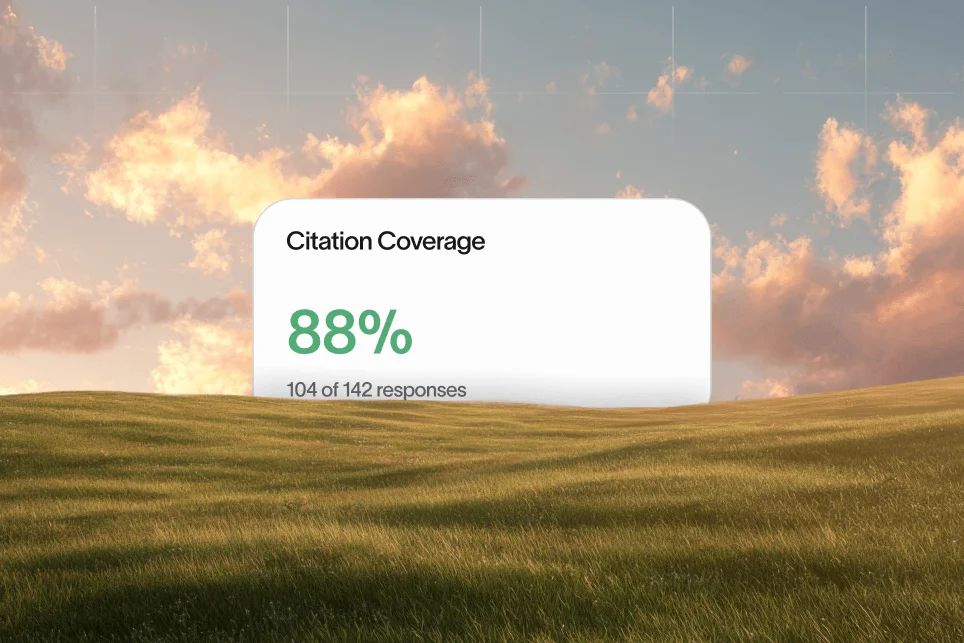
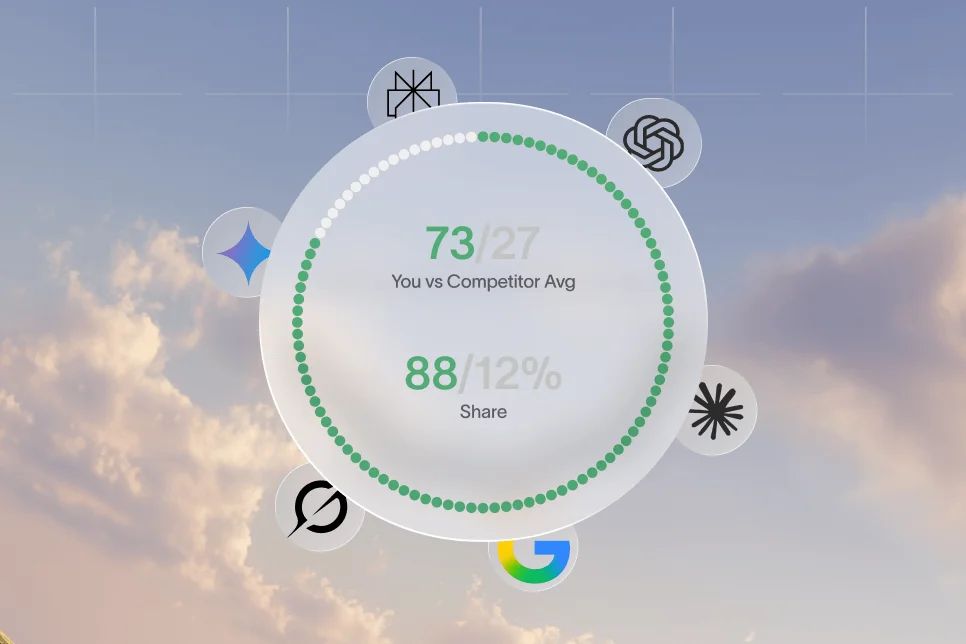
If the goal is to understand where pages are losing ground in search and how often the brand still appears in AI answers, Skayle helps teams measure AI visibility, track citation coverage, and connect refresh work to ranking outcomes.
References
- Sitebulb — Content Refresh Guide: How to improve search & AI visibility
- JS Interactive — Content Refresh: 5 Practical Steps to Keep Pages Relevant
- Virayo — How To Do a Content Refresh for Better SEO
- Marketing Rewired — The Content Refresh Strategy No One Is Talking About
- Uproer — Content Refresh Examples (& How to Identify Them)
- Content Writers — How to Complete a Content Refresh – A Guide for Writers