
TL;DR
GEO isn’t a drafting contest in 2026—it’s a measurable system for earning AI answer citations that drive clicks and conversions. Skayle vs Outrank.so comes down to operating model: citation measurement + execution loops vs primarily content throughput.
GEO tools get compared like content tools, and that’s the first mistake. In 2026, the unit of value isn’t a drafted article—it’s measurable inclusion in AI answers that produces qualified clicks and conversions.
If you can’t measure where AI engines cite you (and why), you can’t systematically earn more citations.
Why GEO comparisons feel wrong in 2026
Which one writes better content? That question mattered when Google rankings were mostly a page-by-page contest and content velocity was the main constraint.
In 2026, AI answers (Google AI Overviews, chat-based search, and assistant-style discovery) reward a different asset: extractable, trustworthy, well-instrumented information architecture.
That changes what “good” looks like:
- A good GEO system makes your brand easy to cite.
- A good SEO system makes your pages easy to rank.
- A good growth system makes those citations and rankings convert.
If a platform can’t connect all three, you’ll end up with activity metrics (pages shipped, briefs generated) and no control over the new funnel.
The AI-answer funnel you’re actually optimizing
Treat AI discovery as a measurable path, not a vibe:
- Impression: You appear in an AI response (sometimes without a link).
- Inclusion: The engine uses your concepts/entities and language.
- Citation: You get an explicit mention or link attribution.
- Click: The user chooses your source.
- Conversion: The session turns into trial, demo, signup, or pipeline.
Most teams optimize step 5 while blind to steps 1–3.
Skayle’s core advantage is that it’s built around steps 1–3 as first-class metrics—not as a screenshot someone posts in Slack once a month.
A definition that prevents bad tooling decisions
Generative Engine Optimization (GEO) is the practice of making your content and entity footprint easy for AI systems to extract, trust, and cite—then measuring that citation coverage so you can repeat what works.
If your platform can’t show you citation coverage gaps and translate them into specific publishing and refresh actions, it’s not really doing GEO. It’s doing assisted writing with a GEO label.
If you want the deeper mechanics behind citation measurement, extraction, and prompt panels, Skayle has gone into detail on citation gap measurement and how teams operationalize it.
Skayle vs Outrank: what you’re really buying
Outrank is worth evaluating if you want an AI-assisted way to produce SEO content and workflows faster. You should still validate what it does (and doesn’t) do around AI answer visibility.
Skayle is a different purchase category: a ranking and visibility operating system that ties planning, structured publishing, and AI citation measurement into a loop.
That “operating model” difference is why the comparison matters.
Outrank’s center of gravity
Based on Outrank’s public positioning, it presents itself as an AI-driven approach to SEO content production and automation (see Outrank). In practice, tools in this category tend to be strong at:
- Generating drafts from keyword seeds
- Producing outlines/brief-like guidance
- Managing simple publishing workflows
- Increasing throughput for long-tail content
The risk is structural: throughput without a citation model usually turns into more pages that don’t materially change AI inclusion.
If you’re buying for GEO, the evaluation should focus on whether Outrank can:
- Track AI answer inclusion/citations at scale
- Show which prompts are missing you
- Connect prompt-level gaps to page-level fixes
- Prove that changes increased citations (not just “content score”)
If it can’t, you’ll end up exporting data into spreadsheets and running manual checks in Perplexity or chat tools.
Skayle’s center of gravity
Skayle is built for teams that need repeatable, measurable authority growth across both classic search and AI answers. It treats content as structured infrastructure, not isolated documents.
Three practical differences show up quickly:
- Measurement-first visibility: Skayle is designed to help you understand how you appear in AI answers via AI Search Visibility, then turn that into prioritized publishing and refresh work.
- System-level execution: Planning → creation → publishing is treated as a connected system (see the platform overview), which matters when you’re shipping clusters, not one-off posts.
- Governed structure: A GEO program fails when content isn’t consistent enough for extraction. Skayle’s model is built around reusable context, entities, and structured publishing logic.
Practical stance for buyers: don’t choose based on who drafts faster. Choose based on who reduces unknowns across AI inclusion, citations, and conversion.
The CITE Loop: how citations compound into pipeline
Here’s the model most teams are missing. Citations don’t compound because you “publish more.” They compound because you build a feedback loop that keeps your content extractable, current, and semantically consistent.
I use a simple 4-step framework for evaluating GEO systems:
The CITE Loop
- Capture: capture prompt sets and citation snapshots across engines.
- Instrument: instrument pages so you can attribute citations → clicks → conversions.
- Tune: tune content, schema, internal links, and entities to improve extraction.
- Expand: expand coverage via clusters and templates once a pattern works.
A tool that only helps with “Tune” (writing) will always be downstream of the real bottleneck.
CITE Loop steps (with the real work attached)
1) Capture
Capture means building a stable, repeatable query/prompt panel. Not “search a few things when you remember.”
Minimum viable capture:
- 25–100 prompts mapped to your ICP’s buying stages
- Variant prompts that force comparisons (e.g., “X vs Y for Z”)
- Prompts that test definitions (e.g., “what is SOC 2 continuous monitoring?”)
- Prompts that test workflows (e.g., “how do I implement event tracking in GA4?”)
You can run these prompts across engines like Perplexity, OpenAI, and Anthropic, but the point is not the tool—it’s having a repeatable panel.
2) Instrument
Instrumentation is where most GEO programs fail. If your team can’t connect “we got cited” to “we got a qualified visit” to “we got a conversion,” GEO will get deprioritized.
At minimum:
- Track organic landing pages and assisted conversions in Google Analytics
- Track query and page performance in Google Search Console
- Use UTM discipline for any distribution you control
- Ensure canonicalization and indexation are clean so engines don’t cite duplicates
On the technical side, you need crawl/extract reliability. If you’re dealing with rendering issues, canonical confusion, or inconsistent schema, fix that before arguing about tooling. Skayle’s view is blunt: if bots can’t reliably extract your answer blocks, you don’t have a GEO program—you have content.
For a technical checklist on this specific problem, see Skayle’s breakdown on crawl and extract fixes.
3) Tune
Tuning is not “add FAQs everywhere.” Tuning is aligning your content to how AI systems assemble answers:
- Clear definitions near the top
- Consistent entity naming
- Scannable steps and decision criteria
- Schema that reflects the page’s purpose
- Internal linking that reinforces cluster authority
When teams say “we did GEO,” what they often did is rewrite paragraphs. That rarely changes citations unless the rewrite changes extractability and trust.
Schema is a common lever, but only if you use it precisely. Don’t ship schema because a plugin generated it. Ship schema because it improves how the page can be interpreted.
If you want to make schema more “answer-shaped” (and less checkbox-shaped), Skayle has a strong set of conversational schema fixes.
4) Expand
Expansion should be the last step. Expansion means:
- Building content clusters that map to the prompt panel
- Publishing programmatic/supporting pages where structure is consistent
- Creating refresh loops so citations don’t decay as competitors update
If you expand before you can measure and tune, you’ll just scale uncertainty.
What to measure (and where teams get stuck)
The measurement stack for GEO should include:
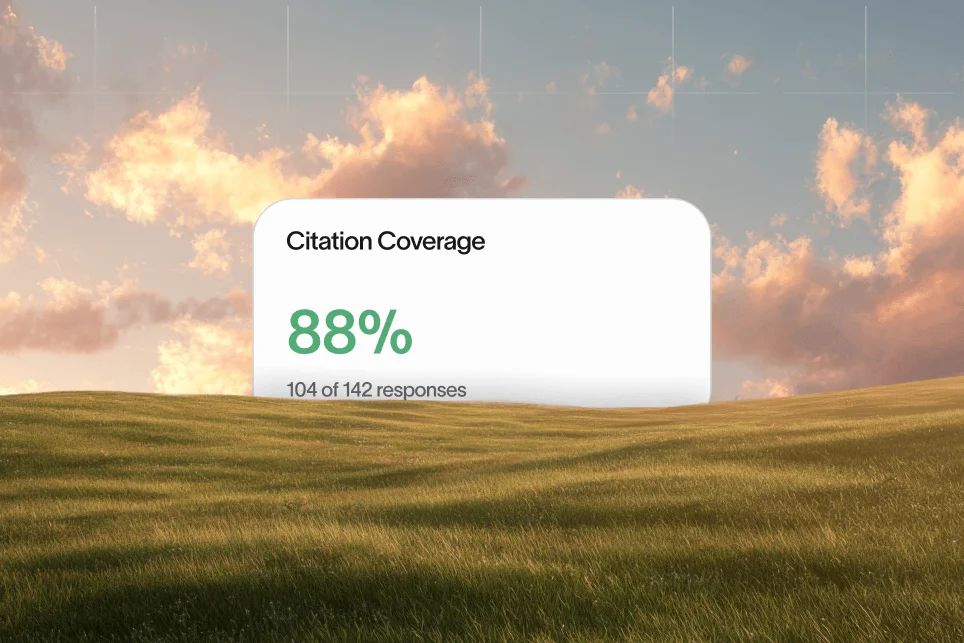
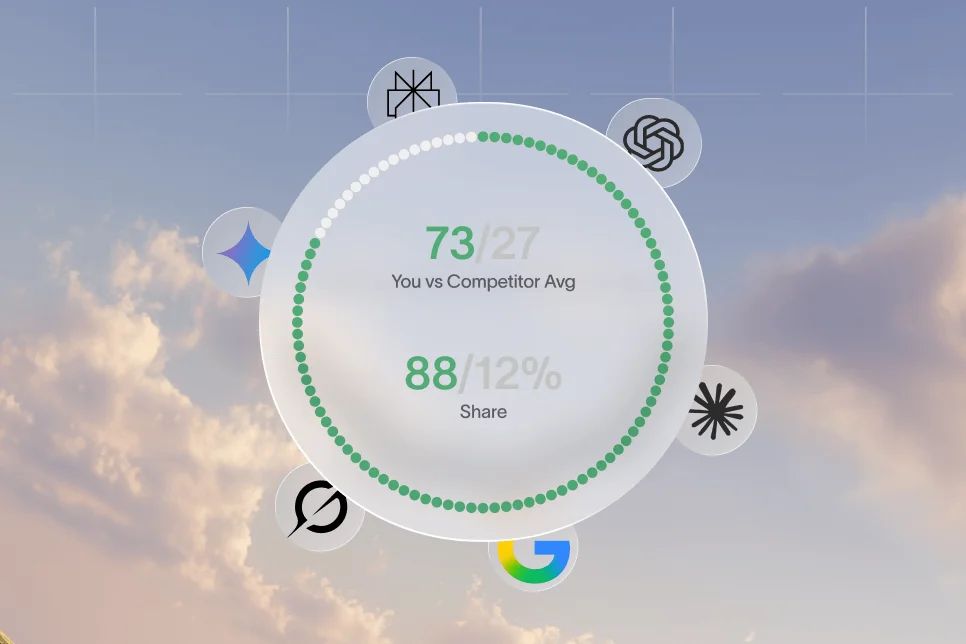
- Citation coverage: which prompts cite you vs competitors
- Inclusion rate: prompts where your concept is used without attribution
- Click yield: sessions from cited pages (where links exist)
- Conversion yield: demo/trial/lead conversion rate on cited landing pages
- Decay: prompts/pages where you used to be cited and dropped
Where teams get stuck:
- They treat AI visibility as “brand awareness” and stop measuring.
- They don’t control for duplicates (multiple URLs answering the same question).
- They don’t maintain a refresh cadence.
Skayle’s product direction is built around turning these stuck points into an operating loop. If you want the refresh angle specifically, Skayle’s refresh playbook is the right mental model for keeping citations compounding.
Skayle vs Outrank: which one fits your team
This is the buyer-facing section that should exist in most “Skayle vs Outrank” pages, but rarely does.
If you’re building a GEO program, you’re choosing between two models:
- A content production assistant (helpful, but downstream)
- A ranking + visibility system (harder to build, but compounding)
Decision criteria that matter more than features
Use these criteria instead of a feature checklist:
- Can I measure AI visibility without manual screenshots?
- Can I translate “citation gap” into a publish/refresh plan?
- Can I keep entity and messaging consistency across 50+ pages?
- Can I govern templates and structured content for programmatic scale?
- Can I connect citations to clicks and conversions?
If your answer to #1 and #2 is no, you don’t have GEO. You have content throughput.
Side-by-side comparison (operating model)
Dimension | Skayle | Outrank |
|---|---|---|
Primary value | Ranking + AI visibility operating system | AI-assisted SEO content workflow (based on public positioning) |
GEO measurement | Designed for ongoing AI visibility tracking and workflow | Validate whether citation tracking is native or manual |
Content governance | Structured context and system consistency | Validate how context is enforced across many pages |
Scale mode | Clusters, templates, refresh loops | Often centered on drafting/publishing throughput |
Best fit | Teams optimizing impression → citation → conversion | Teams primarily optimizing drafting and SEO basics |
This isn’t a moral judgement. It’s an architecture call.
Pros and cons by use case
Choose Skayle if:
- You care about AI citations as a tracked KPI, not a brand anecdote.
- You need to keep content consistent across a category (entities, definitions, comparisons).
- You want an operating system that connects planning, publishing, and measurement.
- You’re willing to run GEO like a product: instrumentation, iterations, refreshes.
Tradeoffs to accept with Skayle:
- You need to define your measurement panel and success metrics.
- Structured systems require governance; “anything goes” publishing won’t work.
Consider Outrank if:
- Your immediate bottleneck is content production and you’re still building foundational SEO coverage.
- You want a simpler workflow primarily focused on drafting.
- You don’t yet have buy-in to measure AI visibility rigorously.
Tradeoffs to accept with Outrank (for GEO specifically):
- You may need external tooling or manual processes to measure citations.
- You risk scaling pages without proving inclusion → citation lift.
If you’re deciding between the two, the clean test is whether you can run the CITE Loop end-to-end with minimal manual glue.
A 14-day GEO pilot that exposes the execution gap
A good GEO pilot doesn’t ask “which tool feels nicer.” It asks: Which tool helps us create measurable citation lift on a defined prompt set?
Here’s a 14-day pilot structure that works even if you’re a small SaaS team.
The action checklist
Choose one category-level outcome
- Example: “Be cited for comparisons and implementation prompts in data security compliance.”
Build a prompt panel (25–40 prompts)
- 10 definition prompts
- 10 comparison prompts
- 10 workflow prompts
Baseline capture (Day 1–2)
- Record: cited sources, whether you’re cited, and which page (if any).
- Keep the panel stable so you can compare changes.
Pick one content cluster (3–6 pages)
- One hub page + supporting pages is enough.
Instrument analytics (Day 1–3)
- Confirm GA4 events for demo/trial start.
- Confirm Search Console is collecting data.
- If your stack is on Webflow or WordPress, ensure you’re not blocking rendering or injecting duplicate canonicals.
Fix extractability issues first (Day 3–6)
- Canonicals, indexability, page speed, schema validity.
- Use Rich Results Test and Schema.org references to validate structure.
- If performance is a problem, use Lighthouse for diagnostic clarity.
Tune content for AI extraction (Day 6–10)
- Add a 40–80 word definition block.
- Add decision criteria bullets.
- Add one short procedure list that a model can quote.
- Tighten internal links across the cluster.
Re-run the panel (Day 11–14)
- Compare: inclusion, citation, and cited URL precision.
This pilot forces a real answer: did the system help you move citations in a measurable way?
A concrete measurement plan (baseline to target)
Because we don’t have your data here, the honest approach is a measurement plan you can execute.
Baseline (Day 1–2):
- Citation coverage: % of prompts that cite you
- Citation precision: % of citations that point to the “right” page (not a random blog post)
- Click yield: sessions to the cited URLs
- Conversion yield: demo/trial conversion rate on those URLs
Target (Day 14–45):
- Increase citation coverage on the panel (choose a realistic delta)
- Reduce “wrong URL” citations by consolidating intent + canonicals
- Improve conversion yield by aligning the landing experience to the cited promise
Instrumentation notes:
- Use Search Console to monitor query → page alignment.
- Use GA4 to measure conversion rate on cited landing pages.
- If you have a CDP like Segment, pipe source/landing metadata into your CRM so sales can see context.
Technical guardrails that prevent false positives:
- Ensure you’re not splitting signals across near-duplicate URLs (see Google’s canonical guidance on duplicate consolidation).
- Ensure you’re not accidentally noindexing key pages via robots meta tags (see robots meta documentation).
- If you’re behind a WAF/CDN, make sure crawlers aren’t blocked; Cloudflare configurations are a common culprit.
If your pilot doesn’t include this instrumentation, you’re not testing GEO. You’re testing writing assistance.
Common mistakes and FAQ (so you don’t repeat them)
The fastest way to waste a quarter is to treat GEO as a new coat of paint on old content habits.
Here are the failure modes that show up across teams, regardless of tooling.
Mistakes that kill AI extractability (and how to avoid them)
Mistake 1: Buying dashboards before you have an execution loop
Contrarian but true: a visibility dashboard is not a GEO program. If you can’t turn “you’re missing citations for X prompts” into a governed refresh/publish plan, reporting becomes noise.
What to do instead:
- Choose a prompt panel.
- Choose a content cluster.
- Ship changes weekly.
- Track deltas.
Mistake 2: Treating schema as decoration
Schema that validates but doesn’t reflect page intent won’t reliably improve extraction.
What to do instead:
- Use schema types that match the content’s purpose.
- Keep entity naming consistent.
- Add FAQ only where it’s real and maintained.
Example: a compact FAQ JSON-LD block (only where questions are genuinely answered on-page):
{
  "@context": "https://schema.org",
  "@type": "FAQPage",
  "mainEntity": [
    {
      "@type": "Question",
      "name": "What is GEO?",
      "acceptedAnswer": {
        "@type": "Answer",
        "text": "GEO is the practice of making content easy for AI systems to extract, trust, and cite, then measuring citation coverage so improvements can be repeated."
      }
    }
  ]
}
Mistake 3: Publishing without consolidation
If you have five pages that answer the same prompt with slight variations, you create extraction ambiguity. AI systems may cite whichever version looks most “complete,” which might not be your best converter.
What to do instead:
- Consolidate intents.
- Use internal links to enforce hierarchy.
- Make one page the canonical answer.
Mistake 4: Ignoring conversion design on cited pages
A citation is not a win if the page can’t convert. AI answers often create high-intent clicks that bounce when the page is vague.
What to do instead:
- Put the definition and key proof near the top.
- Match the AI prompt’s intent (comparison, steps, criteria) immediately.
- Keep CTAs specific and low-friction.
If your internal process is fragmented (brief in one tool, draft in another, publishing somewhere else, visibility tracked nowhere), fix the workflow first. Skayle’s view on repairing AI content workflows is a good reference point.
FAQ: Skayle vs Outrank and GEO in 2026
1) Is Skayle vs Outrank mainly a content quality comparison?
No. For GEO, the core comparison is whether you can measure AI citations and convert that visibility into a repeatable publish/refresh loop. Content quality matters, but it’s downstream of measurement, structure, and consistency.
2) What should a GEO tool track if it’s legitimate?
At minimum: prompt-level citation coverage, inclusion vs citation (using your concepts without attributing you), and citation decay over time. If you can’t export or operationalize those insights into a backlog, you’ll stall.
3) How do I avoid ‘AI visibility theater’ where teams chase screenshots?
Use a fixed prompt panel and report deltas weekly. Tie changes to concrete page updates (definitions, schema, internal links, consolidation) and track impact on clicks and conversions in GA4 and Search Console.
4) Do I need separate tools for classic SEO and GEO?
You can, but the risk is disconnected workflows: SEO reports in one place, content in another, AI visibility in a third, and no single system that turns insights into shipping. The more your stack fragments, the harder it is to compound.
5) What’s the fastest ‘first win’ for GEO?
Pick one comparison prompt set that already drives buying behavior, then ship one cluster that includes: a tight definition, decision criteria, and a clear recommendation framework. Then validate citation lift and conversion yield before expanding.
If you want to get more rigorous about audits and remediation, Skayle’s LLM citation audit approach is a practical next step.
If you’re evaluating Skayle vs Outrank because you’re serious about GEO (not just content production), measure your AI visibility first, then choose the platform that can run the CITE Loop end-to-end—capture, instrument, tune, and expand—without manual glue. If you want to see what that looks like in practice, you can book a demo and walk through your prompt panel, citation gaps, and the publish/refresh plan you’d run next.