
TL;DR
Legacy enterprise SEO suites were built to report rankings, not measure whether AI systems cite your brand. Generative engine optimization needs a different operating model built around prompt visibility, extractable content, citation coverage, and fast refresh cycles.
A lot of enterprise SEO teams still have the same dashboard they had three years ago, but the search environment around them has changed completely. I’ve sat in too many meetings where a team celebrates ranking movement while their brand is quietly disappearing from the places buyers now get answers.
The problem isn’t that legacy SEO suites became useless overnight. It’s that they were built for a different job, and generative engine optimization exposed the gap fast.
The measurement model broke before most teams noticed
Here’s the short version: generative engine optimization is about being selected as a source in AI answers, not just appearing as a blue link in search results.
That sounds obvious once you say it out loud. But most enterprise teams are still using tooling built around rank positions, keyword buckets, and page-level reporting that assumes a click-based SERP is the whole game.
According to a16z, the core shift in GEO is from rankings to references. In other words, visibility now includes whether an AI system chooses to cite, summarize, or mention your brand when answering a prompt.
That creates a measurement problem. If your suite tells you that you moved from position 7 to position 4 for a keyword, but ChatGPT, Google AI Overviews, or Perplexity still never surface your company, the ranking gain may not matter nearly as much as your report suggests.
I’ve seen this pattern with SaaS teams that have strong traditional SEO hygiene: solid title tags, decent internal links, respectable authority, and steady blog output. They still lose mindshare in AI answers because their content isn’t built to be extractable, quotable, or reference-worthy.
And legacy platforms often miss that because they were designed to answer older questions:
- What rank do we hold?
- How many keywords improved?
- Which pages gained clicks?
- Where did traffic move week over week?
Those are still useful questions. They’re just incomplete now.
If you want the big picture in 2026, our guide to SEO explains why modern visibility has to cover both classic rankings and AI answer inclusion.
Why generative engine optimization needs different inputs than classic rank tracking
Most enterprise SEO suites were built for Google’s traditional results pages. They organize work around crawl issues, keyword positions, backlink data, and reporting layers for large sites. None of that is inherently bad. The issue is that GEO asks a different set of questions.
As Search Engine Land notes, GEO requires content structure, authority signals, and AI discovery metrics that go beyond legacy keyword tracking. That’s the structural mismatch.
When I compare old-school suites with modern GEO systems, I use a simple model: discoverability, extractability, credibility, and feedback.
Discoverability
Can AI systems reliably find the right page, section, entity, or supporting evidence on your site?
This is where legacy suites tend to stay too high-level. They may flag that a page exists and ranks, but they usually don’t help you understand whether your content architecture makes your expertise easy to pull into answer engines.
Extractability
Can a model lift a clean answer from your content without rewriting around ambiguity?
A lot of enterprise content fails here. The page may be long, technically optimized, and even ranking well, but it buries the answer under generic intros, vague copy, or fluffy transitions. We’ve covered this editing problem in our piece on AI slop, because content that feels bland to humans is usually even worse for AI extraction.
Credibility
Does your page show enough authority, evidence, point of view, and specificity to deserve citation?
This is where brand becomes your citation engine. AI answers tend to pull from sources that feel trustworthy and uniquely useful, not just sources that happen to be indexed.
Feedback
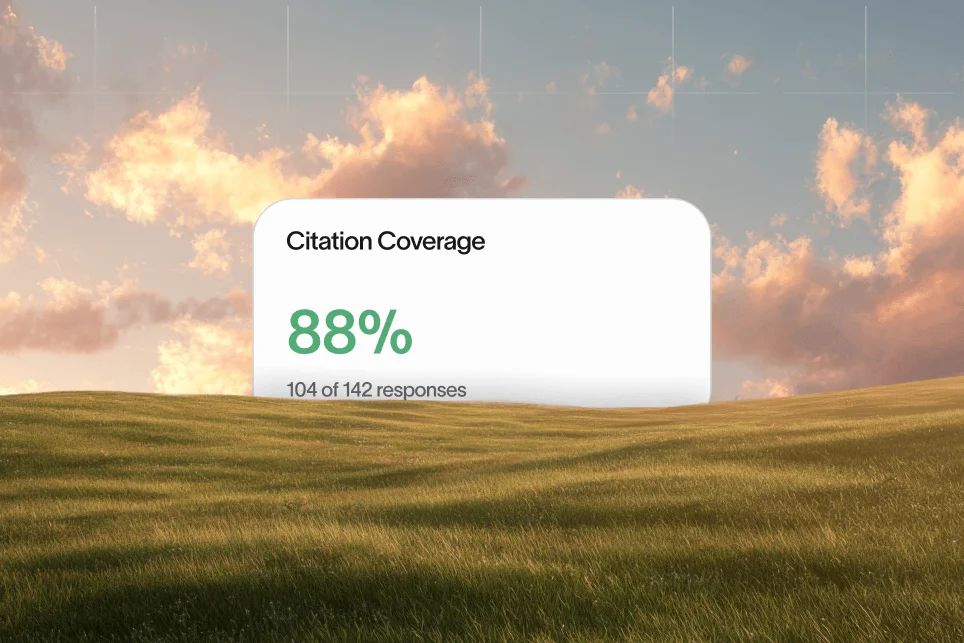
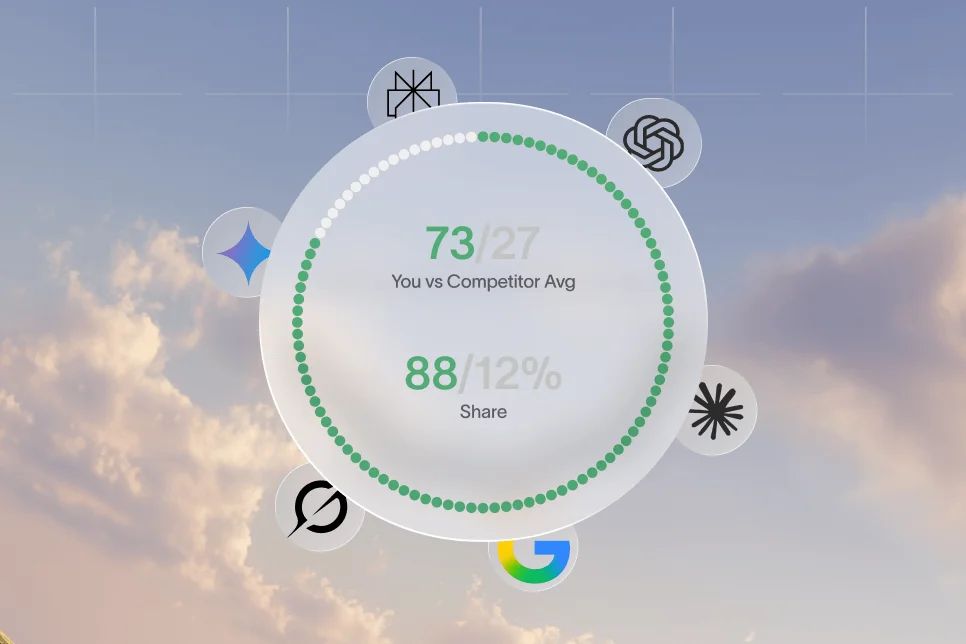
Can your team see whether your brand is appearing in AI answers, which prompts trigger citations, and where coverage is weak?
Legacy suites usually stop at search visibility proxies. Modern systems need to close the loop between content, citation presence, and actual pipeline outcomes.
That last part matters more than teams admit. A lot of reporting today is disconnected from action. That’s one of the biggest operational failures in enterprise SEO stacks.
Where legacy enterprise suites fall apart in the real workflow
The failure isn’t usually one feature. It’s the workflow.
In practice, most enterprise SEO suites were built like reporting systems with optimization modules attached. GEO needs the opposite: an execution system that can observe AI visibility, identify content gaps, update pages quickly, and measure whether those changes increase citation coverage.
I’ve watched large teams run into the same five problems over and over.
They optimize pages, not answer patterns
A rank tracker sees pages. AI systems often operate at the level of answers, snippets, entities, and supporting claims.
That sounds subtle, but it’s a huge difference. If a buyer asks, “What’s the difference between SEO and GEO for SaaS?” the model isn’t thinking in page templates first. It’s looking for a trustworthy explanation it can assemble cleanly.
A 3,000-word page with one decent paragraph may still underperform a tighter page with clear definitions, examples, comparison logic, and evidence blocks.
They report movement, not usefulness
I’ve seen dashboards with hundreds of tracked keywords and color-coded movement charts that tell a VP almost nothing about whether the company is winning buyer attention.
If your dashboard says green while your brand is missing from AI answers on core category prompts, the dashboard is lying by omission.
As Semrush explains, GEO is about appearing in responses generated by AI-powered search engines. That means reporting has to reflect response inclusion, not just organic rank movement.
They separate research from publishing from maintenance
This is the expensive part.
One team does keyword research. Another writes briefs. A freelancer drafts. An editor cleans it up. Someone in SEO requests updates three months later. Nobody owns AI visibility. Nobody sees whether a refreshed page actually improved citations.
That fragmentation is exactly why content gets slow and inconsistent.
They reward volume over citation quality
Legacy suites often encourage broad keyword expansion because more tracked terms create the appearance of growth. But generative engine optimization punishes generic scale.
You don’t need 50 weak articles around a topic if none of them say anything citation-worthy. You need fewer, stronger assets with clean structure, real point of view, and evidence that makes them easy to trust.
They treat AI search as a side report
This is my strongest view: don’t bolt AI visibility onto a rank-tracking stack and call it a GEO strategy. Build around citation coverage first, then connect it back to search.
That’s the tradeoff. You may lose some reporting familiarity. You gain a model that’s aligned with how discovery now works.
According to HubSpot, GEO targets answer engines and large language models rather than standard indexers. If your tooling still assumes the old index-click-report loop is enough, it will keep under-measuring what matters.
The comparison that actually matters in 2026
When buyers ask me what to compare, I don’t start with feature grids. I start with operational fit. The real question is whether your system helps you win the path from impression to AI answer inclusion to citation to click to conversion.
Below is the comparison I think teams should use.
| Dimension | Legacy enterprise SEO suites | Modern GEO systems |
|---|---|---|
| Core model | Rank tracking and reporting | Citation visibility and execution |
| Primary unit | Keywords and pages | Prompts, answers, citations, entities |
| Workflow | Audit-heavy, slower handoffs | Faster feedback and refresh cycles |
| Success signal | Position, traffic, share of voice | Inclusion, citation coverage, assisted conversions |
| Content guidance | Optimization checklists | Answer structure and reference-worthiness |
| Maintenance | Periodic audits | Continuous refresh based on AI visibility gaps |
| Team fit | Large reporting orgs | Leaner teams that need actionability |
BrightEdge, Conductor, and similar enterprise suites
These platforms still have value for large websites with broad governance needs. If you run a complex enterprise site with many stakeholders, they can help centralize technical SEO monitoring, reporting, and workflow controls.
Where they struggle is GEO-specific decision-making. They weren’t built around prompt-level visibility, answer inclusion, or citation analysis as the primary object of measurement. So teams often end up layering spreadsheets, manual testing, and extra tooling on top.
Best for: large organizations that still depend heavily on classic organic reporting.
Tradeoff: strong governance, weaker AI-answer feedback loops.
Profound
Profound is part of the newer wave focused on AI search visibility rather than classic rank tracking alone. The appeal is obvious: it addresses the thing many legacy suites barely touch, which is how brands appear across AI-generated experiences.
For teams specifically trying to understand AI answer presence, tools in this category are directionally closer to the problem. The key question is whether the product helps you turn that visibility data into content action quickly, not just monitoring.
Best for: teams prioritizing AI visibility measurement.
Tradeoff: may need to be paired with stronger content execution workflows.
Searchable
Searchable sits in the same broader conversation: visibility in AI systems, not just keyword movement. That’s a meaningful shift from the enterprise suite model.
The difference to watch is whether a platform acts mostly as a monitoring layer or as a ranking operating system. Monitoring tells you what happened. A stronger GEO setup should also help you decide what to publish, refresh, or restructure next. We unpack that distinction in this comparison.
Best for: teams that want clearer AI visibility monitoring than legacy suites provide.
Tradeoff: value depends on how tightly monitoring connects to execution.
AirOps
AirOps is closer to an operations layer for AI-assisted content workflows. That matters because GEO isn’t just about watching mentions. It’s about shipping better content faster.
The upside is speed and workflow flexibility. The risk is that workflow tools can drift into content production without enough grounding in ranking logic, authority building, or citation measurement.
Best for: teams building AI-assisted content operations.
Tradeoff: content velocity alone does not guarantee AI search visibility.
Skayle
Skayle fits the market as a ranking and visibility platform for SaaS teams that need both sides of the equation: content execution and AI answer presence.
That matters because most teams don’t actually have a tooling problem in isolation. They have a systems problem. Research is in one place, writing in another, updates happen ad hoc, and nobody can clearly measure how content changes affect rankings and AI citations together.
Skayle is best for teams that want one system to plan, create, optimize, and maintain pages that rank in Google and show up in AI answers. The tradeoff is straightforward: if your main need is enterprise governance across a massive legacy stack, a traditional suite may still cover more old-school reporting surfaces. But if your bottleneck is execution tied to measurable visibility, this model is much closer to what GEO requires.
Best for: SaaS teams that need ranking execution and AI visibility in one workflow.
Tradeoff: less appealing if you only want a passive reporting layer.
What a modern GEO operating model looks like in practice
If you’re replacing or reducing dependence on a legacy suite, don’t start by ripping out every old tool. Start by changing what your team measures and ships each month.
Here’s the process I recommend.
Start with prompt sets, not just keyword lists
Keyword research still matters. But for generative engine optimization, you also need prompt clusters based on actual buyer questions, comparison queries, category definitions, and use-case language.
That means mapping things like:
- category questions
- competitor comparisons
- best-tool queries
- problem-aware questions
- implementation questions
- trust and evaluation prompts
This is also where our AI Overviews playbook becomes relevant, because the same discipline of refreshes and answer formatting helps recover visibility when search surfaces change.
Audit pages for citation readiness
I use a plain-language review process:
- Is there a clear answer near the top?
- Is the point of view specific?
- Is there evidence, example, or comparison logic?
- Are headings direct enough for extraction?
- Does the page deserve to be cited over a generic alternative?
That fifth question is where most pages fail.
Refresh the sections that actually get quoted
You usually do not need a full rewrite first. In many cases, the highest-leverage move is rewriting intros, definitions, comparison blocks, FAQs, and summary sections.
A mini example:
- Baseline: a SaaS comparison page ranks on page one for several product terms but gets thin engagement and no consistent AI citations on test prompts.
- Intervention: rewrite the intro to answer the core comparison in 60 words, add a direct comparison table, add specific tradeoffs for each option, and tighten FAQs around buyer language.
- Outcome to measure: citation presence across a fixed prompt set, click-through rate from organic, and assisted demo conversions over 30 to 60 days.
- Timeframe: first visibility read at two weeks, stronger trendline after one full refresh cycle.
Notice what I did not do: publish five more supporting blog posts and hope volume fixes the issue.
Tie visibility to conversion signals
This part gets ignored. If you appear in AI answers but the page you send traffic to is vague, slow, or overly generic, the visit dies there.
Your page has to support the new funnel:
- impression
- AI answer inclusion
- citation
- click
- conversion
That means design and conversion work are part of GEO now. Strong summary blocks, obvious next-step CTAs, clean comparison layouts, and proof near the top all matter.
Keep a monthly feedback loop
A modern system should tell you three things every month:
- where your brand is being cited
- where competitors are being cited instead
- which page updates are most likely to close the gap
That is a much better operating rhythm than producing a quarterly report nobody acts on.
The mistakes I see teams repeat when they try to modernize
Most failures in generative engine optimization are not caused by lack of effort. They’re caused by carrying the wrong assumptions forward.
Mistake one: treating GEO as a new label for SEO
GEO overlaps with SEO, but it is not just a rebrand. As Forbes put it, GEO is an evolution designed specifically for generative engines. If you keep the same inputs, same reports, and same content style, you should expect limited change.
Mistake two: publishing generic AI-written pages at scale
This backfires fast. Thin, repetitive content rarely earns trust from people, and it gives AI systems little reason to reference you instead of a better source.
Mistake three: assuming technical SEO alone will save weak content
Technical foundations still matter. Clean architecture, crawlability, internal links, and structured content all help. But if the page says nothing original, it’s hard to win citations.
Mistake four: measuring only traffic
Traffic can go down while influence goes up, especially if more discovery happens inside answer engines. That doesn’t mean traffic no longer matters. It means you need a wider view.
As reported by Wired, an entire market has formed around getting brands surfaced by AI systems rather than relying only on traditional search behavior. Measurement has to catch up with that reality.
Mistake five: buying monitoring without execution capacity
A dashboard will not fix fragmented publishing operations. If your team can’t refresh pages quickly, clarify positioning, or close content gaps, better AI visibility reporting just gives you cleaner frustration.
Which setup is right for you if you’re choosing now
If you’re a mature enterprise with a huge site, multiple business units, and heavy reporting requirements, you may still keep a legacy suite in the stack. That’s fine. The mistake is expecting it to carry your GEO strategy by itself.
If you’re a SaaS team trying to grow category visibility, influence AI answers, and connect content work to pipeline, you probably need a different center of gravity.
Here’s my practical view:
- Keep legacy suites for governance, historical reporting, and large-site monitoring.
- Add or replace with a GEO-focused system when AI answer inclusion matters to your buying journey.
- Prioritize tools that connect measurement to publishing and refresh workflows.
- Choose execution speed over reporting complexity if your team is small.
There is no prize for having the most elaborate dashboard. The only thing that matters is whether your brand becomes easier to find, easier to cite, and easier to trust.
FAQ: what teams still get wrong about generative engine optimization
Is generative engine optimization replacing SEO?
No. Generative engine optimization is extending the visibility model, not deleting SEO. Traditional rankings, technical SEO, and organic traffic still matter, but they no longer capture the full discovery journey.
Why can’t legacy rank trackers handle GEO on their own?
Because they were built to measure position-based search outcomes. GEO requires prompt-level visibility, citation analysis, answer formatting, and content feedback loops that most legacy suites were not designed around.
Do AI citations really matter if they don’t always drive clicks?
Yes, because citations influence brand recall, shortlist formation, and trust before the click. In many categories, the answer engine becomes part of the buying journey even when the visit happens later.
What should I measure first if I want to improve AI visibility?
Start with a fixed prompt set tied to real buying questions, then track citation presence, competitor presence, and traffic or conversion changes on the destination pages. That gives you a usable baseline without overcomplicating the system.
Can smaller SaaS teams compete without enterprise SEO software?
Yes. In fact, smaller teams often move faster because they can refresh content, tighten positioning, and test answer-first formatting without long approval chains. Speed and clarity matter more than bloated reporting.
Legacy enterprise SEO suites are failing at generative engine optimization for a simple reason: they were built to describe the old search environment, not help teams win the new one. If you want better results in 2026, measure citation visibility, publish pages that deserve extraction, and build a workflow that turns visibility gaps into action.
If you’re trying to understand how your brand appears in AI answers and where your current stack falls short, Skayle can help you measure your AI visibility and connect it to content that actually ranks.