
TL;DR
To compare GEO performance, measure inclusion, citations, and conversion readiness across engines using a stable prompt set. Use an evidence-layered page structure, then fix citation-to-conversion gaps on the pages engines already cite.
A lot of teams tell me they’re “doing GEO,” but when you ask what changed, it gets vague fast. Mentions went up. Traffic “seems different.” Someone saw the brand in an answer once.
If you want Generative Engine Optimization to drive pipeline, you need to compare performance the same way you’d compare paid channels: consistent inputs, consistent scoring, and a tight link between citations and conversions.
What you’re really measuring when you compare GEO performance
Generative Engine Optimization is the work of making your content easy for answer engines to extract, trust, and cite.
That definition matters because it changes what “performance” means. In classic SEO, performance starts at rankings and ends at clicks. In GEO, performance starts one step earlier:
Impression (your brand is eligible to appear)
AI answer inclusion (the model uses your info)
Citation (a link or explicit source mention)
Click (a user chooses your source)
Conversion (signup, demo, purchase)
If you only track step 4, you’ll miss most of the levers.
The business case is not theoretical anymore
A big reason GEO is moving from “interesting” to “mandatory” is simple: answer interfaces are stealing attention from the blue links.
Manhattan Strategies cites a Gartner prediction that 40% of B2B queries could be satisfied in answer engines by 2026 (Manhattan Strategies) [2]. You don’t have to love forecasts to act on them. You just have to acknowledge the direction of travel.
And the click behavior is different. The same Manhattan Strategies piece reports that Copilot cited answers can see 6x higher click-through rate than classic organic links (Manhattan Strategies) [2]. If that’s even directionally true for your category, citations become a growth lever, not a vanity metric.
Point of view (the part most guides dodge)
Here’s the contrarian stance I’ve landed on after watching teams chase “AI visibility” for months:
Don’t optimize for mentions. Optimize for repeatable citation patterns tied to one conversion path.
Mentions are cheap. Citations require the model to trust you enough to point users to your page. And if the cited page doesn’t convert, you just built awareness for your competitors.
If you want a deeper breakdown of how this differs from classic SEO mechanics, we’ve mapped it out in our explanation of GEO vs SEO.
The five-engine reality: where citations actually come from
When SaaS teams say “AI search,” they usually mean five different surfaces:
Google AI Overviews
ChatGPT-style assistants
Perplexity-style answer engines
Microsoft Copilot experiences
Gemini-style assistants embedded across products
You can’t compare GEO performance if you assume they behave the same.
Google AI Overviews: eligibility is a technical gate
AI Overviews behaves like a hybrid: it’s answer-first, but it’s still deeply connected to Google’s crawling, indexing, and extraction pipeline.
If you’re not consistently getting cited, it’s often not “your writing.” It’s rendering, canonicals, crawl waste, or missing structure.
This is why teams that treat GEO like “just add FAQs” stall out. The fast wins usually come from tightening extraction and schema. If you want the technical checklist, pair this article with our AI Overviews technical playbook.
ChatGPT: brand trust and entity clarity carry more weight
In ChatGPT-style experiences, you’re fighting two battles:
The model’s understanding of who you are (entity clarity)
The model’s confidence that your page is a safe source to cite
Anecdotally, ChatGPT citations tend to cluster around pages that are:
strongly structured (clear headings, lists, tables)
explicit about definitions
updated often enough to feel “current”
The a16z write-up includes an example where Vercel reportedly saw 10% of signups coming from ChatGPT (a16z) [4]. Whether your number is 10% or 1%, the takeaway is the same: citations can become a measurable acquisition channel.
Perplexity: citation behavior is the product
Perplexity is the easiest place to “see” GEO because citations are a core UX element.
That also makes it a great testing ground. If your pages aren’t being cited there, you likely have an extraction problem (structure, specificity, proof), not just a distribution problem.
Single Grain references an academic result attributed to Liu et al. showing visibility increases up to 37% in Perplexity responses after applying GEO methods (Single Grain) [1]. Treat that as directional, not guaranteed. The real value is using Perplexity as a controlled environment for iteration.
Copilot: don’t ignore the CTR math
If Copilot citations can drive materially higher CTR (Manhattan Strategies) [2], then comparing GEO performance isn’t just “where did we show up.” It’s:
where did we show up
where did we get cited
where did the cited page actually convert
That last part is where most teams fall down.
Gemini and the “no obvious citation” problem
Gemini-style assistants (and many embedded assistants) often make measurement messy because attribution is inconsistent.
So your comparison framework has to handle:
explicit links (easy)
brand mentions without links (harder)
implied sourcing (hardest)
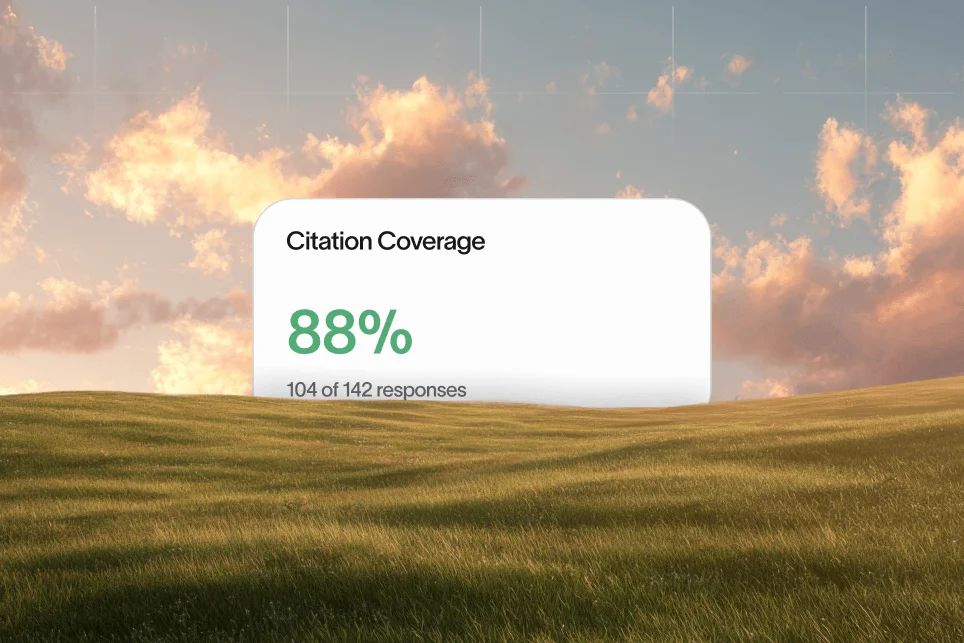
This is why I push teams to think in terms of citation coverage gaps (where competitors get cited and you don’t) rather than waiting for perfect analytics. If you need a structured way to find those gaps, start with a citation gap workflow.
The Evidence-Layered Page Stack (a model answer engines actually reward)
Most GEO advice is a pile of tactics. It’s hard to operationalize.
What’s worked better for SaaS teams is building pages with layered “evidence surfaces” that models can extract and reuse. I call it the Evidence-Layered Page Stack:
Answer layer: definitions, direct responses, tight summaries
Proof layer: numbers, case outcomes, screenshots (when appropriate), verifiable claims
Structure layer: headings, lists, tables, consistent templates, schema
Conversion layer: the next step is obvious, relevant, and fast
This isn’t theory. It matches what the GEO-BENCH style findings emphasize: adding citations and statistics can drive meaningful visibility lifts (IMD references methods boosting visibility over 40% via GEO-BENCH) (IMD) [5].
What this changes in how you write
A “normal” SEO article can ramble and still rank.
A GEO-ready page can’t. The model needs chunks it can confidently lift:
a 1–2 sentence definition
a short list of steps
a table with comparisons
a crisp claim with supporting context
That’s also why I recommend designing topic clusters for context windows, not just crawl paths. If you’re building hubs, the internal linking rules matter more than they used to, and we’ve covered that in our guide to topic cluster architecture.
The conversion layer is where “visibility” turns into revenue
You’re optimizing a new funnel:
impression → AI answer inclusion → citation → click → conversion
That means your cited pages need to be conversion-capable. Not pushy. Just clear:
one primary CTA
one secondary CTA
fast load
no dead-end educational pages
If you don’t design for that, you’ll win citations and lose deals.
Step-by-step: run a GEO performance comparison for your SaaS in 14 days
You don’t need a giant data science project to compare engines. You need a consistent test harness.
Here’s a field-tested process you can run with a small team.
Step 1: Pick one conversion path (or your results won’t be comparable)
Choose a single “money path” for this test. Examples:
demo request
free trial signup
pricing page → contact sales
If you mix paths, you’ll get noisy data. This is the first mistake I made when we started doing this: we tracked citations to anything “top of funnel,” then couldn’t explain why pipeline didn’t move.
Step 2: Build a prompt set that mirrors real buying journeys
Create 30–60 prompts, split across intent stages:
problem-aware (“How do I reduce churn in a SaaS?”)
solution-aware (“best churn analytics tools for B2B SaaS”)
vendor-aware (“Skayle vs X for AI search visibility”)
implementation (“how to set up structured data for FAQs in SaaS docs”)
Keep prompts stable for 14 days. Don’t tweak them mid-test.
Step 3: Score each engine on three metrics (keep it boring)
You want a scoring model you can run every month.
Use three metrics per prompt:
Inclusion rate: were you used in the answer? (yes/no)
Citation rate: did you get a link or explicit source? (yes/no)
Click-worthiness: did the cited snippet make your page sound like the best next click? (1–3 scale)
If you want to get more rigorous later, you can add “answer share of voice” (how much of the answer aligns with your framing). Profound’s write-up discusses answer share-of-voice measurement and cites cases with 20% gains (Profound) [9].
Step 4: Map citations back to page types (this is where insights appear)
Create buckets for cited URLs:
blog articles
comparison pages
pricing
docs
templates / programmatic pages
Then ask one uncomfortable question: Are the engines citing pages that can convert?
If the answer is “mostly blog posts,” you have a design problem, not a GEO problem.
Step 5: Fix the top 10 pages with the biggest “citation-to-conversion gap”
This is the highest-leverage work.
A citation-to-conversion gap is when:
the engine cites you (good)
the page gets clicks (fine)
the page doesn’t produce the next action (bad)
Typical fixes:
add a clear “next step” section after the core answer
tighten the definition paragraph
add a small comparison table
add proof (even one solid data point)
add or validate schema
If you need structured guidance on schema choices for AI citations, use our structured data blueprint.
Step 6: Instrument conversion in a way you can trust
Because many AI surfaces won’t pass clean referrers, you need redundant measurement.
Do all three:
Dedicated landing variants for AI-cited pages (same content, clearer CTA)
UTM capture where possible (some surfaces allow it, some don’t)
Assisted conversion tracking (self-reported “how did you hear about us?” and CRM source fields)
The point isn’t perfection. It’s having enough signal to compare engines.
A mid-test action checklist (what I’d do on day 7)
By day 7, you should be able to act without waiting for “final results.”
Pull the top prompts where competitors are cited and you’re not.
Identify the exact page types competitors are getting cited for (blog vs product vs docs).
Update one page per day using the Evidence-Layered Page Stack.
Re-run only the affected prompts 48 hours later.
Log changes like an experiment (what changed, what you expected, what happened).
That’s how you keep GEO from turning into random acts of content.
For teams that want a more formal audit workflow, our LLM citations audit guide is a solid companion.
SaaS case studies: what moved citations, clicks, and SQLs
Case studies are useful when you treat them like patterns, not promises.
Below are a few results worth dissecting because they include both visibility and business outcomes.
Case 1: “Mentions exploded” is not the same as “pipeline moved”
Single Grain describes LS Building Products achieving a 67% organic traffic increase, 400% traffic value rise, and 540% increase in Google AI Overviews mentions through GEO work (Single Grain) [1].
Baseline: standard organic performance, limited AI Overview visibility.
Intervention: GEO-focused content and optimization work (as described by Single Grain).
Outcome: large lift in AI Overview mentions plus classic SEO gains.
Timeframe: reported as a case result in the Single Grain roundup.
The lesson for SaaS: a spike in AI mentions can be real, but you still need to route that visibility to pages that close.
Case 2: SQLs from answer engines in six weeks (a SaaS-shaped outcome)
AlphaP Tech reports that prop-tech SaaS Smart Rent got 32% of new SQLs from ChatGPT and Perplexity within six weeks (AlphaP Tech) [3].
Baseline: SQL acquisition dominated by traditional channels.
Intervention: GEO efforts focused on being present in ChatGPT/Perplexity answers.
Outcome: 32% of new SQLs attributed to those answer engines.
Timeframe: six weeks.
This is the shape you should aim for: not “we got cited,” but “we got sales-qualified leads.”
Case 3: AI citations that actually convert
The same AlphaP Tech roundup includes a SaaS/web dev brand where 10% of organic traffic came from ChatGPT/Perplexity citations, and 27% of that traffic converted to SQLs (AlphaP Tech) [3].
That’s a full funnel result:
citations → traffic
traffic → SQLs
It also hints at something teams underestimate: AI-sourced traffic can be more qualified because the user arrives after consuming a synthesized answer.
Single Grain cites a conversion comparison of 27% for AI-sourced visitors vs 2.1% from standard search (Single Grain) [1]. Don’t assume those exact numbers will map to your SaaS, but do take the direction seriously: answers can pre-qualify.
Case 4: 10% signups from ChatGPT (and why it’s believable)
The a16z piece mentions Vercel reaching 10% signups from ChatGPT (a16z) [4].
Developer audiences are heavy assistant users, so the channel fit makes sense.
The generalizable playbook isn’t “be Vercel.” It’s:
identify where your buyers already ask questions
become the cited source for the repeatable prompts
make the cited page conversion-ready
A quick “engine comparison” table you can reuse
Use this as a starting template for your own reporting. Don’t pretend it’s universal truth.
Engine surface | What tends to win citations | What breaks performance | What to measure first |
|---|---|---|---|
AI Overviews | extractable structure + technical eligibility | indexing/rendering issues | citation rate by query cluster |
ChatGPT | entity clarity + proof-backed pages | vague content, thin proof | inclusion + citation on vendor-aware prompts |
Perplexity | explicit sourcing + tight answers | rambling pages | citation rate + which URL type is cited |
Copilot | citation clarity + strong next click | weak CTA pages | CTR proxy + conversion rate on cited pages |
Gemini-style assistants | broad trust + consistent brand facts | inconsistent attribution | mention frequency + downstream branded search lift |
The common mistakes (and why they keep happening)
These show up in almost every SaaS GEO program I review.
Publishing before you can measure. If you can’t compare prompts over time, you can’t learn. Start with measurement, then ship.
Optimizing informational pages that can’t convert. Visibility without a next step is just “helpful content for strangers.”
No proof layer. Opinions don’t get cited as often as specific, checkable statements.
Treating schema as decoration. Schema is part of the extraction layer. If you haven’t validated it, you’re guessing.
Refreshing randomly. GEO rewards pages that stay current. A refresh plan beats a publishing binge. If you’re building that cadence, our content refresh approach pairs well with GEO work.
FAQ: Generative Engine Optimization performance questions SaaS teams ask
Will GEO replace SEO for SaaS?
No. GEO changes where the click originates, but it still depends on crawlable, trustworthy content. The teams that win treat SEO as the infrastructure and GEO as the distribution layer across answer engines.
What’s the difference between SEO, SEM, and GEO?
SEO earns organic rankings, SEM buys placement, and GEO increases the likelihood your content is used and cited inside AI-generated answers. Practically, GEO puts more emphasis on extractable structure, proof, and entity clarity than many “ranking-only” SEO programs.
What’s a good baseline for GEO performance?
Start with a baseline that’s easy to repeat: 30–60 prompts, measured weekly, across at least two engines. Track inclusion rate and citation rate first; conversion comes next once you know which pages are being cited.
Which engines should I prioritize first?
Prioritize the engine surfaces your buyers already use, then prioritize the ones that provide clean citations (they’re easier to debug). Many teams start with Perplexity-style citation-first engines for testing, then apply learnings to AI Overviews and assistants.
What content types get cited most often for B2B SaaS?
In most B2B categories, comparison pages, implementation guides, and definition-style explainers show up often because they answer direct questions. The key is making those pages evidence-rich and routing them to product proof, not leaving them as dead-end education.
If you’re trying to turn Generative Engine Optimization into a repeatable program (not a one-off experiment), start by measuring your citation coverage and tightening the pages that already have a chance to win. If you want, you can see how you appear in AI answers and use that visibility data to decide what to fix and publish next—what engine are your prospects using most right now?