
TL;DR
A strong content refresh strategy in 2026 is about more than updating copy. It helps SaaS teams recover rankings, regain AI answer visibility, and protect the authority of pages that already matter to pipeline.
You usually notice the drop too late. A page that used to drive demos and branded searches is still indexed, still technically live, but it stops showing up where buying intent now starts: inside AI-generated answers.
That’s the shift a lot of SaaS teams missed in 2025. Traffic decay is no longer the only warning sign. Citation decay often shows up first.
Why old winners quietly disappear from AI answers
A content refresh strategy is the process of updating existing pages to restore accuracy, depth, structure, and visibility without throwing away the URL authority you already built.
That definition matters because too many teams still treat refreshes like light editing. Change a date. Swap a screenshot. Add 200 words. Hope rankings come back.
That rarely works now.
In 2026, you’re not just competing for blue links. You’re competing for inclusion in summaries, AI Overviews, citations, comparison answers, and recommendation lists. As documented in Sitebulb’s guide to search and AI visibility, refreshing content now plays a direct role in protecting and improving visibility in AI-driven search environments.
I’ve seen the same pattern over and over. A company has a page that ranked well for months. It still gets some impressions in Google Search Console. But branded mention checks, assisted conversions, and manual prompt testing show that the page is no longer cited by AI systems for the query set it used to influence.
The page isn’t dead. It’s stale.
And stale content has a compounding problem:
- It loses factual sharpness
- It falls behind new category language
- It gets out-structured by fresher pages
- It becomes less quotable
- It stops being the page AI systems want to extract
My point of view is simple: don’t rewrite everything, and don’t keep publishing around a decaying page. Fix the asset that already has authority.
That’s also where a lot of teams waste budget. According to Marketing Rewired on Medium, strategic refreshes can produce better ROI than launching entirely new campaigns from scratch. That lines up with what operators see in practice. Refreshing an existing winner is often faster, cheaper, and more defensible than starting from zero.
If you want the broader market context behind this shift, we covered the foundation in our SEO guide and the editorial risk in this breakdown of AI slop. The short version: generic updates don’t restore authority. Useful updates do.
What citation decay looks like before traffic fully drops
Most teams only refresh when traffic is already down hard. That’s late.
The better move is to catch citation decay while the page still has residual authority.
By citation decay, I mean a page that still exists in the index and may still rank on page one or two, but is losing visibility in AI answers, summaries, comparison responses, and recommendation prompts. The page is no longer being selected as a trusted source as often as it used to be.
Here’s what that looked like on one SaaS content program I helped review:
Baseline:
- A feature comparison page had stable rankings for a mid-funnel keyword cluster
- Organic clicks were softening, but not collapsing
- Sales said prospects were mentioning competitors more often in calls
- Manual AI prompt checks showed the brand had gone from cited to absent on core comparison prompts
Intervention:
- We rebuilt the intro around direct-answer language
- Added clearer definitions and buyer-use-case sections
- Removed vague claims that had no proof
- Updated screenshots, examples, and comparison criteria
- Tightened internal links from adjacent product and use-case pages
Expected outcome over 4 to 8 weeks:
- Better extractable passages
- Higher consistency between search intent and page structure
- Improved likelihood of citation on commercial queries
- Stabilization in assisted demo pathways even before raw traffic fully recovered
I’m being careful with the outcome language because you should never invent numbers you didn’t measure. But the pattern is reliable: pages regain usefulness before they regain obvious headline metrics.
A strong content refresh strategy starts with early warning signals like these:
- Impressions stay flat, but clicks weaken
- Rankings fluctuate more than usual for core terms
- The page is still relevant, but examples are outdated
- Competitors now answer the query more directly
- AI tools summarize the topic without citing your brand
- Sales and customer success hear new language your page doesn’t use
According to Keywords Everywhere’s content refresh guide, the highest-return refresh opportunities are often your existing performers and “near-winners” rather than random underperforming URLs. That’s the right prioritization model.
Don’t start with your worst page. Start with the page that is closest to being valuable again.
The refresh model I’d use on every high-value SaaS page
You don’t need a bloated audit process. You need a repeatable one.
I use a simple model called the citation decay review. It has four parts:
- Check signal loss
- Check intent drift
- Check proof gaps
- Check extractability
That’s the whole model. It’s simple on purpose because teams actually use simple things.
Step 1: Check signal loss
Start with pages that already matter to pipeline.
Pull a shortlist of URLs that historically drove one or more of these:
- Non-brand organic clicks
- Assisted conversions
- Demo visits
- Comparison-query impressions
- Branded mention growth after discovery content
Then compare the last 90 days to the previous 90 days. You’re looking for soft decay, not just catastrophic drops.
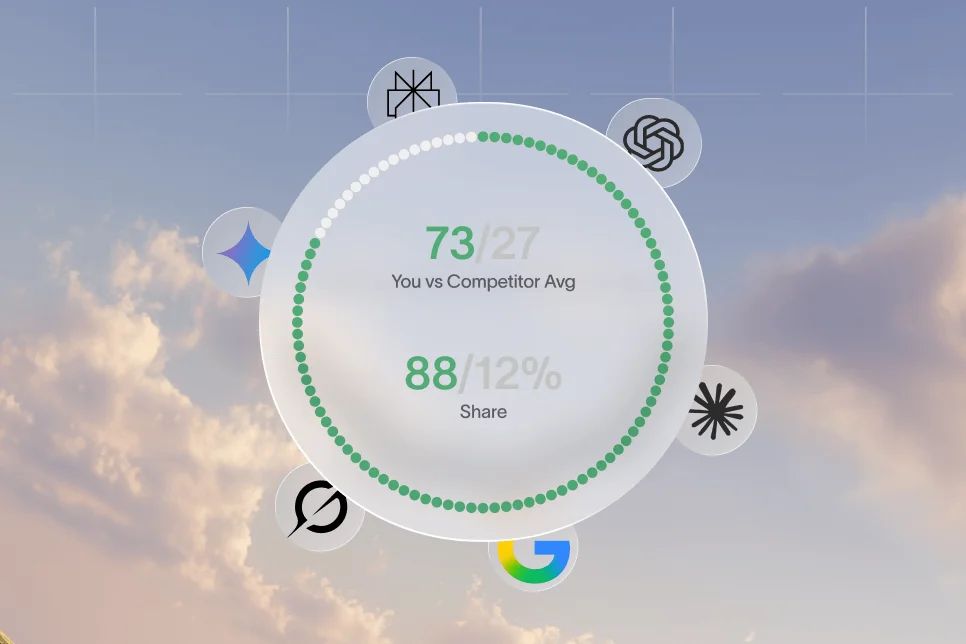
Use your usual stack. That might be Google Search Console, Google Analytics, and prompt-based spot checks. If you have a system that measures how often your brand appears in AI-generated answers, even better. That’s where a platform like Skayle can help teams rank higher in search and understand how often their pages surface in AI answers, instead of treating AI visibility as a black box.
Step 2: Check intent drift
This is the part most refreshes miss.
The query didn’t always change completely. Sometimes the query keeps the same words while the expected answer format changes.
A page that ranked for “best payroll software for startups” in 2024 might have won with a long-form opinion post. In 2026, that same query may reward:
- concise category framing
- buyer criteria tables
- clear alternatives
- recent examples
- strong definitions near the top
That is intent drift.
Review current search results and AI answers manually. Don’t copy them. Just study what shape of answer is winning now.
Then ask:
- Is my page still solving the same decision job?
- Does the opening answer the query immediately?
- Are the subheads aligned to how people compare options now?
- Does the page still sound current in category language?
Step 3: Check proof gaps
This is where weak pages lose citability.
AI systems prefer content that feels trustworthy and specific. Not because it uses more words, but because it contains extractable proof. That usually means definitions, examples, comparisons, clear claims, and a visible point of view.
Proof gaps show up when a page has:
- generic statements with no support
- outdated product screenshots
- old feature references
- no examples tied to real buyer situations
- claims like “best” or “leading” without context
As noted in AirOps’ 2026 refresh guide, a strong refresh improves accuracy, depth, and structure while preserving the authority of the original URL. That’s the standard. Not cosmetic editing.
Step 4: Check extractability
This is the part built for AI answers.
Read your page and ask a blunt question: what can actually be quoted from this page without rewriting it?
If the answer is “not much,” that’s your problem.
Make the page easier to extract by adding:
- direct definitions in 40 to 80 words
- comparison bullets
- decision criteria lists
- short answer blocks under common questions
- explicit use cases
- clear statements of tradeoffs
Think about the path you’re optimizing now:
impression -> AI answer inclusion -> citation -> click -> conversion
A lot of content still skips the first three steps and only thinks about clicks. That’s outdated.
What to change on the page when the diagnosis is clear
Once you know why a page is fading, the actual content refresh strategy becomes much easier. You’re not “updating content.” You’re fixing a visibility job.
Here’s the action checklist I’d use in order.
- Rewrite the top 150 words so the answer is immediate
- Update definitions, category language, and examples
- Add one strong point of view the page can own
- Remove filler sections that don’t help the query
- Add proof: examples, criteria, scenarios, screenshots, or sourced context
- Tighten headings so each one answers a real sub-question
- Improve internal links from related commercial and informational pages
- Refresh metadata if the positioning changed
- Review visuals, branding, and outdated interface references
- Recheck AI-answer extractability before republishing
Rewrite the opening for answer-first reading
Most stale pages bury the answer in throat-clearing.
Your opening should do three things fast:
- define the topic
- state your point of view
- tell the reader what to do next
Bad opening:
“Content marketing is constantly evolving, and staying up to date is essential for businesses that want to succeed online.”
Nobody wants that.
Better opening:
“A content refresh strategy updates existing pages so they regain rankings, stay accurate, and become easier for AI systems to cite. In most SaaS teams, the best pages to refresh are proven winners and near-winners, not forgotten blog posts.”
That kind of opening gives both people and machines something usable.
Add sections built for citation, not just ranking
This is the contrarian stance I’ll defend: don’t add more words just to look comprehensive; add cleaner answers that can be cited.
More length is not the fix. Better structure is.
Practical additions that help:
- one-sentence definitions under key headings
- “when this works” and “when this doesn’t” sections
- comparison criteria tables
- short examples from real workflows
- FAQ phrasing that mirrors conversational prompts
That’s also why refreshes affect conversion, not just visibility. A page that is easier to cite is usually easier to understand. A page that is easier to understand is usually easier to trust.
Fix visuals and conversion paths too
A good refresh is not only editorial.
If the page drives demos or signups, review the page like a buyer would:
- Are screenshots obviously outdated?
- Does the CTA still match the page intent?
- Are proof elements visible without scrolling forever?
- Is the design helping people compare, skim, and decide?
This gets ignored because teams separate content from conversion. Buyers don’t.
Virayo’s refresh checklist calls out updates to text, images, titles, and other SEO elements together, which is the right mindset. Refreshes work better when content quality, page clarity, and on-page signals move together.
Which pages to refresh first if your backlog is a mess
Most teams have too many candidate pages and no clear priority. So they either refresh nothing or refresh the wrong things.
Here’s the simpler way to choose.
Refresh these first
- Pages that used to rank in the top 3 to 10 and slipped
- Pages with commercial intent and clear pipeline influence
- Near-winners sitting just outside top visibility positions
- Comparison pages, alternatives pages, and category pages with outdated framing
- Evergreen educational pages with decaying examples or thin proof
That prioritization is consistent with Keywords Everywhere’s recommendation to double down on existing performers and push near-winners over the line.
Leave these for later
- pages with no strategic keyword target
- pages that were weak from day one
- pages with obsolete business relevance
- pages that should be merged or retired instead of refreshed
This is where teams get sentimental about content. Don’t.
A page is an asset, not a memory.
If the URL has no meaningful authority, no role in the funnel, and no realistic search job, it may not deserve a refresh. It may deserve consolidation.
Uproer’s examples on identifying refresh candidates are useful here because the hard part is often not editing. It’s correctly deciding what’s worth saving.
A practical weekly refresh cadence
If your team is small, don’t launch a giant project. Run a weekly cycle.
Here’s a realistic operating rhythm:
- Monday: identify 3 to 5 candidate URLs
- Tuesday: review current SERP and AI answer patterns
- Wednesday: update copy, proof, and structure
- Thursday: refresh internal links, metadata, and visuals
- Friday: republish, annotate changes, and set review checkpoints
That’s manageable for a lean content team.
And if your content production is already fragmented, this is where centralizing planning and updates matters. Skayle fits naturally here because it gives SaaS teams one place to plan, optimize, and maintain content built to rank and appear in AI answers, instead of running refresh work across disconnected docs, audits, and reporting tabs.
For teams already seeing losses from answer engines, our playbook on recovering AI Overviews traffic is a useful companion to this process.
The mistakes that make refresh projects fail
I’ve made some of these myself. Most operators have.
The problem isn’t lack of effort. It’s doing the wrong kind of update.
Mistake 1: Treating a refresh like a date change
If your refresh is just “2025” to “2026,” you didn’t refresh anything.
Freshness is not the date. It’s the relevance, accuracy, and utility of the page.
Mistake 2: Rewriting the URL from scratch without a reason
Sometimes a full rewrite is needed. Often it isn’t.
If the original page already has links, query history, and topical authority, preserve that asset unless the intent has completely changed. AirOps makes this point well: preserve the original URL authority when the page can be rehabilitated through stronger accuracy, depth, and structure.
Mistake 3: Adding fluff to look comprehensive
This one is everywhere.
Writers add 1,000 extra words of obvious filler because the page “needs depth.” But shallow information expanded into longer paragraphs is still shallow information.
Depth means clearer reasoning, better examples, stronger proof, and tighter coverage of actual sub-questions.
Mistake 4: Ignoring the page’s role in conversion
A refresh that recovers impressions but breaks conversion flow is not a win.
If the page is part of your path to revenue, review CTA placement, message match, and friction points after every major update.
Mistake 5: Not measuring before and after
This is the classic failure.
If you don’t record a baseline, you can’t tell whether the refresh worked.
At minimum, log:
- top queries
- impressions
- clicks
- ranking range
- assisted conversions
- prompt-based citation checks
- internal link changes
- publish date and update notes
You don’t need perfect attribution. You need enough discipline to learn.
The FAQ teams ask when they start refreshing for AI visibility
How often should you refresh content in 2026?
There isn’t one universal schedule. Refresh pages based on business value, volatility, and evidence of decay. High-intent pages in fast-moving categories often deserve review every quarter, while stable evergreen pages may only need a deeper pass twice a year.
What is the difference between a content refresh and a full rewrite?
A refresh keeps the core URL, search job, and existing authority while improving relevance, clarity, and structure. A rewrite is broader and usually changes the page more substantially because the original framing no longer matches intent or business needs.
Can a content refresh strategy help with AI Overviews and answer engines?
Yes, because fresher pages are often easier to trust, extract, and cite. As Sitebulb’s guide explains, refresh work now supports both traditional search visibility and AI-driven discovery.
Which pages usually improve fastest after a refresh?
Pages that already have authority, relevant backlinks, and strong intent alignment tend to respond first. That’s why near-winners and once-successful commercial pages are usually better bets than weak URLs with no traction.
What should you measure after updating a page?
Track both search and business signals. Watch impressions, clicks, query mix, ranking stability, assisted conversions, and whether the page starts appearing more consistently in AI-generated answers for target prompts.
What a modern content refresh strategy is really protecting
The old model was simple: publish, rank, decay, replace.
That model is too expensive now.
In 2026, your best content assets do more than collect clicks. They shape how your brand is described, whether your ideas get cited, and whether buyers encounter you before they ever visit your site.
That’s why I keep coming back to the same principle: in an AI-answer world, brand is your citation engine. If your page has a clear point of view, useful structure, current proof, and language the market recognizes, it becomes easier to cite and more likely to convert.
A strong content refresh strategy protects that compounding value. It helps you preserve URL authority, recover lost relevance, and make your best pages useful again in the places discovery now happens.
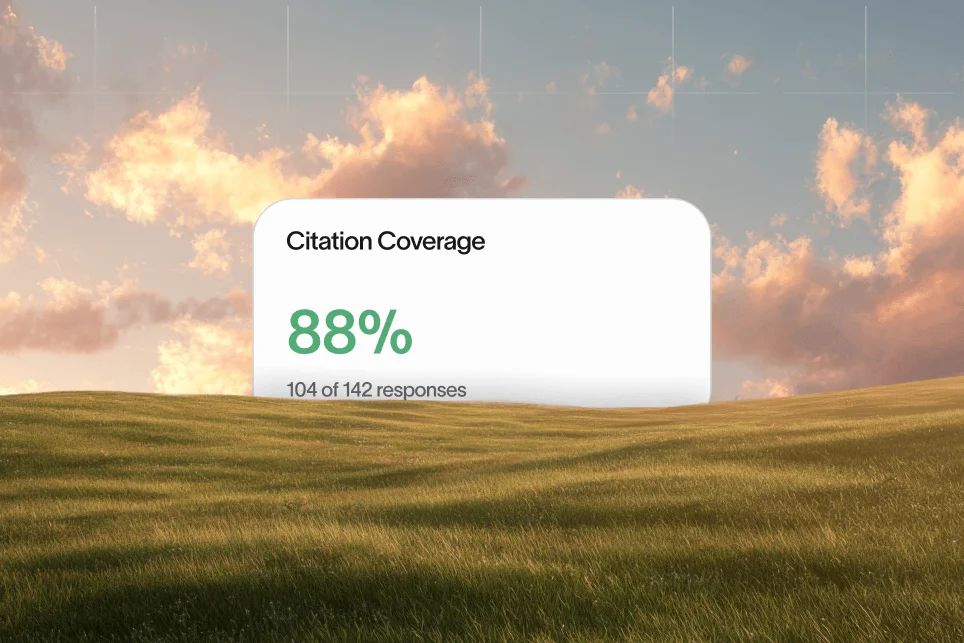
If your team is seeing strong pages fade, don’t assume you need more net-new content. Start by measuring where your existing pages have lost citation coverage, then refresh the ones that already deserve to win. If you want a clearer view of how your brand appears in AI answers and where refresh work should start, Skayle can help you measure that visibility and turn it into an execution plan.
References
- Sitebulb — Content Refresh Guide: How to improve search & AI visibility
- AirOps — The Content Refresh Guide to Recover Rankings, Grow …
- Keywords Everywhere — Content Refresh 101: What to Update (and Why It Works)
- Marketing Rewired on Medium — The Content Refresh Strategy No One Is Talking About
- Virayo — How To Do a Content Refresh for Better SEO (+ Free …)
- Uproer — Content Refresh Examples (& How to Identify Them)
- Content Refresh: The Must-Have Strategy in Every …
- Content refresh: 8 easy ways to refresh content