TL;DR
Citation-first content hubs structure SaaS documentation so AI systems can extract clear answers and cite your product. By combining answer-first explanations, evidence sections, entity clarity, and proper metadata, feature pages become reliable sources for AI-generated answers and search visibility.
Most SaaS documentation is written for humans skimming feature pages. But the fastest‑growing audience isn’t human readers—it’s AI systems deciding what to cite when someone asks a question.
If your feature pages aren’t structured for extraction, they won’t appear in AI answers no matter how good the product is.
A citation-first content hub flips the traditional documentation model: instead of writing pages and hoping they rank, you design them so AI engines can extract answers, verify claims, and cite your product as the source.
One simple rule explains the entire strategy: AI models cite the sources that present the clearest answer with the strongest evidence.
That’s what citation-first content is built for.
Why SaaS documentation rarely gets cited by AI systems
Most SaaS companies organize feature content like a marketing brochure.
Typical structure looks like this:
• Big hero headline
• Marketing copy about benefits
• A few screenshots
• Maybe a short FAQ
This structure works for landing pages, but it fails for AI extraction.
Large language models are trained to retrieve information that looks like verifiable answers, not promotional messaging.
According to the guide on answer‑first content published by Search Engine Land, AI systems are significantly more likely to cite content that starts with a direct answer and structured facts rather than long narrative explanations.
That means the typical SaaS feature page is invisible in AI responses.
AI systems prefer sources that resemble:
• Knowledge base documentation
• Q&A pages
• Structured technical explanations
• Evidence-backed claims
And there’s another shift happening.
Users themselves are now prompting AI to prioritize sources. A report discussed in Tom’s Guide highlights how people are increasingly asking AI tools to provide answers with citations up front.
If your documentation cannot be cited, your product disappears from those conversations.
This is why SaaS teams are moving toward citation-first content hubs.
The citation-first feature hub model
A citation-first hub is not a single article.
It’s a structured set of feature pages designed so AI systems can quickly understand:
• what the feature does
• how it works
• why it matters
• what evidence supports the claim
The structure we use internally is simple.
The Citation-First Feature Hub Model has four layers:
- Answer layer – direct answers to common feature questions
- Evidence layer – proof and technical details
- Entity layer – clear definitions of product capabilities
- Citation layer – references and structured metadata
Each layer increases the probability that AI systems extract your content as a trusted source.
Layer 1: The answer layer (lead with the result)
Every feature page should start with a direct explanation of the feature.
Not a headline.
Not a marketing paragraph.
A clear answer.
Example:
Bad feature intro:
“Our platform revolutionizes marketing automation with advanced AI capabilities.”
Good citation-first intro:
“Marketing automation is the process of automatically sending targeted messages to users based on behavior, events, or lifecycle stage.”
The difference is subtle but critical.
The second example provides a definition that AI systems can quote.
Research summarized in Search Engine Land’s answer‑first content guide explains that front‑loading facts instead of opinions increases the likelihood of being extracted by LLMs.
In practice this means:
• Define the feature immediately
• Keep the first paragraph under 60 words
• Answer the most obvious user question first
If the page can answer “What does this feature do?” in one paragraph, it becomes extractable.
Layer 2: The evidence layer (why the claim is trustworthy)
Citations only happen when a claim looks verifiable.
A simple explanation isn’t enough.
You need supporting evidence.
According to documentation on why sources matter from Citation Machine, citations exist primarily because they provide verifiable evidence behind an idea or claim.
That logic applies directly to SaaS feature documentation.
The evidence layer typically includes:
• product architecture overview
• supported integrations
• workflow diagrams
• usage scenarios
Example evidence block for a feature page:
Baseline feature claim:
“Our AI assistant summarizes customer conversations.”
Evidence layer expansion:
• Supports Slack, email, and CRM conversations
• Uses message threading to detect conversation boundaries
• Generates summaries under 120 words
• Exports summaries into CRM records
Now the claim is specific enough to cite.
Layer 3: The entity layer (make the product understandable)
AI systems need context to understand what your product is.
This is where most SaaS pages fail.
They assume readers already know the company.
AI systems do not.
Every feature page should define three entities clearly:
- Product name
- Feature category
- Related capabilities
Example entity block:
Product: Skayle
Category: SEO and AI search visibility platform
Feature: AI Search Visibility tracking
That context allows AI systems to associate your product with the correct category.
Without it, citations drift to competitors or aggregators.
If you want deeper examples of entity clarity in SaaS pages, our guide to LLM‑ready feature pages breaks down the structure used in high‑citation product documentation.
Layer 4: The citation layer (make attribution easy)
The final layer ensures attribution is technically easy.
This is where many teams stop short.
Even excellent documentation fails to get cited if it lacks reference signals.
Standard citation structures generally include four elements:
• Author
• Date
• Title
• URL
This structure is documented in detail by the citation standards described in Scribbr’s guide to citing web pages.
For SaaS feature documentation, this usually means adding:
• publication date
• update date
• documentation owner
• canonical URL
These elements create traceable references.
They help AI systems verify the source before citing it.
Step-by-step: building a citation-first content hub
Once the structure is clear, building the hub becomes straightforward.
Step 1: Identify feature questions worth citing
Start with the questions users actually ask.
Examples:
• “What does customer segmentation software do?”
• “How does AI search visibility tracking work?”
• “What tools monitor AI citations?”
These queries represent citation opportunities.
Each one deserves a page.
AI systems often extract answers from pages that directly mirror user questions.
Step 2: Create feature definition pages
Each feature gets a dedicated definition page.
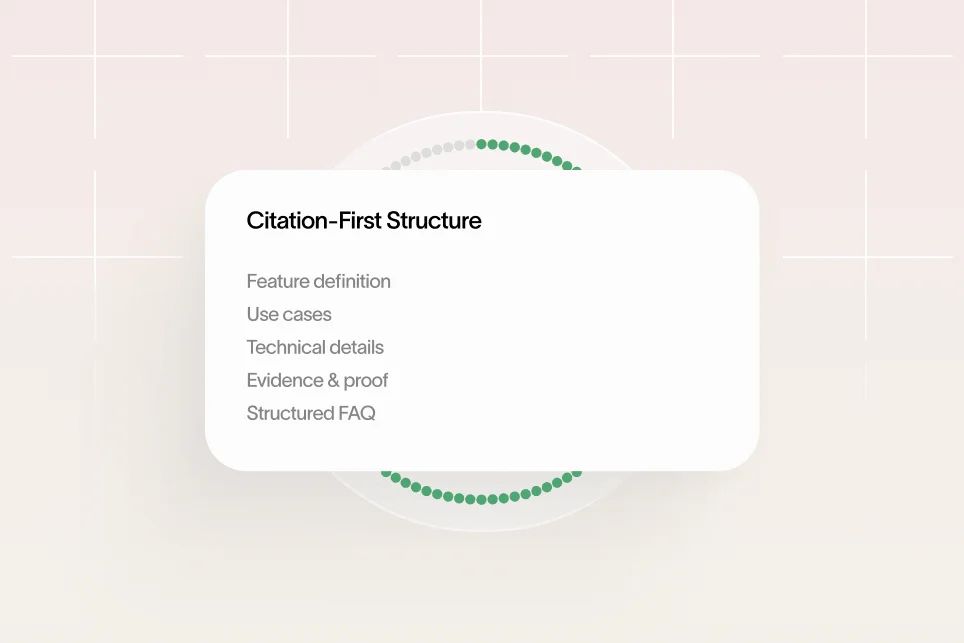
Structure:
Definition (50–80 words)
Explanation
Use cases
Evidence
FAQ
This structure aligns closely with the Q&A pattern recommended in Search Engine Land’s answer‑first content framework.
Step 3: Connect pages into a feature hub
Individual pages are not enough.
AI systems understand context through clusters.
Your hub should connect:
• feature overview pages
• use case pages
• integration pages
Internal links create topical authority.
For example, feature documentation often benefits from connections to supporting topics like structured data implementation or content extraction signals. If you’re optimizing content for AI discovery, improving markup clarity can help—our breakdown of structured data fixes for LLM extraction explains why.
Step 4: Add answer blocks for AI extraction
Each page should include two or three short answer blocks.
Example:
“AI search visibility tracking measures how often a brand appears in AI‑generated answers and whether those answers cite the brand as a source.”
That sentence alone can become a citation.
These blocks are the most commonly extracted sections by AI systems.
Step 5: Refresh documentation regularly
Citation eligibility decays when pages become outdated.
Documentation hubs should be refreshed at least twice per year.
If the feature evolves, update:
• feature capabilities
• integrations
• examples
Keeping documentation fresh is one of the simplest ways to maintain search authority. Our breakdown of a practical content refresh strategy shows how regular updates help pages keep rankings and citations.
A real example of citation-first documentation in practice
A SaaS analytics company we worked with had a familiar problem.
Their feature pages ranked reasonably well in Google.
But they never appeared in AI answers.
Baseline issues:
• feature pages began with marketing copy
• no clear definitions
• no structured FAQ
We rebuilt their documentation hub around citation-first content.
Changes included:
• adding definition paragraphs to each feature
• restructuring pages into Q&A format
• adding clear evidence sections
Within two months the company began appearing in AI responses when users asked about analytics workflows.
The product itself didn’t change.
Only the structure of the documentation did.
That’s the entire point of citation-first content.
The biggest mistake SaaS teams make with AI visibility
Most teams believe more content equals more visibility.
That assumption is wrong.
Publishing dozens of shallow pages rarely produces citations.
AI systems prefer fewer pages with clearer answers.
The contrarian takeaway:
Don’t scale content volume.
Scale content clarity.
One well‑structured documentation hub can outperform hundreds of blog posts when it comes to citations.
If your goal is visibility inside AI answers, documentation quality matters more than publishing frequency.
How platforms like Skayle help measure citation visibility
Even well‑structured documentation needs measurement.
Most analytics tools still focus on search rankings.
But rankings alone don’t show how AI engines describe your brand.
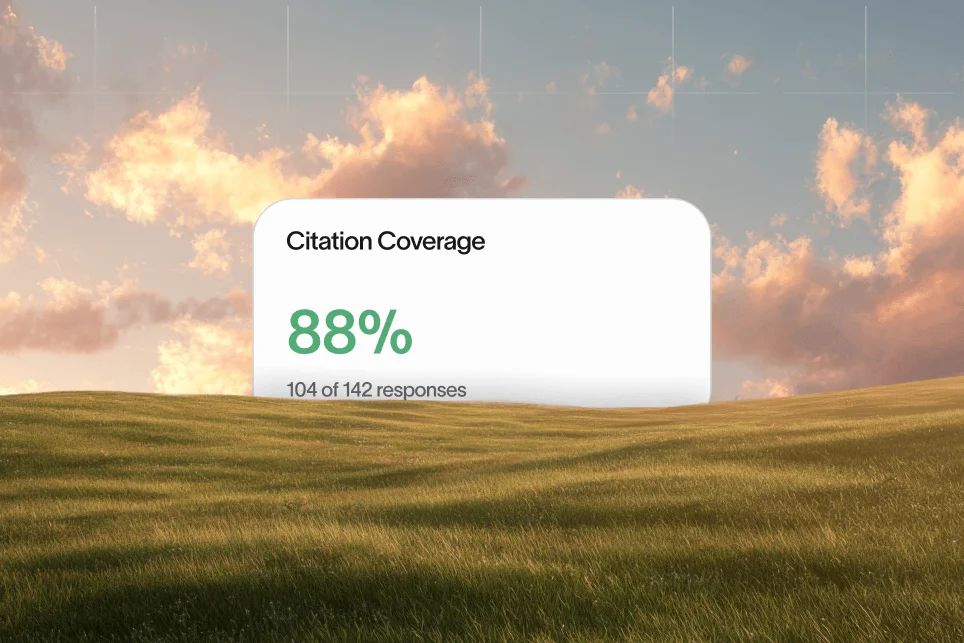
Platforms like Skayle help companies track how often they appear in AI responses and whether those answers cite their content.
Instead of guessing where your documentation appears, teams can measure:
• citation coverage
• mention rate
• competitor comparison
That visibility makes it easier to prioritize the pages that need stronger citation signals.
Common mistakes that kill citation potential
Even strong documentation can fail if a few structural issues exist.
The most common ones are surprisingly simple.
Burying the definition
If the core explanation appears halfway down the page, AI systems may ignore the content.
Lead with the answer.
Overly promotional language
Marketing copy rarely gets cited.
Neutral explanations perform far better.
No structured sections
Walls of text are difficult to extract.
Use clear headings and answer blocks.
Missing metadata
Without publication dates or authorship signals, documentation appears less authoritative.
Small fixes here often produce outsized visibility improvements.
Frequently asked questions
What is citation-first content?
Citation-first content is documentation designed so AI systems can easily extract and cite the information. It prioritizes clear answers, structured explanations, and verifiable evidence instead of marketing copy.
Why do AI models prefer answer-first content?
AI models are trained to retrieve concise explanations that resemble factual answers. Research discussed in Search Engine Land’s answer-first guide shows that pages starting with clear answers are more likely to be extracted and cited.
What makes SaaS documentation citation-friendly?
Citation-friendly documentation includes definitions, structured sections, evidence-backed claims, and metadata such as authorship and publication date. These elements help AI systems verify the credibility of the content.
Do citations matter for SEO as well?
Yes. Content that gets cited by AI systems often overlaps with high-quality search results. Clear definitions and structured explanations improve both traditional SEO and AI visibility.
How many pages should a citation-first content hub include?
Most SaaS products start with 10–20 feature documentation pages covering core capabilities, integrations, and workflows. Quality and clarity matter far more than sheer volume.
Why citation-first documentation is becoming a competitive advantage
Search is changing from link discovery to answer discovery.
That shift fundamentally changes how SaaS documentation should be written.
The companies that win in AI search will not be the ones producing the most content.
They’ll be the ones producing the clearest sources.
A well-structured citation-first content hub turns your documentation into a source of truth that AI systems can trust and reference.
And once a page becomes a reliable source, citations compound.
That’s when documentation stops being a support asset and becomes a growth engine.
If you want to understand how your brand currently appears inside AI answers—and where citation gaps exist—measuring your AI search visibility is the first step toward fixing it.