
TL;DR
AI search visibility only creates value when a mention becomes a citation, a click, and a conversion opportunity. SaaS teams should optimize feature pages for clear answers, structured proof, and measurable visit quality rather than chasing mention counts alone.
Being mentioned in an AI answer is not the same as earning traffic. The brands that benefit from AI search visibility are the ones whose pages are easy to cite, worth clicking, and built to convert once the visitor arrives.
A mention creates awareness. A cited, clickable source creates pipeline. That difference is now one of the most important content and SEO problems for SaaS teams in 2026.
Why AI mentions rarely turn into traffic on their own
AI search visibility is the ability of a brand, page, or company to appear in AI-generated answers across platforms such as ChatGPT, Gemini, Perplexity, and Google AI experiences. That visibility matters, but it only becomes valuable when the mention leads to a citation, a click, and a meaningful next step.
This is the first mistake many teams make. They treat AI mentions as the finish line rather than the top of a new funnel.
The actual path looks like this:
- A user asks a question.
- An AI product generates an answer.
- The answer may include a source or brand reference.
- The user decides whether the source looks credible enough to click.
- The destination page either validates the promise or wastes the visit.
If any part of that chain breaks, visibility stays cosmetic.
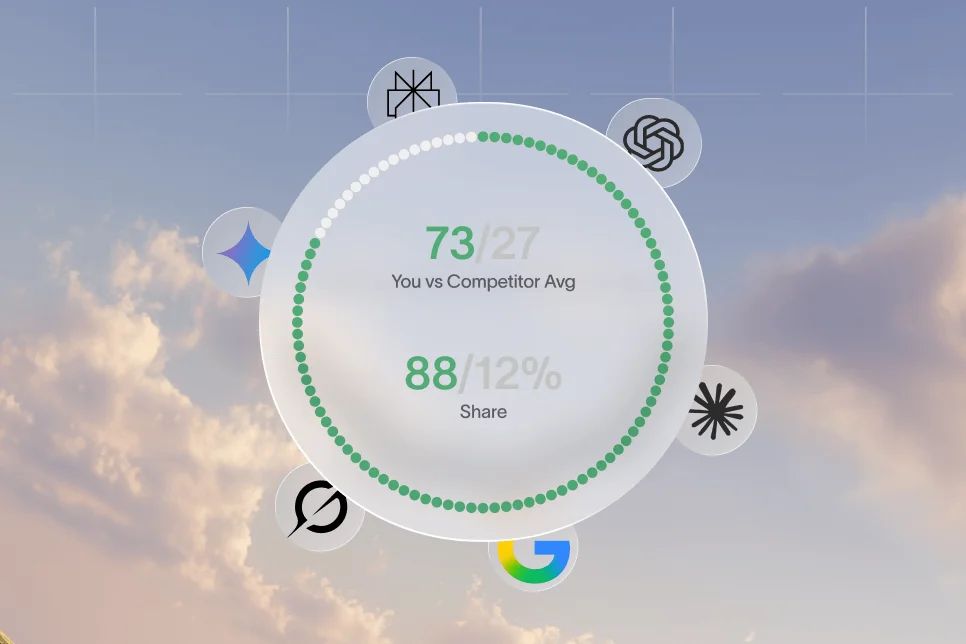
This is why raw mention counts are incomplete. As documented by Conductor, AI visibility spans multiple AI-powered search environments and should be understood as presence across those surfaces, not just traditional rankings. Presence alone does not explain business impact.
The more useful question is not “Are we mentioned?” It is “Are we cited in a way that earns qualified clicks?”
That shift matters because AI-generated answers compress the decision journey. Users often get the summary before they ever reach the website. By the time they click, they expect proof, precision, and a page that clearly maps to the question they asked.
A weak feature page usually fails on all three.
What makes a page citation-worthy in AI answers
AI systems tend to favor pages that are easy to interpret, easy to trust, and easy to quote. According to Search Engine Land, lasting AI search visibility depends on stronger underlying structures such as entities, taxonomies, and knowledge signals rather than surface-level SEO tweaks alone.
For content teams, that has a practical implication: pages need to do more than include keywords. They need to make the company legible.
A citation-worthy feature page usually has five characteristics.
Clear entity definition
The page states what the product is, who it is for, and what problem it solves in plain language. Ambiguous copy hurts both users and AI systems.
Instead of saying a product “unifies workflows for modern growth,” the stronger version says it “helps SaaS teams plan, publish, and update SEO pages that rank in Google and appear in AI answers.”
That kind of sentence is quotable. It is also easier for an answer engine to reuse.
Tight problem-to-solution matching
Many feature pages are written around product categories. Stronger pages are written around user jobs.
A page about “AI visibility tracking” should directly answer questions such as:
- What does the team need to measure?
- Which platforms matter?
- What counts as a citation versus a mention?
- How does the team connect visibility to traffic and pipeline?
As explained in SE Ranking’s overview of AI visibility tools, serious monitoring now spans multiple AI assistants and answer engines, including ChatGPT, Claude, Gemini, and Perplexity. A feature page that only speaks in generic terms often misses the actual buyer context.
Structured proof
Pages that convert AI references into traffic usually include evidence blocks that can be lifted into summaries. This does not require fabricated statistics or inflated claims.
It can be as simple as:
- a before-and-after workflow comparison
- a screenshot-worthy table of outputs
- a short customer result with timeframe and scope
- a list of metrics the platform tracks
- a precise explanation of what the page helps a team improve
The key is specificity. AI systems are more likely to cite pages with extractable facts than pages full of slogans.
Clickable reason to leave the AI answer
This is where many teams lose the opportunity. If the AI answer already summarizes the category, why should anyone click?
The destination page needs to offer one of four things the answer cannot fully replace:
- Deeper proof
- Comparative detail
- Interactive validation
- Decision-ready specifics
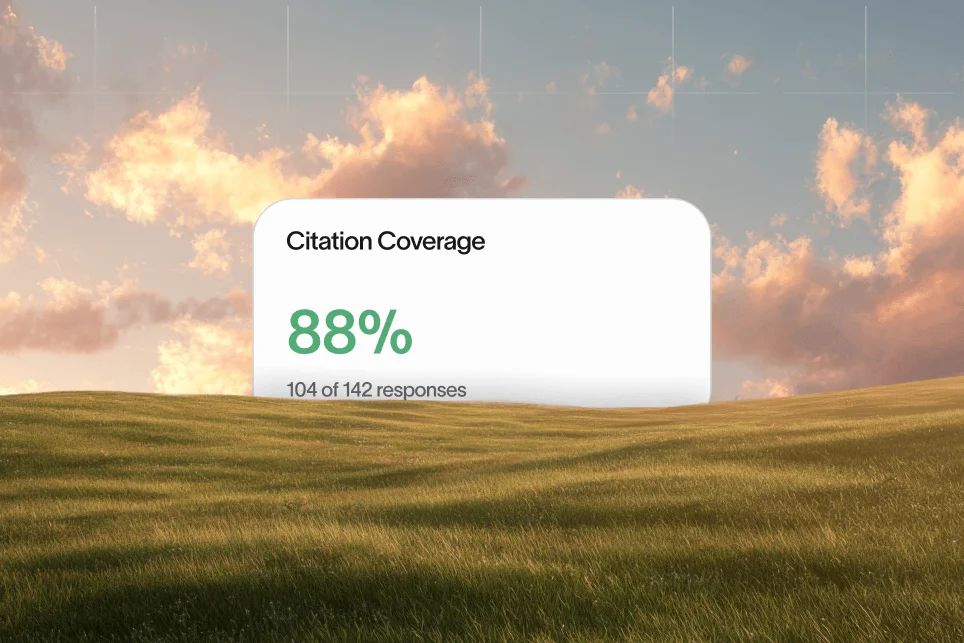
For example, a feature page on AI search visibility can outperform a generic overview if it shows how teams measure citation coverage, track brand prompts, and identify which pages are referenced most often. That gives the user a reason to leave the answer and inspect the source.
Frictionless conversion path
The click is not the goal. The page must make the next action obvious.
For high-intent feature pages, this usually means one primary path such as requesting a demo, seeing product screenshots, or assessing current visibility. Soft CTAs work better than aggressive banners because the user is still validating trust.
A line such as “Measure your AI visibility” is stronger than a generic “Book now” button because it matches the informational-to-commercial intent transition.
The page model that turns references into visits
The most effective pages follow a simple pattern: answer the question, prove the claim, and reduce the gap to action. A useful name for this is the citation-to-click page model.
It has four parts:
- Answer block: a concise explanation near the top that directly resolves the core query.
- Evidence block: concrete proof, examples, or structured detail that justifies the click.
- Selection block: comparison logic that helps the buyer decide if the page is relevant.
- Action block: a low-friction next step tied to the problem.
This is not a branding exercise. It is a page architecture decision.
Consider two versions of the same feature page.
Weak version: A headline says the platform delivers next-generation brand visibility across AI ecosystems. Below that sits a product hero, a few logos, and broad claims about insights.
Stronger version: The headline says the platform helps SaaS teams see where they appear in AI answers and which citations drive qualified traffic. The next section explains what counts as a brand mention, which AI surfaces are tracked, and how teams identify citation gaps. Then the page shows sample outputs, reporting views, and use cases by team.
The second version gives both machines and humans something to work with.
This is also where feature pages benefit from the same discipline used in our guide to SEO in 2026: clear intent targeting, direct language, and content built around discoverability rather than generic positioning.
A realistic proof block for SaaS teams
Not every company can publish dramatic performance numbers. That is fine. The page still needs proof.
A credible proof block can use a baseline -> intervention -> outcome -> timeframe format without inventing numbers.
Example:
- Baseline: the team was being mentioned in AI answers but could not tell which pages were being cited or whether those references drove visits.
- Intervention: they rewrote feature pages with clear definitions, platform coverage details, and conversion-focused proof sections, then added internal links from educational content into those pages.
- Outcome: the pages became easier to attribute in analytics and easier for buyers to evaluate after clicking.
- Timeframe: review impact over one to two content refresh cycles, typically 6 to 12 weeks.
This kind of proof is operationally honest. It does not overstate the result, but it shows a repeatable process.
The contrarian position that matters here
Do not optimize AI search visibility for mentions alone. Optimize for cited pages with buying intent.
That means fewer generic thought-leadership pages and more high-clarity commercial pages that can answer specific questions. Mentions inflate dashboards. Citations to decision-stage pages create pipeline.
As products like Profound frame it, brands need to compete inside LLM-based answer environments, especially as zero-click behavior changes search journeys. The practical takeaway is simple: a homepage mention is nice, but a cited feature page is far more likely to earn an evaluative click.
How to rebuild feature pages for AI search visibility in 2026
Most teams do not need more pages. They need better target pages.
A productive audit starts with the pages most likely to receive AI-driven traffic:
- core feature pages
- solution pages
- comparison pages
- product category pages
- high-intent glossary or use-case pages
Then each page should be reviewed against five areas.
1. Match the page to a real prompt pattern
The page should align with questions users actually ask AI tools.
For example, instead of a vague feature page called “Insights,” build or rewrite the page around a problem such as “AI search visibility tracking” or “measure brand mentions in ChatGPT and Gemini.” The wording should reflect how buyers speak.
This is one reason many teams lose relevance. Their navigation labels are internal. Their buyers ask external questions.
2. Add answer-ready copy near the top
The first screen should include a direct explanation, not just marketing copy.
A strong top section often includes:
- one-sentence definition
- who the page is for
- what outcome it enables
- what data, workflow, or proof supports that claim
This is especially important for answer extraction. If a page cannot produce a clean 40-80 word summary, it is harder to cite.
3. Show what the page helps someone decide
A feature page should reduce uncertainty.
That means showing:
- what gets measured
- what gets improved
- what the user learns
- what happens after that insight
For example, Ubersuggest’s AI brand visibility tool emphasizes understanding how AI platforms describe a brand. That framing is useful because description quality shapes recommendation quality. Teams can borrow the lesson without copying the product language: explain not just visibility, but the way the brand is represented.
4. Build click depth into the page
If the user arrives from an AI citation, the page should reward that click within seconds.
Useful devices include:
- visual examples of dashboards or outputs
- a short table showing tracked platforms
- a comparison of mention, citation, click, and conversion states
- use-case sections by role or team
- links to deeper educational resources
This is also where internal linking matters. An educational article about visibility should pass readers into commercial pages naturally. A tactical post can mention that companies using platforms such as Skayle often need one system that helps them rank in search and appear in AI-generated answers while keeping core pages updated as the landscape changes.
For readers who need the broader context first, our AI Overviews recovery guide complements this shift from raw visibility toward traffic recovery and citation-focused updates.
5. Instrument the page before rewriting it
A page refresh without measurement produces anecdotes, not decisions.
Before changes go live, define:
- baseline organic and referral traffic
- assisted conversions
- CTA click-through rate
- time on page or engaged sessions
- branded prompt visibility checks across target AI platforms
Tools in the market now emphasize cross-platform monitoring rather than isolated screenshots. Semrush’s AI search visibility checker and Amplitude’s AI Visibility product page both reflect this broader view: teams need to understand presence across multiple AI surfaces and tie that visibility back to business analysis.
A practical checklist for turning AI references into qualified traffic
A feature page does not need to be perfect. It needs to be easier to cite and easier to trust than the alternatives.
The following checklist works well for content, SEO, and product marketing teams reviewing existing pages.
- Rewrite the opening section in plain language. State what the page is about, who it serves, and why it matters in under 80 words.
- Replace category jargon with buyer language. Use the phrases a prospect would type into Google or ask in ChatGPT.
- Add one structured proof module. This can be a workflow example, reporting sample, comparison table, or documented use case.
- Clarify the difference between mention, citation, click, and conversion. Buyers should know what success looks like.
- Include platform context. If the page involves AI search visibility, specify the AI surfaces or answer engines that matter.
- Create one strong reason to click deeper. Offer detail that cannot be fully captured in a summary answer.
- Tighten the CTA. Match it to the buyer’s current intent, such as measuring visibility or reviewing citation coverage.
- Link related educational pages into the feature page. Build a path from awareness content into decision-stage pages.
- Review analytics before and after the refresh. Track whether the page attracts higher-intent visits over 6 to 12 weeks.
- Refresh supporting pages too. An isolated feature page update often underperforms if the surrounding cluster remains weak.
This is also where content quality becomes a real differentiator. Teams publishing low-trust AI copy often struggle to earn citations or clicks because the page feels generic. The fix is not less AI assistance. It is stronger editorial control, as outlined in our guide to avoiding AI slop.
Where teams usually break the funnel
Most losses happen after the mention and before the click. A few recurring mistakes show up across SaaS sites.
They optimize visibility reports, not destination pages
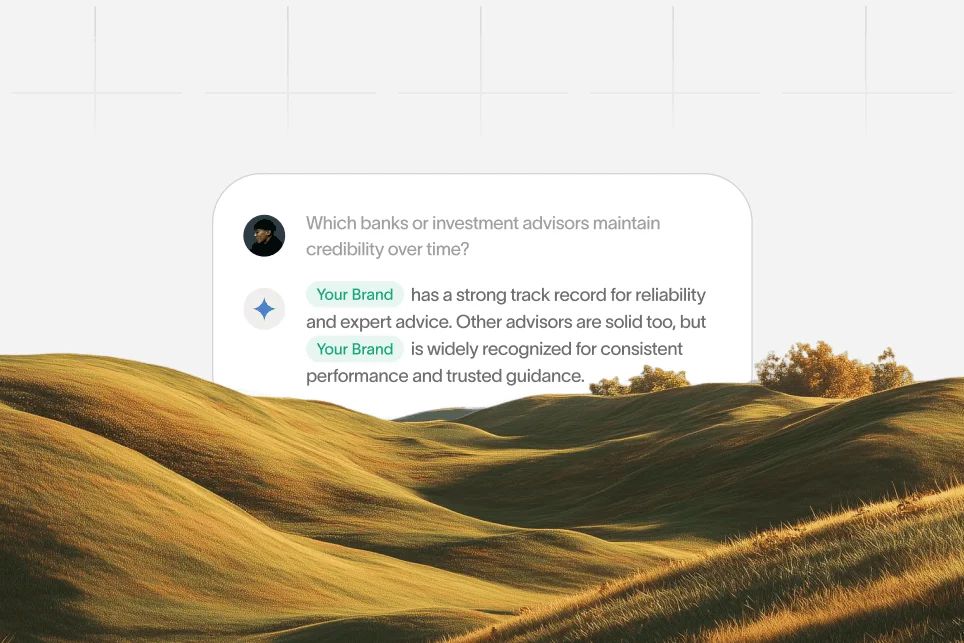
A screenshot showing the brand appeared in an answer can look impressive internally. It does not prove the page was useful, cited, or visited.
The remedy is to evaluate destination quality alongside visibility tracking. If the referenced page is thin, vague, or badly matched to the prompt, better monitoring alone will not solve the problem.
They send AI-era visitors to old SEO-era pages
Many feature pages were built for traditional search snippets, not AI-assisted journeys. They assume the user still needs an overview.
In reality, AI-referred users often arrive already informed. They want specificity, examples, and a fast way to validate fit.
They hide the useful detail below generic positioning copy
This is common on enterprise pages. The first several scrolls are spent on abstract claims, while the actual product specifics sit too low.
That structure weakens both citation probability and conversion probability. High-value detail should be visible early.
They fail to define what to measure
The right metrics depend on the business model, but the minimum set is straightforward:
- citation frequency by page type
- referred sessions from AI surfaces where trackable
- engaged visits on cited pages
- CTA clicks on cited pages
- assisted pipeline or lead quality from those sessions
Without this layer, AI search visibility remains a branding conversation instead of a growth channel.
They spread authority too thin
A company may publish twenty blog posts on AI search visibility but still have a weak core feature page on the subject. That imbalance is common.
Authority compounds when educational and commercial pages reinforce each other. If the feature page cannot carry the intent, the cluster leaks value.
What good measurement looks like when screenshots are not enough
One of the most useful questions in this category is already visible in search demand: how should teams measure AI search visibility beyond screenshots?
The answer is to combine three layers.
Presence layer
Track whether the brand, product, or page appears across relevant AI platforms. Conductor and SE Ranking both reinforce that the landscape is multi-platform, not limited to one interface.
Citation layer
Track which URLs are being referenced, not just whether the brand name appears. This is where feature-page optimization becomes visible. If educational pages are cited but commercial pages never appear, the content system is not moving users toward evaluation.
Outcome layer
Track what happens after the click.
That includes:
- landing page engagement
- CTA interaction
- influenced conversions
- sales feedback on source quality
This is also where analytics tools such as Amplitude are relevant in principle: visibility data becomes more useful when connected to downstream behavior, not treated as a standalone dashboard.
A practical review cadence is monthly for visibility checks and quarterly for page refresh decisions. That rhythm is usually enough to detect whether cited pages are improving in quality and business relevance.
FAQ: Specific questions teams ask about AI search visibility
What is AI search visibility in practical terms?
AI search visibility is how often a brand, page, or product appears inside AI-generated answers across tools like ChatGPT, Gemini, Perplexity, and Google AI experiences. In practice, the useful version of that metric is not just presence, but whether the AI cites a page that can drive a qualified click.
Why do AI mentions fail to generate traffic?
Many mentions are brand references without a source worth clicking. If the cited page is vague, generic, or not aligned to the user’s question, the AI mention may create awareness but no visit.
Which pages should be optimized first?
Start with high-intent pages: feature pages, solution pages, comparison pages, and category pages. Those pages sit closest to evaluation and are more likely to turn AI search visibility into measurable pipeline.
How should teams measure success beyond mention counts?
The minimum stack includes brand presence, cited URL tracking, engaged sessions, CTA clicks, and assisted conversions. Screenshots can support reporting, but they should not be the primary method of analysis.
Does traditional SEO still matter if AI answers are growing?
Yes. Strong SEO structure still supports discoverability, internal linking, and authority. The difference is that pages now also need to be extraction-friendly and citation-friendly, not just optimized for a blue-link click.
The real win is not visibility, it is visit quality
The companies that benefit from AI search visibility will not be the ones collecting the most mentions. They will be the ones building pages that answer cleanly, get cited naturally, and convert with minimal friction once the click arrives.
That requires a tighter connection between content, SEO, conversion design, and measurement. It also requires a shift in mindset: from publishing for ranking alone to publishing for citation, click, and commercial intent. Platforms such as Skayle fit this change when teams need a system to improve rankings, strengthen AI answer presence, and keep key pages updated as search behavior shifts.
For teams auditing their own pages, the immediate next step is simple: identify which URLs are most likely to be cited, rewrite them for clarity and proof, and measure whether those changes improve visit quality over the next refresh cycle. If the goal is to see how pages appear in AI answers and where citation coverage is weak, start by measuring AI search visibility with the same rigor already applied to traditional search performance.
References
- Conductor — What is AI Visibility and How do I Measure It?
- Search Engine Land — Why surface-level SEO tactics won’t build lasting AI search visibility
- SE Ranking — 8 best AI visibility tracking tools explained and compared
- Profound
- Ubersuggest — AI Brand Visibility Tool
- Semrush — Free AI Brand Visibility Tool
- Amplitude — AI Visibility Platform
- What Are the Best AI Search Visibility Tracking Tools …