Define the evaluated set
Select the organization, tracked competitors, prompts, supported engine surfaces, locale or market context, and the time window being compared.
AI answers are sampled observations, not a fixed index. This methodology explains what Skayle evaluates, how the signals differ, and what the resulting metrics can—and cannot—support.
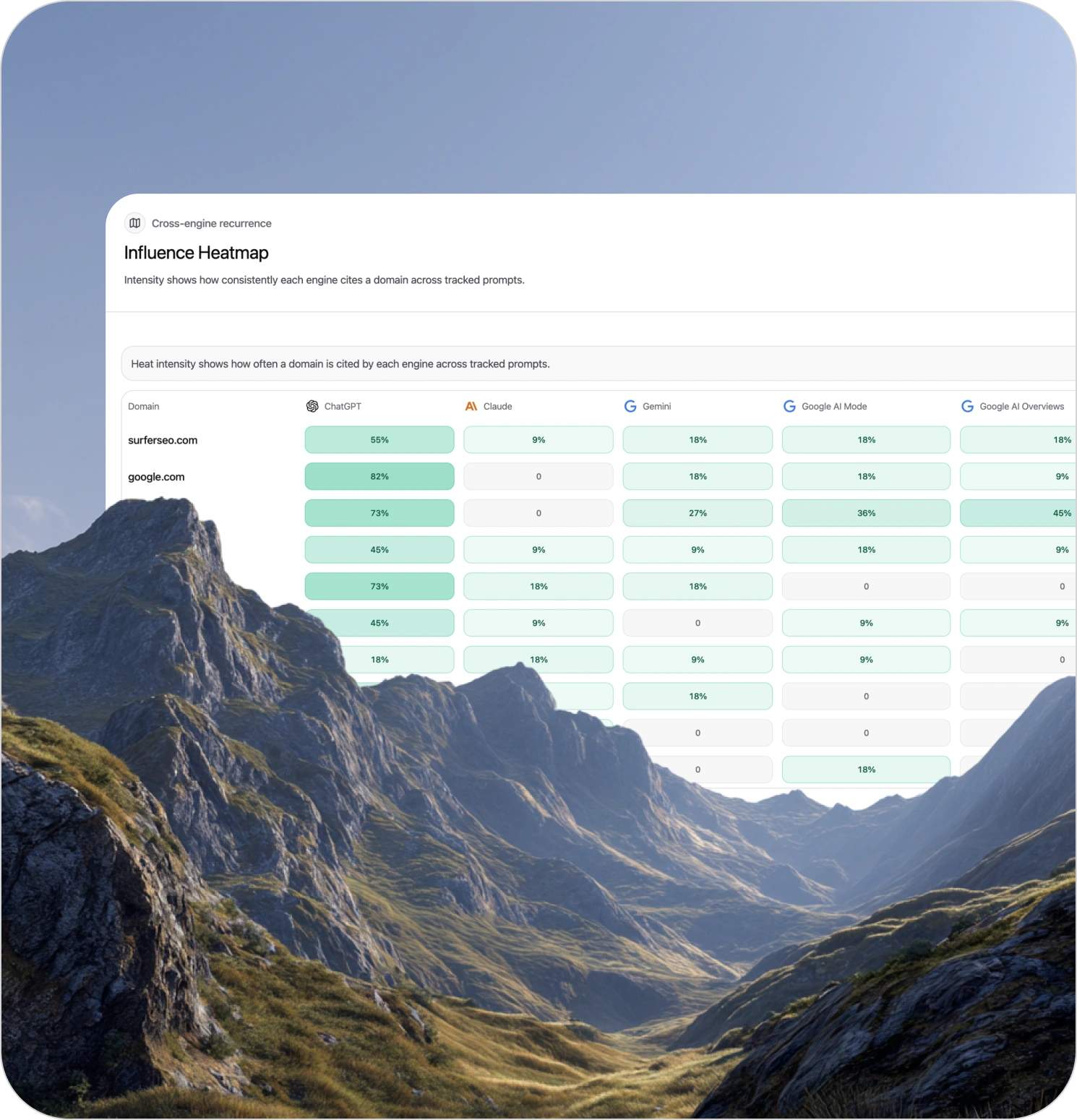
Every reported number should remain tied to the prompt set, engine set, organization, competitor configuration, and collection period that produced it. Without those boundaries, the number is not reproducible or comparable.
Select the organization, tracked competitors, prompts, supported engine surfaces, locale or market context, and the time window being compared.
Run the defined prompts across the selected engines and retain the response evidence associated with that observation. Results can vary by engine, model, time, and response conditions.
Record brand presence, citations, source domains, competitors, and other supported classifications separately. A mention does not become a citation unless the response identifies a supporting source.
Trend and competitor comparisons use the same defined prompt, engine, organization, and period scopes. Changing the evaluated set changes what the result represents.
Use the observed gap to inspect content, authority, site structure, or positioning. The observation supports prioritization; it does not prove that a proposed change caused a later model response.
Interpretation
Limitations
Last updated: August 11, 2026. Method definitions may evolve as supported engine surfaces and evaluators change.