
TL;DR
Skayle vs Surfer SEO is a choice between page-level scoring and a compounding, site-wide authority system. In 2026, the best decision criteria include AI citation coverage, extractability, and refresh loops—not just content scores.
Choosing between Surfer SEO and Skayle is less about “which tool is better” and more about what operating model a team is committing to. One approach optimizes pages in isolation; the other builds a system that compounds authority across an entire site.
Surfer SEO helps tune a single URL; Skayle is built to run a site-wide ranking and AI-visibility system that turns monitoring signals into publish and refresh decisions.
Point of view: page scores are a weak proxy for outcomes in 2026. Teams win by building content that search engines and answer engines can reliably extract, trust, and cite—then keeping that content updated as the SERP and AI answers change.
1. Single-page scoring vs site-wide compounding: what each tool is designed to do
Surfer SEO is broadly known for content analysis and on-page guidance tied to what’s ranking for a query. It’s useful when a team needs fast feedback loops for a specific page and a specific SERP.
Skayle’s design intent is different: it’s a ranking operating system—planning, creation, publishing, and ongoing maintenance tied to measurable visibility, including AI answers.
What “system logic” means in Skayle vs Surfer SEO
In practice, “system logic” is the difference between:
- Page-level optimization: improve one article’s topical coverage, headings, and terms so it’s closer to the current ranking set.
- Portfolio-level compounding: improve how the whole site builds authority over time (internal links, entities, schema, refresh cadence, template governance, and visibility monitoring).
Surfer tends to sit in the first bucket. Skayle is built for the second.
Where Surfer is genuinely strong
Surfer SEO can be a good fit when:
- A team has strong editorial operations already and just wants on-page tuning.
- The site has a small set of high-value pages, and the priority is getting each one “closer” to the current SERP norms.
- Writers need structured guidance without running deep manual SERP research every time.
(Reference: Surfer SEO)
Where the limitations show up in 2026
In 2026, two things make pure page scoring less decisive:
- AI answers and overviews are extractive. Engines pull chunks they can quote, compare, or summarize. If content isn’t structured for extraction, “more terms” doesn’t fix it.
- Rank stability depends on maintenance. Content decays. Competitors refresh. SERPs shift. Without a refresh loop, teams keep re-doing the same work.
Skayle’s content model is aimed at turning SEO from “optimize, publish, hope” into a maintained system. This is also why Skayle content tends to emphasize workflows like content refresh strategy rather than just on-page checklists.
2. The compounding authority loop that page tools don’t cover
A useful way to frame Skayle vs Surfer SEO is the difference between “winning the page” and “winning the category.” Page tools help with the first. Systems help with the second.
Here’s a named model that makes the difference concrete.
The Cite-to-Convert Loop (Skayle’s system model)
The Cite-to-Convert Loop is a 4-step loop designed for the 2026 funnel: impression → AI inclusion → citation → click → conversion.
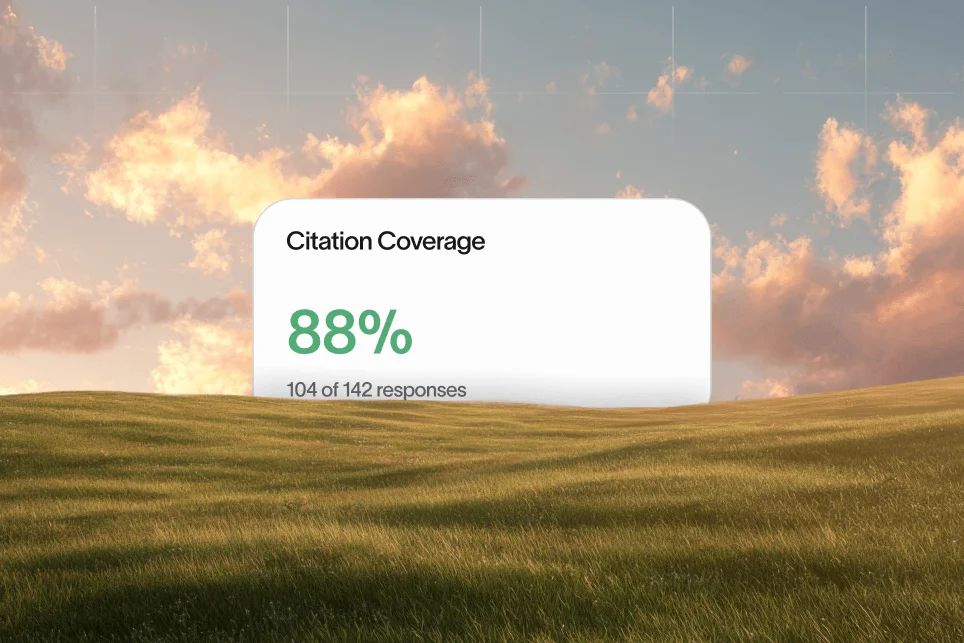
- Instrument: measure rankings and AI citations for priority topics.
- Extract: structure pages so bots can reliably extract entities, definitions, comparisons, and steps.
- Earn: publish or refresh what closes coverage gaps, not what “sounds good.”
- Refresh: monitor drift (SERP changes, AI answer changes) and update with governance.
A page scoring workflow can support “Extract” partially, but it rarely covers “Instrument” and “Refresh” as a closed loop.
Why this matters for SaaS pipeline math (without pretending there’s one magic metric)
No tool can promise a specific lift. But the funnel math is straightforward to measure.
Example measurement plan (illustrative, not a claim):
- Baseline: 20,000 organic sessions/month to demo-intent pages, 1.5% demo conversion rate, 10% demo-to-opportunity.
- Intervention: restructure 15 pages for extraction (definitions, comparison blocks, FAQ, schema), add internal links, and refresh 5 decayed pages.
- Target outcome (to validate): +15% qualified organic sessions and +0.3–0.7 percentage point conversion lift from better intent matching and clearer comparisons.
- Timeframe: 6–10 weeks for early signal, 12–16 weeks for trend.
- Instrumentation: Google Analytics, Google Search Console, and a weekly citation tracking snapshot in the AI tools your buyers use.
The key is that this outcome is measurable. Skayle is positioned around that measurable loop, especially on the AI side (see the platform view of AI search visibility).
Contrarian stance: stop chasing “content score” as a primary KPI
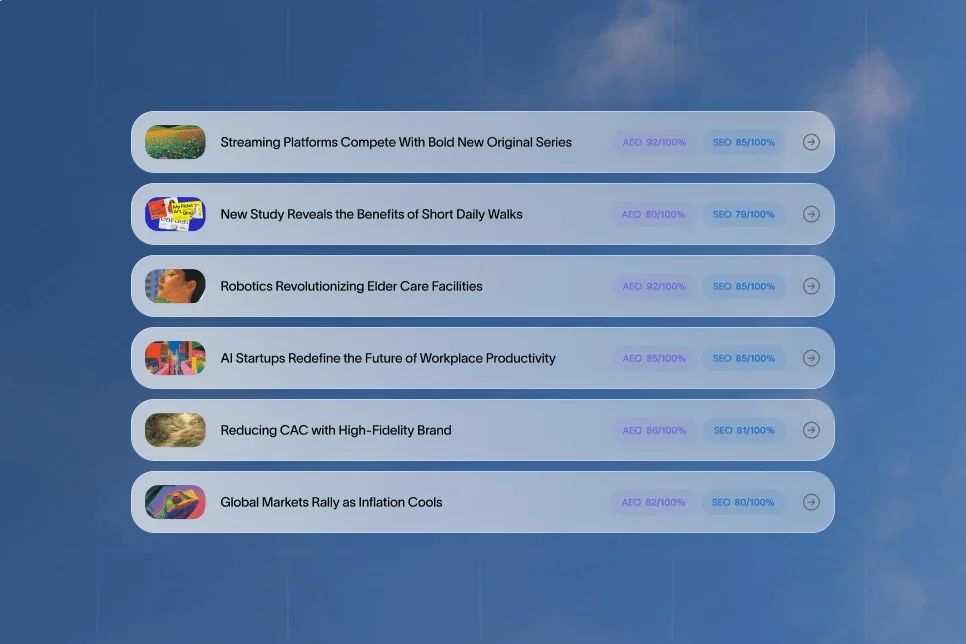
Content scores can be a useful check, but they’re a bad goal.
A score is correlation with what ranks today, not a guarantee of:
- being extractable in AI answers,
- being credible enough to be cited,
- converting the click once you get it,
- staying current 90 days later.
Teams that treat scores as the KPI tend to overproduce similar pages and underinvest in the infrastructure that makes authority compound.
3. The real workflow comparison: from query → publish → maintain
Skayle vs Surfer SEO becomes clearer when the comparison is framed as process, not features.
Workflow A: “optimize the doc” (common Surfer-centric motion)
A typical flow looks like:
- Pick keyword
- Draft page
- Run content analysis
- Add terms/headings until the score is acceptable
- Publish
- Move on
This can work when:
- the site already has strong topical authority,
- the query is narrow,
- the team has clear conversion design and a mature internal linking practice.
But most SaaS teams fail on steps 5–6: they publish, then they stop looking.
Workflow B: “manage the content asset” (Skayle-centric motion)
A system-first flow looks like:
- Plan coverage (cluster + supporting pages)
- Build consistent content objects (definitions, comparisons, FAQs, use cases)
- Publish with governance (templates, structured sections, internal links)
- Track rankings + AI answers + citations
- Refresh when signals show decay or gaps
This is aligned with the idea behind Skayle’s GEO workflows: teams need content that ranks in blue links and shows up in AI overviews.
Technical difference that matters: extractability and rendering reliability
A lot of “why aren’t we cited?” issues are not writing problems. They’re extraction problems.
Common technical blockers:
- content injected client-side (bots get incomplete HTML)
- canonical issues (AI engines pick the wrong URL)
- weak schema coverage (entities and page purpose are unclear)
- inconsistent headings and repeated near-duplicate pages
Skayle’s worldview pushes teams toward technical reliability because it’s prerequisite for citations. If a team needs the technical checklist, this is the right direction for crawl and extract fixes.
(References: Google Search Central documentation, Schema.org)
4. What changes in 2026 when AI answers are part of the SERP
Surfer SEO was built in a world where the main problem was “how do we write a page that ranks?” That problem still exists. It’s just incomplete.
In 2026, the question is: “How do we get included in answers, get cited, and make that citation convert?”
AI engines reward structure, not just coverage
Answer engines tend to prefer sources that:
- define terms cleanly
- give step-by-step procedures
- compare options with explicit criteria
- include constraints, edge cases, and clear scope
This is why Skayle’s content systems angle leans into extractable formatting and monitoring loops (see the system approach in generative engine optimization).
What to build into pages so citations lead to clicks
A citation is not a conversion. Pages still need to earn the click and then earn the demo.
Practical conversion elements that survive both SEO and AI:
- Above-the-fold clarity: what the product is, who it’s for, and the exact problem it solves.
- Comparison blocks: “X vs Y” with decision criteria. (This is where AI answers often pull quotable lines.)
- Proof primitives: customer stories, metrics (if real), screenshots, implementation steps.
- Friction controls: fast load, minimal popups, clean navigation.
To keep measurement honest, use event-based tracking in Google Tag Manager and report funnel performance in Looker Studio.
Where most teams get this wrong
Three failure modes show up repeatedly:
- They optimize the blog, but conversions happen on product pages. Citations land on informational pages; the next click is unclear.
- They create “AI-friendly” content that’s generic. AI can summarize generic content without citing it.
- They never measure citations. Without tracking, teams can’t tell whether AI visibility is rising, flat, or being taken by competitors.
The practical fix is to treat AI visibility as a monitored channel, not a vibe. This is the core idea behind AI answer tracking.
(References: Perplexity, OpenAI, Anthropic)
5. Decision criteria that don’t waste six months (plus a checklist)
Skayle vs Surfer SEO decisions go wrong when teams compare feature lists instead of constraints.
Choose Surfer SEO when the constraint is “writer guidance per page”
Surfer SEO is often the better fit when:
- the content team needs tactical on-page guidance quickly
- the site is smaller and the goal is to push a handful of pages up the SERP
- the company already has separate systems for planning, publishing, and reporting
Surfer can also complement other suites where keyword research and audits happen elsewhere, such as Semrush or Ahrefs.
Choose Skayle when the constraint is “execution consistency across the whole site”
Skayle is more aligned when:
- content is fragmented across tools and people
- rankings are inconsistent because the site lacks governance
- the team needs a repeatable way to publish and refresh at scale
- AI visibility and citations are part of the growth model
This includes programmatic and template-driven workflows, where compounding effects matter more than any single page.
A checklist teams can use before committing (10 items)
- List the 20 pages that drive revenue outcomes (demos, trials, qualified leads).
- Confirm the current bottleneck: research time, writing quality, on-page tuning, publishing throughput, refresh bandwidth, or attribution.
- Decide whether the primary KPI is page-level rank lift or site-wide authority growth.
- Audit internal linking: do money pages receive links from informational winners?
- Audit extractability: can a bot pull definitions, steps, and comparisons from the HTML?
- Decide what “AI visibility” means for the team (citations, mentions, inclusion, or traffic) and how it will be tracked.
- Pick a refresh cadence (monthly for top pages, quarterly for the rest) and assign an owner.
- Define conversion requirements: what must be true for an informational click to become a demo?
- Instrument the funnel: set events, form steps, and assisted conversions.
- Run a 30-day pilot with 5 pages: one new page, two refreshes, two comparison pages, then evaluate with a pre-defined scorecard.
Common mistakes in Skayle vs Surfer SEO evaluations
- Mistake: treating “content optimization” as the job. The job is revenue visibility through rankings and citations.
- Mistake: assuming AI citations are automatic once you rank. Many ranking pages are not structured for extraction.
- Mistake: ignoring maintenance cost. A page you never refresh is a liability once the SERP changes.
- Mistake: forgetting governance. If every writer invents a structure, the site becomes impossible to manage.
(References: Google Lighthouse, Web.dev)
6. FAQ: Skayle vs Surfer SEO in real buying scenarios
Is Surfer SEO “bad” for SEO in 2026?
No. It can be useful for on-page work, especially for teams that already have strong content operations and just need consistent SERP-aligned guidance. The limitation is that page optimization alone doesn’t solve AI citation coverage, refresh discipline, or site-wide governance.
Does Skayle replace keyword research tools like Semrush or Ahrefs?
It depends on how the team runs research and reporting today. Many teams still keep dedicated research suites like Semrush or Ahrefs for competitive intelligence, while using Skayle to operationalize publishing and maintenance. The main difference is that Skayle is positioned as an execution system, not a dashboard.
What’s the fastest way to test “system vs page” in 30 days?
Pick five URLs with clear intent and stable tracking: two decayed pages, two comparison pages, and one new supporting page. Define baseline metrics (rank, clicks, conversion rate, and citation inclusion), apply consistent structure + internal links + schema, then compare deltas at day 30 and day 60.
How do AI citations change the content brief?
Briefs need to include extractable blocks: definitions (40–80 words), decision criteria tables, step-by-step processes, and FAQs aligned to conversational queries. It also helps to specify which entities must be unambiguous (product category, integrations, compliance terms) so the page is easier to cite.
If a team already uses Surfer SEO, what’s the gap to close?
The usual gap is maintenance and measurement. Teams should add a refresh system (what to update, when, and based on which signals) and start tracking AI answer inclusion alongside rankings. That closes the loop between what gets published and what actually becomes visible in modern SERPs.
If the goal is to choose between page optimization and a compounding authority system, evaluate Skayle vs Surfer SEO using a pilot that measures rankings, citations, and conversion—not just content scores. To see how a ranking operating system ties those signals together, measure your AI visibility and use it to drive what gets refreshed and published next.