
TL;DR
If you’re asking what is SEO in 2026, it’s no longer just about ranking pages in Google. Modern SEO means making your content easy to understand, trust, rank, and cite across both search engines and AI-generated answers.
A lot of teams still treat SEO like a publishing checklist: pick a keyword, write a post, wait for traffic. That worked well enough for a while. It does not hold up when Google, AI Overviews, ChatGPT, and other answer engines are all deciding whether your brand is worth surfacing.
If you’re asking what is SEO in 2026, the short answer is this: SEO is the work of making your brand easy to understand, trust, rank, and cite across both search engines and AI-generated answers. That definition is broader than old-school ranking tactics, and it matters because visibility now starts before the click.
Why the old definition of SEO is too small now
For years, the simple definition was fine: SEO helps your website rank higher in search results. That is still true, but it is incomplete.
According to Google Search Central’s SEO Starter Guide, SEO is about helping search engines understand your content and helping users find your site and make a decision. That second part matters more than ever. Ranking is not the end goal. Being useful enough to earn attention is.
Other standard definitions point in the same direction. Moz describes SEO as improving a website’s content, structure, and visibility to rank higher. Search Engine Land frames it as connecting content with users by delivering relevant, valuable information. Put those together and you get the practical version most SaaS teams need: SEO is not just traffic acquisition. It is discoverability infrastructure.
That is the point of view I would use if I were briefing a founder today.
If your site is hard to crawl, vague in its positioning, thin on evidence, and inconsistent across pages, you may still publish content, but you will struggle to win durable visibility. Google may hesitate to rank you. AI systems may summarize competitors instead of citing you.
This is where the modern funnel changes the work. You are no longer optimizing only for impression to click. You are optimizing for impression to AI answer inclusion to citation to click to conversion.
That changes what “good SEO” looks like.
We’ve covered the broader shift in our guide to SEO in 2026, but the short version is simple: the teams winning now build pages that are easy to parse, easy to trust, and easy to extract.
The 4-layer visibility model that makes modern SEO easier to manage
Most teams get overwhelmed because they lump everything into one bucket called SEO. I prefer a simpler model: crawlability, relevance, evidence, and maintenance.
If you remember those four layers, most SEO decisions become easier.
- Crawlability: Can search engines and AI systems access and understand the page?
- Relevance: Does the page clearly match the query and the reader’s intent?
- Evidence: Does the content show enough specificity, proof, and authority to deserve ranking or citation?
- Maintenance: Does the page stay accurate as the market, product, and SERP change?
That is not a gimmicky framework. It is just the cleanest way I know to explain why some sites publish constantly and still go nowhere.
I’ve seen this in SaaS content audits more times than I can count. A team will say, “We already have 150 blog posts. Why are we not getting pipeline?” Then you look closer.
The pages overlap each other. Search intent is mixed. Product pages are vague. Comparisons have no point of view. Stats are outdated. Internal links are random. The site has volume, but not clarity.
Modern SEO punishes that kind of fragmentation.
In AI search, it gets worse. If your page does not present a clean answer, a direct definition, a useful list, or a clear point of view, it becomes hard to cite. AI answers tend to pull from sources that feel trustworthy and uniquely useful. Brand becomes your citation engine.
That is why article structure matters more now. A readable page with direct headers, concise definitions, and proof blocks is not just good for users. It is easier for machines to interpret.
1. Start with search intent, not keywords in isolation
The most common beginner mistake is thinking SEO starts with the keyword. It starts with the reason behind the keyword.
If someone searches “what is seo,” they usually want a clear definition, a basic explanation of how it works, and enough context to understand why it matters. They do not want a bloated agency pitch. They also do not want a dense technical manual.
That sounds obvious, but a lot of pages still miss it.
Semrush defines SEO as the process of making your website more visible in search engines without paying for ads. That is useful because it highlights intent immediately: people asking this question want to understand organic visibility.
Here is the practical move:
Match the page to the real job the query is trying to do
For an informational keyword like “what is seo,” your page should do four things quickly:
- Give a clean definition.
- Explain why SEO matters now.
- Break down the main components.
- Show what changed because of AI-generated answers.
If you skip any of those, you leave room for another page to become the default answer.
A simple way to test intent fit is to read only your subheadings. If the outline alone does not answer the searcher’s core question, the page is probably unfocused.
Don’t chase traffic with the wrong page type
One of my favorite contrarian rules is this: don’t force conversion pages to rank for educational queries; build the right page for the right job instead.
I’ve watched teams try to rank a demo page for an early-stage query, then wonder why bounce rates are ugly and conversions are weak. If the reader needs education, give them education. If they need evaluation, give them comparison content. If they need trust, give them proof.
SEO works better when each page has one clear role.
2. Make your site easy to understand before you make it impressive
A lot of SEO problems are really comprehension problems.
You might have a great product. You might have strong design. You might even have decent domain authority. But if your site structure and page copy make readers work too hard to understand what you do, performance suffers.
That applies to both humans and machines.
As Moz notes, SEO includes improving site structure and visibility. That is not just a technical concern. It affects whether your value proposition lands in five seconds or gets lost in abstraction.
What clarity looks like on a real page
If I land on a SaaS page, I should be able to answer these questions almost immediately:
- What does this company do?
- Who is it for?
- What problem does it solve?
- Why is it different?
- What proof supports the claim?
When those answers are fuzzy, rankings often stall because engagement signals, internal linking logic, and topic coherence all weaken together.
On content pages, clarity shows up in smaller ways too:
- Descriptive headlines
- Short paragraphs
- Direct definitions
- Useful examples
- Internal links that reinforce the topic
- Clean on-page hierarchy
That last point matters more than people think. If every article is a wall of text, it may technically be “long-form,” but it is not extractable.
A concrete before-and-after example
Let’s say you have a page targeting “SEO content audit.”
Baseline: The page opens with a broad paragraph about digital transformation, then jumps into a 17-point list with no examples, no process, and no point of view.
Intervention: You rewrite the intro to define what an SEO content audit is in two sentences. Then you add a step-by-step review process, include screenshots or examples from an actual audit, group fixes into quick wins versus structural issues, and tighten the internal links.
Expected outcome: Better time on page, stronger query match, easier extraction in AI answers, and a clearer path to conversion over the next 6 to 8 weeks.
No fake guarantees. Just a page that finally does its job.
3. Build pages that answer, not pages that wander
This is where old blog habits quietly kill performance.
A lot of content still opens too wide, meanders through generic background, and buries the useful material halfway down the page. That is bad for users. It is also bad for AI visibility.
Digital Marketing Institute emphasizes that SEO is about earning traffic from editorial or natural search results. Editorial quality is not just grammar. It is structure, judgment, and usefulness.
The pages most likely to get cited do a few things well
They tend to include:
- A direct answer near the top
- Tight definitions in 40 to 80 words
- Numbered or bulleted breakdowns
- Specific examples
- Strong section headers
- A visible point of view
That is not accidental. Those are citation-friendly traits.
If your content says the same thing as everyone else, in softer language, with less proof, you are giving the model no reason to choose you.
The common writing mistake I keep seeing
Teams often try to sound “authoritative” by sounding abstract.
They write lines like, “Organizations must leverage content ecosystems to meet evolving discoverability demands.” Nobody talks like that. More important, nobody cites it.
A stronger sentence would be: “If your content is vague, AI systems are more likely to summarize someone else.”
Clear beats clever.
This is also why human editing matters even when AI helps with drafting. If you want a deeper look at that balance, we broke it down in our guide to more human AI articles.
4. Authority now comes from proof, not volume alone
There was a period when publishing more often could cover a lot of weaknesses. In 2026, that tradeoff is worse.
You still need coverage. You still need topic clusters. But authority is increasingly tied to whether your content contains something worth trusting and repeating.
Michigan Technological University describes SEO as creating and optimizing relevant, authoritative content in a way that helps visitors and search engines. That word, authoritative, is where many content programs break.
What proof looks like without inventing data
You do not need made-up benchmarks. You do need evidence.
Useful proof can include:
- A real process you use internally
- Before-and-after messaging examples
- Product screenshots or workflow details
- Original observations from audits
- A clear explanation of tradeoffs
- Specific timelines for measuring impact
For example, if you publish a page about content maintenance, do not stop at “refresh content regularly.” Show what triggers a refresh.
A stronger block might say:
- Baseline traffic has flattened for 8 weeks
- Rankings slipped from positions 4-6 to 9-12
- SERP intent shifted toward comparison-style content
- Product messaging changed after a new release
- The page is now a refresh priority for the next monthly cycle
That is useful. It is also easier to trust.
This is one reason platforms like Skayle matter in practice. The value is not “AI writes blogs fast.” The value is having a system that helps SaaS teams plan, improve, and maintain pages so they rank higher in search and appear in AI answers without SEO execution getting scattered.
Don’t publish ten thin pages when one strong page should exist
Here is the contrarian stance I’d push hard: don’t create more content to fix weak authority; consolidate and sharpen what already deserves to win.
I’ve seen sites with three near-duplicate pages targeting the same concept:
- what is seo
- seo explained
- beginner seo guide
None of them rank well because each one dilutes the other.
A single strong page with a sharp definition, clean structure, internal links, examples, and updated context often outperforms the fragmented version.
5. Internal links and page relationships shape topical authority
Internal linking is one of those topics people treat as hygiene, then wonder why their content feels disconnected.
In reality, internal links tell both users and search engines how your knowledge is organized. They help distribute authority, clarify topic relationships, and move readers toward deeper or more commercial pages when the timing is right.
A practical checklist for a healthier SEO content system
If I were cleaning up a SaaS content library this month, I would do these five things first:
- Map each page to one primary intent and one supporting cluster.
- Merge overlapping articles that target the same query family.
- Add internal links from broad educational pages to deeper tactical guides.
- Rewrite weak intros so the answer appears in the first 100 words.
- Set a refresh schedule for pages tied to product, SERP, or AI visibility changes.
That checklist sounds simple because it is. The hard part is doing it consistently.
What good internal linking looks like
A foundational page like this one should naturally connect readers to adjacent topics. For example, someone learning what SEO is may also need a clearer view of AI search visibility, content systems, or refresh workflows.
That is why it makes sense to point readers toward our guide to SEO in 2026 for the broader market shift, and toward content maintenance guidance when the issue is keeping rankings from decaying over time.
The key is relevance. Do not scatter links because you can. Link because the next page deepens the same conversation.
6. AI visibility changes the standard for what “good SEO” means
This is the biggest shift, and it is the one many teams still treat like a side topic.
Traditional SEO asked, “Can this page rank?” Modern SEO also asks, “Can this page be cited?”
That second question changes how you write, structure, and maintain content.
The traits that make a page easier for AI systems to cite
Pages are more citation-ready when they include:
- Clear definitions near the top
- Distinct subtopics under direct headers
- Specific claims with attribution
- Lists that summarize key points cleanly
- Original examples or opinionated explanations
- Consistent terminology across the site
This is where many brands miss the opportunity. They write perfectly acceptable search content, but nothing memorable enough to become source material.
If your brand has no clear point of view, no useful examples, and no content discipline, you may still be indexed. You just will not be referenced often.
A realistic measurement plan
Because we should not invent numbers, the best way to manage AI visibility is to set a measurement plan before calling anything a win.
For one page or cluster, define:
- Baseline metric: current rankings, organic clicks, branded impressions, and citation appearances in AI answers
- Target metric: improved rankings for the primary keyword cluster and more recurring mentions in AI-generated responses
- Timeframe: 6 to 12 weeks for page-level updates, longer for cluster-level authority shifts
- Instrumentation: Google Search Console, analytics, and a platform that tracks how your brand appears in AI answers
That last piece matters because unmeasured visibility becomes a blind spot fast. If you need to see how often your brand is actually showing up in AI-generated answers, a ranking and visibility platform like Skayle can help measure that gap and tie reporting back to execution.
7. SEO wins compound when maintenance is part of the system
The last principle is the least glamorous and one of the most important.
SEO is not a one-time publishing event. It is an ongoing maintenance function.
Screaming Frog describes SEO as improving the quality and quantity of visitors through better visibility in algorithmic search. The phrase that matters to me is “improving.” That implies continued work, not one finished asset.
What maintenance actually means in practice
A strong page should be reviewed when:
- The SERP intent changes
- Your product positioning changes
- Competitors publish stronger pages
- Links break or internal pathways weaken
- Stats, screenshots, or examples go stale
- AI answers begin surfacing a different framing of the topic
I learned this the hard way on older content programs. We would celebrate a page when it reached page one, then ignore it for months. Traffic held for a while, then slowly eroded. Nothing dramatic. Just steady decay.
By the time someone noticed, the page needed a rewrite, not a refresh.
Refreshes are often higher leverage than net-new posts
This is another place where teams overvalue production and undervalue upkeep.
A page already ranking in positions 5 to 12 is often a better bet than another new article on a loosely related keyword. Tightening the intro, clarifying intent, updating examples, improving internal links, and sharpening the CTA can produce more business value than publishing something new just to keep the calendar full.
That is especially true for SaaS teams with limited headcount. Fragmented content operations are expensive. Consistent maintenance compounds.
The mistakes that quietly weaken SEO for both Google and AI answers
By this point, the patterns are clear. Still, these are the mistakes I see most often:
Publishing before the page has a clear job
If you cannot explain the page’s primary intent in one sentence, it is not ready.
Writing vague intros
Your first paragraph should answer the query, not warm up for six sentences.
Treating design and SEO like separate projects
Poor scannability hurts comprehension. Poor comprehension hurts ranking and citation potential.
Chasing volume instead of authority
More pages do not always mean more traffic. Sometimes they just create overlap and confusion.
Ignoring refresh cycles
The page that won last year can become stale quietly. Search visibility does not stay earned by default.
FAQ: the questions people usually ask after “what is seo”
What is SEO in simple terms?
SEO is the process of making your website easier to find, understand, and trust in search engines. In 2026, that also includes making your content easier for AI systems to cite in generated answers.
What is the main goal of SEO?
The main goal is to improve organic visibility so the right people find your content without paid ads. A stronger SEO program also helps your brand become a source that AI tools reference when answering questions.
Does SEO still matter if AI answers reduce clicks?
Yes. If anything, SEO matters more because AI answers still need source material. Strong SEO increases the odds that your brand is indexed, surfaced, cited, and trusted before the click even happens.
Can beginners do SEO on their own?
Yes, at a practical level. You can learn the basics of search intent, page structure, internal linking, and content quality without being technical. The harder part is staying consistent and measuring what actually changes rankings and visibility.
What is an example of good SEO?
A good example is a page that clearly answers a real search query, uses clean headings, matches intent, includes useful examples, and links logically to related pages. It should help a human quickly and be structured clearly enough for search engines and AI systems to interpret.
If you want the practical version, SEO in 2026 is not about gaming an algorithm. It is about publishing pages that are clear, relevant, evidence-backed, and maintained well enough to keep earning attention over time.
That is the work that compounds. That is also the work that gives your brand a better shot at showing up not only in Google, but inside the answers people increasingly trust before they ever visit a website.
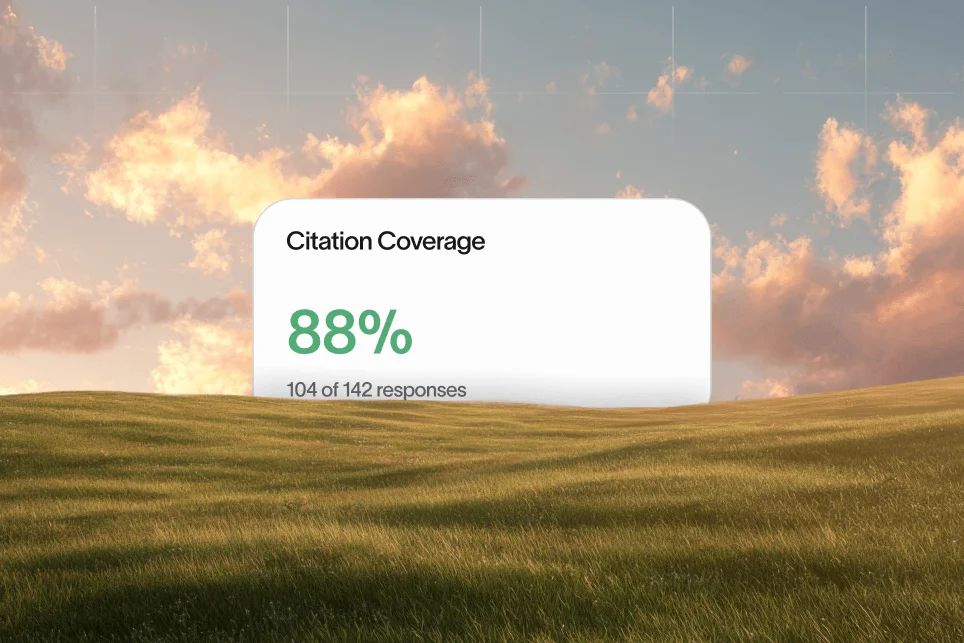
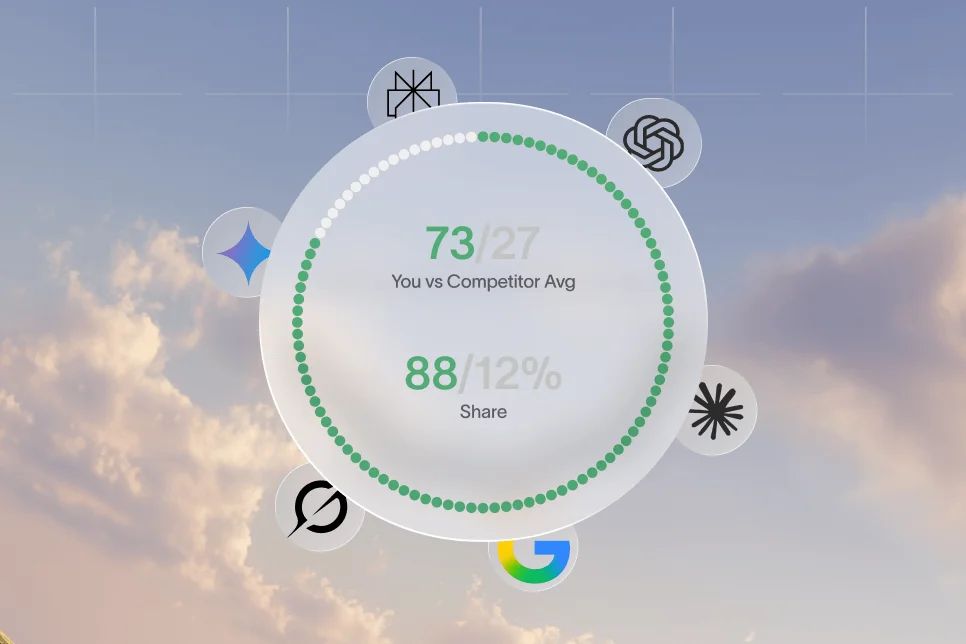
If your team is trying to understand where that visibility stands today, start by measuring it. See how you appear in AI answers, where your citation coverage is thin, and which pages deserve a sharper refresh before you publish the next ten posts.
References
- Google Search Central: Search Engine Optimization (SEO) Starter Guide
- Moz: What Is SEO? Search Engine Optimization Best Practices
- Digital Marketing Institute: What Is SEO and How Does it Work?
- Search Engine Land: What Is SEO - Search Engine Optimization?
- Semrush: What Is SEO? An Intro to Search Engine Optimization
- Michigan Technological University: What is SEO?
- Screaming Frog: What is SEO?
- Search engine optimization