
TL;DR
Feature grids are too vague for modern SaaS SEO. Turn features into capability pages that define the job, user, context, and outcome so AI agents can cite your content and buyers can understand your product faster.
Most SaaS sites still describe their product the way a sales deck does: short bullets, generic tabs, and a grid of icons that say almost nothing. That used to be survivable. In 2026, it leaves a lot of discovery on the table because AI systems need clearer signals than “powerful automation” and “advanced analytics.”
If you want better visibility, you need to describe what your product does, for whom, in what context, and with what outcome. A good rule is simple: AI agents cannot recommend what your pages fail to define.
Why feature grids break down in modern SaaS SEO
A lot of teams think they have a content problem when they really have a translation problem. The product is useful. The website just doesn’t express that usefulness in a way search engines, AI answer engines, and busy buyers can interpret quickly.
Traditional feature pages are usually built for internal comfort, not external clarity. They mirror the product menu. They echo the roadmap. They make sense to the team that built the tool, but not necessarily to someone asking, “What software helps me route leads by territory?” or “Which platform can update stale SEO pages at scale?”
That gap matters more now because SaaS SEO is no longer just about ranking a page in ten blue links. According to Yes Optimist, modern SaaS SEO has expanded to include visibility in AI answer engines alongside traditional organic search. That changes what page structure needs to do.
A homepage bullet like “workflow automation” is too vague to earn trust. It gives no use case, no buyer context, no business outcome, and no reason for an AI system to cite your page over a stronger source.
I’ve seen this in audits over and over. Teams assume their nav structure is enough. Then they wonder why competitors with weaker products show up more often for problem-aware searches. The competitor usually isn’t winning because they built more features. They’re winning because they explained them better.
Here’s the contrarian take: Don’t start from your product architecture. Start from the decision language buyers use when they need help.
That means shifting from:
- feature names n- module labels
- internal terminology
- broad claims with no proof
To:
- capability definitions
- use-case pages
- buyer-specific language
- structured evidence
As Semrush frames it, SaaS SEO is fundamentally about improving visibility through optimized site structure. If structure is the bridge to discovery, flat feature grids are a weak bridge.
The shift from product bullets to capability mapping
Let’s define terms clearly.
A feature is a product element. A button, report, workflow, alert, dashboard, or integration.
A capability is the customer-facing job that set of features enables. For example:
- “Role-based permissions” is a feature.
- “Control access across large marketing teams” is a capability.
- “Webhook support” is a feature.
- “Sync lead events with your CRM in near real time” is a capability.
That distinction changes everything for SaaS SEO.
AI systems are more likely to surface content that answers a practical query in plain language. They respond better to pages that connect product functionality to a user problem, buyer type, and outcome. That lines up with guidance from Sure Oak, which emphasizes that strong SaaS SEO targets specific audience pain points rather than generic feature lists.
So when I say “map capabilities,” I mean building pages and page sections around five pieces of information:
- What job the product helps someone do
- Who that capability is for
- When they need it
- What proof or constraints matter
- How the capability connects to an action or result
That five-part structure is what I call the capability mapping model. It’s not fancy. It’s reusable.
If your current page says:
- Automated reporting
- Custom dashboards
- Flexible permissions
- Enterprise integrations
You haven’t actually said much.
If the page says:
- Build executive dashboards for SaaS pipeline and organic growth reporting
- Give content leads, SEOs, and revenue teams separate views without duplicating work
- Share read-only performance reporting across stakeholders
- Connect reporting to planning so teams can act on visibility gaps
Now the page carries meaning.
That meaning helps with rankings, but it also helps with the new funnel: impression -> AI answer inclusion -> citation -> click -> conversion.
What a capability page needs before AI agents can cite it
Most companies do not need more words. They need cleaner page anatomy.
A capability page should answer the same questions a sharp sales engineer or solutions consultant would answer in a first call. But it should do it faster, with less fluff, and in a format both humans and machines can extract.
Here’s the structure I recommend.
Lead with a direct definition
Start with a 40-80 word paragraph that defines the capability in plain English.
Example:
“Lead routing assigns inbound leads to the right owner based on territory, segment, deal size, or account rules. The goal is faster follow-up, cleaner ownership, and fewer handoff mistakes.”
That kind of paragraph is useful because it can stand alone. It’s citation-ready. It also helps buyers confirm they’re in the right place.
Add buyer and use-case context
Next, specify who uses the capability and in what situation.
For example:
- For RevOps teams managing multi-region inbound demand
- For SEO teams updating hundreds of programmatic pages
- For support leaders triaging enterprise accounts by SLA tier
This matters because AI systems often look for context clues. If your page never says who it’s for, you force the model to infer too much.
Translate functions into outcomes
Don’t stop at what the software does. Explain what changes because of it.
Weak copy:
- Create custom fields
- Build dashboards
- Trigger alerts
Stronger copy:
- Standardize tracking across campaigns so reporting stays consistent
- Surface performance changes before rankings or conversions slide further
- Alert owners when key pages need updates
Make proof visible
Proof does not need to mean inflated case studies.
It can mean:
- specific workflow examples
- supported inputs and outputs
- screenshots of page sections you can annotate visually later
- implementation constraints
- integrations involved
- reporting views tied to decisions
When proof is absent, your content feels like every other vendor page. According to Directive Consulting, SaaS SEO should move away from vanity metrics and focus on SQLs. That same logic applies to capability pages: don’t optimize the page to sound impressive; optimize it to help qualified buyers recognize fit.
Use structured formatting that mirrors how questions are asked
Break content into sections like:
- What it does
- Who it helps
- Common use cases
- Inputs it uses
- Output or result
- Limitations or prerequisites
- Related capabilities
This is also where internal linking starts to matter. If you’re talking about how authority and AI mentions diverge, it’s useful to connect readers to our explanation of citation gaps. If you’re thinking about how pages become more citeable, our source anchoring guide helps frame what page elements strengthen AI citations.
A practical 5-step process you can use this quarter
This is the part most teams skip because it feels tedious. It’s also the part that fixes the problem.
You do not need a massive rebuild. You need a disciplined content pass across your core commercial pages.
Step 1: Inventory every feature claim on your site
Pull copy from:
- homepage
- product pages
- solution pages
- integration pages
- pricing page
- comparison pages
- help center articles that attract search traffic
Put every feature claim into a sheet. Then rewrite each one as a plain-language customer job.
Example:
- “Granular permissions” becomes “Control who can edit, approve, and publish content across teams.”
- “Content monitoring” becomes “Spot pages losing traffic or freshness before they become bigger visibility problems.”
This first pass usually reveals how much of the site is written in internal language.
Step 2: Group features by customer job, not product menu
This is where many product marketers resist the process.
Your nav might have six modules, but customers may only care about three higher-level jobs:
- Find opportunities
- Create and improve pages
- Measure visibility and authority
Those jobs are what deserve capability pages.
For SaaS teams working on SEO and AI visibility, that grouping might look like this:
- Discover keyword and topic opportunities
- Generate content briefs tied to search intent
- Optimize pages for rankings and AI answers
- Monitor AI visibility and citation coverage
- Refresh content as search behavior changes
If your site maps to jobs like that, it becomes easier for both buyers and AI systems to understand what your product is actually useful for.
Step 3: Build one page per capability with a repeatable page template
Use the same structure each time. Consistency helps indexing and makes internal linking easier.
Your page template can include:
- One-sentence capability definition
- Short summary of who it’s for
- Three to five common use cases
- Supporting features inside the capability
- Evidence block with examples or workflow detail
- Related capabilities and next-step pages
- FAQ that reflects buyer phrasing
This is where many teams overdo design and underdo clarity. Fancy tabs are fine. Hidden content is not. If the core explanation sits behind interactions or vague labels, you weaken discoverability.
Step 4: Add proof blocks that support real evaluation
You may not have hard performance numbers you can publish. That’s fine.
You can still build credible proof blocks using a baseline -> intervention -> outcome -> timeframe pattern.
Example:
A team had a product page with a generic feature grid, one screenshot, and a short CTA. Baseline: the page ranked for branded queries but rarely for problem-aware terms, and demo intent was unclear. Intervention: they split the page into customer jobs, added use-case sections, clarified supported workflows, and linked related capabilities. Expected outcome: better fit for long-tail discovery, stronger qualification on page, and more useful AI citation potential within one to two content recrawl cycles.
That’s not a fabricated result. It’s a measurement plan.
Track:
- impressions by problem-aware query set
- non-brand clicks
- assisted conversions
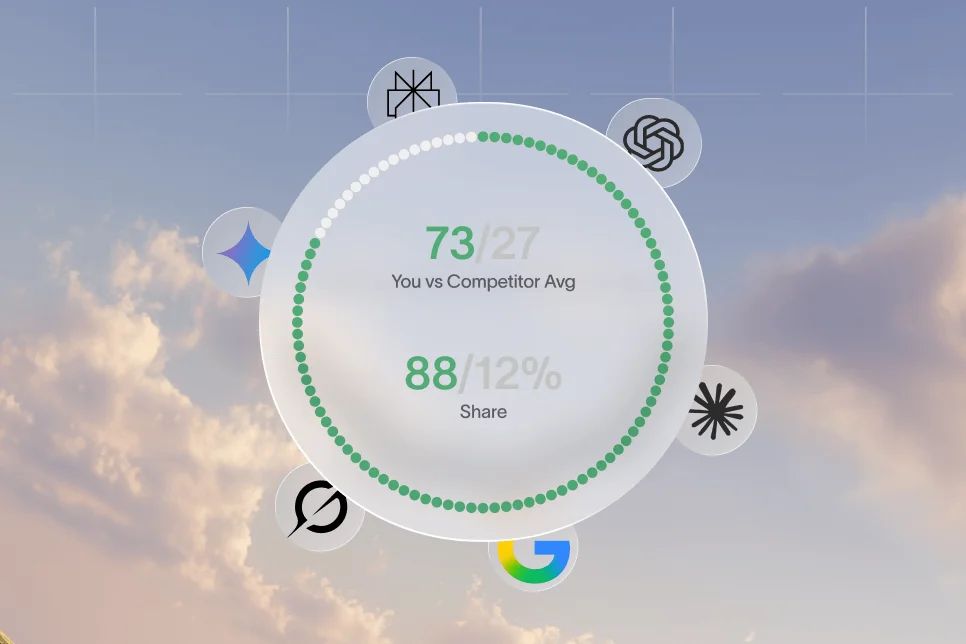
- AI mention frequency
- page-to-demo conversion rate
If you need a system for measuring the AI side, platforms like Skayle help teams track how often they appear in AI-generated answers while connecting that visibility back to content decisions. That’s the practical difference between publishing pages and actually managing discoverability.
Step 5: Connect capability pages into a real authority cluster
A single strong page helps. A network of connected pages helps more.
Each capability page should link to:
- adjacent capabilities
- use-case pages
- industry pages
- integration pages
- glossary content defining core terms
- evaluation and comparison pages where relevant
This is also where our guide to AI visibility tracking would naturally sit in a broader content system, alongside content ops and structured authority pieces.
If you want to understand the economics of building this in-house versus using a system, we’ve also broken down the tradeoffs in this ROI comparison.
Page design choices that help both citations and conversions
A lot of SaaS SEO advice ignores page design. That’s a mistake.
If your content is technically present but visually confusing, people bounce before they trust you. And if people don’t engage, your page weakens on the human side of the funnel even if it gets surfaced.
Keep the core claim above the fold
The top of the page should answer three things fast:
- what the capability is
- who it helps
- why it matters
Not with brand slogans. With clarity.
A weak hero says:
- “Intelligent growth infrastructure for modern teams”
A stronger hero says:
- “Track where your brand appears in AI answers and identify the content gaps reducing visibility.”
One sounds expensive. The other sounds useful.
Use comparison tables carefully
Tables are useful when they explain scope, fit, or constraints.
They are useless when they just become a bigger feature dump.
Good table columns:
- use case
- ideal team
- required inputs
- output
- related workflow
Bad table columns:
- feature included yes/no
- unlimited seats yes/no
- customizable yes/no
Make related paths obvious
Don’t strand a reader on a single page.
If someone lands on a capability page about AI visibility tracking, the next steps might be:
- how citation gaps appear
- how source anchoring affects mentions
- how to refresh content that has authority but weak AI inclusion
That path supports the full funnel from discovery to evaluation.
Keep schema and formatting practical
You do not need to turn every page into a technical science project.
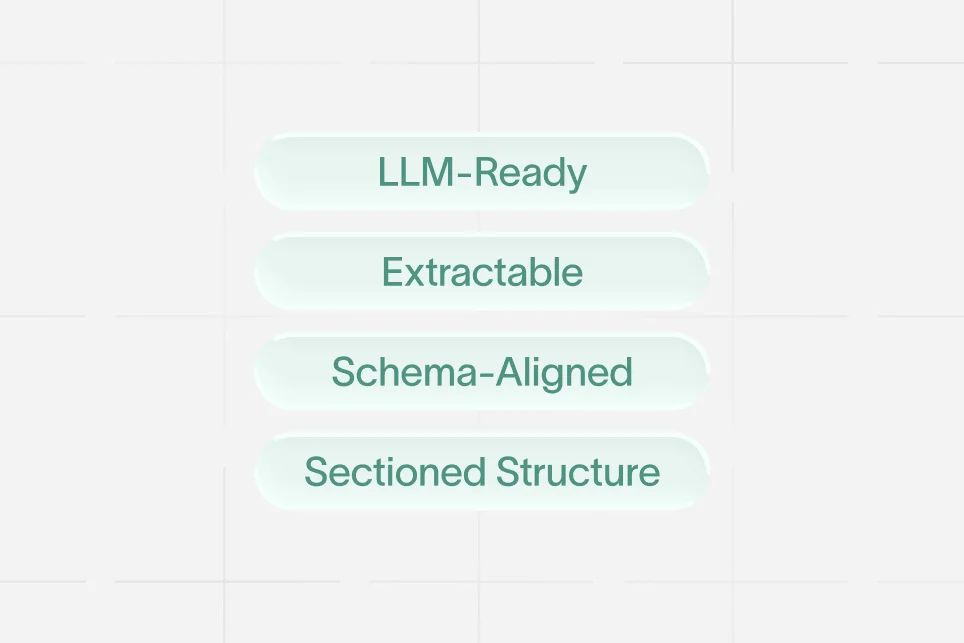
But you should make sure the content is consistently structured, the page has clear headings, and FAQs are written in direct language. Clean structure helps extractability. Messy structure makes everything harder.
As Virayo notes in its discussion of integrated discovery campaigns, SaaS growth increasingly depends on visibility across multiple discovery surfaces. AI agents are now one of those surfaces. Your page design needs to support that reality.
Common mistakes that quietly kill AI discoverability
Most failures here are not dramatic. They’re small, repeated mistakes that make your site harder to interpret.
Mistake 1: Writing for the roadmap instead of the buyer
This happens when product naming dictates page naming.
Buyers don’t search your internal labels. They search the task, pain point, or desired result.
Mistake 2: Hiding substance behind tabs, accordions, and vague UI copy
Some interaction is fine. But if the page only becomes meaningful after five clicks, you’re making understanding too expensive.
Put the important explanation in visible HTML copy.
Mistake 3: Treating every capability like it serves everyone
It doesn’t.
A page becomes stronger when it excludes bad-fit scenarios and names the ideal user. Specificity usually improves qualification.
Mistake 4: Chasing traffic with empty top-of-funnel phrasing
This is where vanity creeps in.
Directive Consulting makes a useful point: traffic alone is not the target. Qualified pipeline is. Capability pages should help the right buyer self-select, not just pull in broad clicks.
Mistake 5: Publishing pages without a measurement plan
If you can’t tell whether the rewrite improved:
- non-brand impressions
- citation inclusion
- problem-aware query coverage
- demo conversion rate
then you’re guessing.
A simple measurement window is enough. Capture a baseline for 30 days, relaunch the page, and review query mix, page engagement, internal pathing, and conversion quality over the next 30 to 60 days.
What this looks like in the real world
Let’s make this less abstract.
Say you run a SaaS platform for SEO and content teams. Your current product page lists:
- keyword clustering
- AI briefs
- content scoring
- automated refreshes
- publishing workflows
- reporting dashboards
That page tells me what exists. It does not tell me when I should care.
A stronger setup would split those into clearer capability pages:
Discover search opportunities with buyer intent attached
Define how teams identify topics worth publishing, how opportunities are prioritized, and how intent changes across funnel stages.
Build briefs that reduce rewrites and editorial back-and-forth
Explain that the capability turns SERP analysis and search intent into a usable draft brief, with fewer handoff errors between SEO and content.
Refresh stale pages before they decay further
Show how teams identify slipping pages, update them systematically, and maintain authority instead of letting content rot.
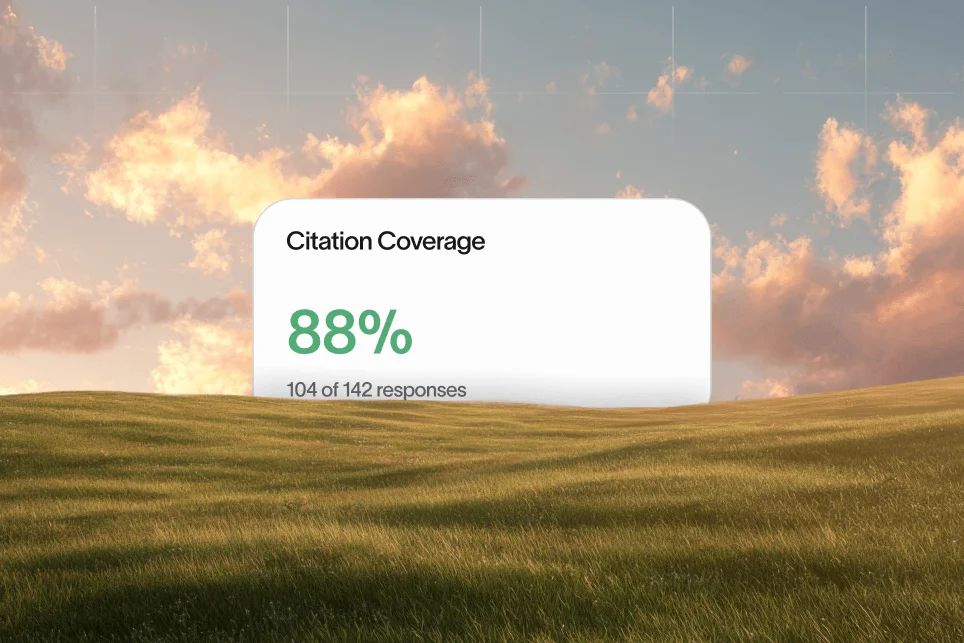
Measure AI answer visibility and citation coverage
Spell out how a team sees whether its brand appears in AI-generated answers, where mentions are weak, and which pages need improvement.
That last page is especially important now. We’re seeing more teams realize they rank in traditional search while getting missed in AI-generated answers. If that gap sounds familiar, our glossary entry on citation gaps gives the concept a practical definition.
The result is not just better page clarity. It’s a better commercial narrative. Each page aligns to a buyer job, a workflow, and a measurable outcome.
That is the real point of SaaS SEO in 2026. Not more pages for the sake of volume. Better pages for the sake of discoverability and qualification.
Questions teams ask when they start rebuilding feature pages
Does every feature need its own page?
No. Most individual features are too small or too dependent on surrounding context.
A page should usually represent a meaningful customer job. Features can live inside that page as supporting proof.
Should capability pages replace product pages?
Not always.
In many cases, product pages still serve existing demand, branded navigation, and direct comparison needs. Capability pages usually work best as a layer that translates product architecture into buyer language.
How many capabilities should we map first?
Start with the three to five that matter most to pipeline, sales conversations, or strategic visibility.
If you try to map everything at once, the project stalls. Prioritize the capabilities buyers already ask about on demos and in search.
What if we don’t have enough proof yet?
Then be concrete about workflows, fit, and limitations.
Proof is not only customer logos and dramatic percentage gains. Sometimes the strongest signal is a precise explanation of what the capability supports, what it doesn’t, and who gets value fastest.
Is SEO dead or just changing?
It’s changing.
The underlying need is still discoverability. But as Marketer Milk and Yes Optimist both reflect in different ways, SaaS SEO now spans both classic organic rankings and AI-mediated discovery. That means clarity, structure, and usefulness matter more than generic optimization theater.
FAQ: the practical details people usually ask last
What is SaaS SEO in simple terms?
SaaS SEO is the process of helping a software company get discovered through organic search and, increasingly, AI-generated answers. It includes page structure, content strategy, search intent alignment, and commercial relevance.
Why aren’t feature bullets enough anymore?
Because feature bullets describe product parts without enough context. AI systems and human buyers both need to understand the job, the user, and the outcome before they trust a recommendation.
What is the difference between a feature page and a capability page?
A feature page lists what exists in the product. A capability page explains what the product enables someone to accomplish, who it helps, and why that matters.
How do I know which capabilities deserve dedicated pages?
Look at sales calls, demo questions, support themes, and high-intent search language. The best candidates are the jobs buyers repeatedly care about and that influence evaluation or conversion.
Do capability pages help conversion too, or just SEO?
They help both.
A good capability page pre-qualifies visitors, reduces confusion, and creates a cleaner path from search visit to product understanding. Better clarity usually improves the click-to-conversion path, not just rankings.
How should we measure success after rewriting these pages?
Track baseline and post-launch changes in non-brand impressions, query quality, engagement, internal navigation, assisted pipeline, and page-level conversion rate. If AI discovery matters to your team, also track citation visibility and answer inclusion over time.
Feature lists are easy to publish, but they rarely do enough work. If you want SaaS SEO to drive more than generic traffic, map your product into capabilities people can understand and AI systems can cite. If you want a clearer view of how your brand shows up in AI answers and where your citation coverage is weak, measure your AI visibility with Skayle and turn those gaps into a concrete content roadmap.