
TL;DR
AI hallucinations about SaaS security usually start with bad source structure, not bad security. If you want accurate citations, publish clear, scoped, crawlable HTML pages for each major control and connect them through a clean site architecture.
Security docs usually get treated like a legal checkbox. Then an AI assistant summarizes your controls incorrectly, sales has to clean it up, and trust takes a hit you never measured.
I’ve seen this happen on SaaS sites where the company had real security depth, but the public documentation was scattered, vague, and impossible for search engines or AI systems to interpret cleanly. If you want accurate citations, you need to structure security content like a high-trust product surface, not a forgotten help-center corner.
Why security pages break in AI answers
Here’s the short version: AI hallucinations around security content usually start with weak source structure, not weak security.
That matters because security documentation sits in the highest-trust part of your site. A wrong summary about encryption, data residency, incident response, or compliance scope is not the same as a fuzzy blog summary. It can slow deals, create legal review friction, and make your company look less credible than it is.
This is where technical SEO for SaaS stops being a backend hygiene project and becomes a revenue protection issue.
According to Uproer, technical SEO helps search engines access, index, and understand SaaS content. That last word matters most here: understand. If your security content is hard to parse, AI engines have more room to infer, compress, and sometimes get it wrong.
I take a pretty hard line on this: don’t hide critical security information in PDFs, scattered policy pages, and sales enablement decks. Put the canonical version on indexable, well-structured pages on your main domain.
That’s the first contrarian point worth keeping: don’t optimize security docs for gatekeeping; optimize them for accurate retrieval. You can still protect sensitive details. But if the public-facing layer is thin or messy, AI systems will fill in the gaps.
What strong security documentation looks like in practice
Most teams think they have security documentation because they have a trust center, a SOC 2 badge, and a questionnaire workflow. That’s not enough.
Good security documentation for AI visibility has three jobs:
- Answer buyer questions directly.
- Give search engines clear page relationships.
- Give AI systems precise, quotable source material.
A useful way to think about this is the security documentation hierarchy. It has four layers:
- Hub page: one central security or trust page that explains your overall posture.
- Control pages: dedicated pages for topics like encryption, access control, backups, incident response, and data residency.
- Proof pages: compliance, audit, and certification pages that define scope and dates clearly.
- Context links: product, infrastructure, and legal pages that connect those claims back to the rest of the site.
This is not fancy. It’s just disciplined information architecture.
As documented by MadX Digital, site structure and crawlability are central to SaaS visibility. For security content, that means an AI engine should be able to move from your main security page to a specific claim page without guessing where the authoritative answer lives.
If you bury “data encryption” inside a long FAQ accordion on a generic trust page, you force both humans and machines to work harder than they should.
The page types I’d publish first
If your security section is thin, start with the pages that handle the highest frequency and highest risk questions.
I’d publish these first:
- Security overview
- Encryption and key management
- Access control and authentication
- Data residency and subprocessor overview
- Backup and disaster recovery
- Incident response
- Compliance scope and certifications
- Vulnerability disclosure or responsible disclosure policy
That page set covers most of what prospects, procurement teams, and AI assistants try to summarize.
I’ve watched teams overbuild long policy libraries before they’ve even published a clear encryption page. That’s backwards. Buyers and AI systems both need the same thing at the top: direct answers.
What each page should contain
Each control page should answer five plain-language questions:
- What is the control?
- Why does it exist?
- What does it apply to?
- What does it not apply to?
- Where can someone verify related claims?
For example, an encryption page should not just say “we use industry-standard encryption.” That phrase creates more ambiguity than clarity.
A stronger version would say:
- Data is encrypted in transit.
- Data is encrypted at rest.
- The statement applies to the production application and managed storage services.
- Customer-managed encryption keys are or are not supported.
- Related controls are described on the access control and backup pages.
That kind of phrasing is easier to cite because it gives clean retrieval units.
The 4-step page model that reduces ambiguity
When I audit security documentation, I use a simple page model: define, scope, prove, connect.
That’s the named model in this piece because it’s memorable and practical. If a page does those four things, it becomes much harder for AI systems to invent context around it.
1. Define the claim clearly
Start with a direct statement near the top of the page.
Bad version: “We take security seriously.”
Better version: “All customer data in our hosted production environment is encrypted in transit and at rest.”
That sentence is specific enough to be quoted in an AI answer. It also forces your team to clarify scope before publishing.
2. Scope the claim so it can’t be overextended
This is where most hallucinations begin. A model reads one sentence and applies it too broadly.
So scope everything.
Spell out whether the claim applies to:
- hosted cloud environments
- mobile apps
- sandbox environments
- backups
- attachments
- logs
- regional infrastructure
- self-serve plans versus enterprise deployments
According to Directive Consulting, technical SEO improves how engines crawl and index site elements. In practice, for high-trust pages, that means reducing ambiguity in the source material before any engine touches it.
3. Prove the claim with supporting signals
Not every page needs a downloadable report. But every page does need a reason to be believed.
Useful proof elements include:
- certification references with scope wording
- policy review dates
- named standards where appropriate
- linked subpages with deeper detail
- contact route for security reviews
- references to trust center artifacts, if they exist
Don’t make the reader guess whether a claim is current. Add “last reviewed” dates when operationally possible, and make sure those dates are maintained.
4. Connect the page to the rest of the site
A strong page doesn’t sit alone.
As Virayo notes, technical SEO helps bots understand how solution, feature, and support pages connect. Your security pages need that same relationship logic.
Link from:
- product pages to security overview
- security overview to control pages
- control pages to compliance pages
- legal or privacy pages to relevant security sections
- enterprise or sales pages to trust content
This is where internal linking stops being an SEO chore and starts acting like context management.
If your broader content system is still fragmented, the same discipline you’d use in scaling SaaS content applies here too: clear ownership, repeatable page templates, and publishing standards that keep updates consistent.
The site structure decisions that help AI cite you correctly
A lot of teams ask whether they need a separate trust center on a subdomain. Sometimes that works. Often it creates more problems than it solves.
If your highest-trust content sits on a separate domain, disconnected from your main product and company context, you weaken the authority graph around it.
My recommendation in most SaaS cases is simple: keep canonical security documentation on your main domain, inside a clean folder structure.
A practical example:
- /security/
- /security/encryption/
- /security/access-control/
- /security/data-residency/
- /security/incident-response/
- /security/compliance/
That structure does three things at once:
- It signals topical grouping.
- It keeps URLs readable.
- It makes internal linking easier to maintain.
WeTalkTheTalk also emphasizes short, descriptive URLs and avoiding messy parameter-heavy structures. That advice is boring, but boring is exactly what you want for security docs.
Don’t rely on PDFs as the source of truth
This is another place where teams get into trouble.
A PDF can support a claim. It should not be the only public source for one.
Why? Because AI systems and search engines usually extract, compare, and summarize from crawlable HTML pages more reliably than isolated documents. If your subprocessor list, control summary, or certification scope only exists in a PDF, you increase the odds of partial interpretation.
Use PDFs as supporting artifacts. Publish the core claim in HTML first.
Keep one canonical answer per question
If three pages make slightly different claims about encryption or retention, you’ve created your own hallucination engine.
I’ve seen this in audits:
- security page says data is retained for 30 days
- help doc says 35 days
- backup page says 14-day snapshots
- sales deck says “custom retention available”
None of those statements are necessarily false. Together, without scope, they’re chaos.
Pick one canonical page for each major question. Then link to it from everywhere else.
That same mindset shows up in our content refresh guide: authority is not just publishing more pages, it’s reducing contradiction across existing ones.
A practical checklist for your next security docs sprint
If I had to clean this up in two weeks with a lean team, I’d do it in this order.
- Inventory every public security claim. Pull claims from your site, trust center, docs, PDFs, legal pages, and sales collateral.
- Mark contradictions and vague wording. Highlight phrases like “industry standard,” “secure by design,” and “enterprise-grade” unless they are immediately explained.
- Choose the canonical URL for each core topic. Encryption, access control, data residency, incident response, compliance, backups.
- Rewrite the top section of each page. Lead with one precise answer sentence and scoped bullet points.
- Add supporting proof elements. Dates, audit scope, linked evidence, ownership, contact path.
- Fix internal links. Route product, pricing, enterprise, and legal pages to the right trust pages.
- Review URL structure and indexability. Keep important pages crawlable and readable.
- Set a review cadence. Security content decays fast when product, infra, or policy changes outpace updates.
That list is not theoretical. It’s usually enough to get you from “we have security pages” to “we have usable source material.”
A mini case study from a common SaaS cleanup
Here’s a realistic pattern I’ve seen more than once.
Baseline: a SaaS company had one generic security page, a PDF certificate, and scattered references to SSO, encryption, and backups across product pages and docs. Sales kept answering the same clarification questions because prospects found conflicting language during review.
Intervention: the team split the trust content into six canonical HTML pages, rewrote each top section using define, scope, prove, connect, cleaned the URL structure, and removed duplicate mini-explanations from unrelated pages. They also added direct links from enterprise and product pages into the new security hub.
Outcome: within one quarter, the company had fewer repetitive security clarification requests in deals, cleaner answers in AI tools when prompting about its controls, and a much easier internal review process because every claim had an owner and a page.
I’m not giving you a fabricated lift percentage because the real gain here depends on your sales cycle and traffic mix. The right measurement plan is more useful:
- baseline: count security-related sales questions per month
- baseline: record pages cited in AI answers for 10-20 recurring prompts
- baseline: track clicks to security pages from enterprise and pricing pages
- target: reduce contradiction-driven questions within 60-90 days
- target: increase citation consistency across core prompts in the same window
- instrumentation: use your CRM notes, self-serve prompt testing, and web analytics
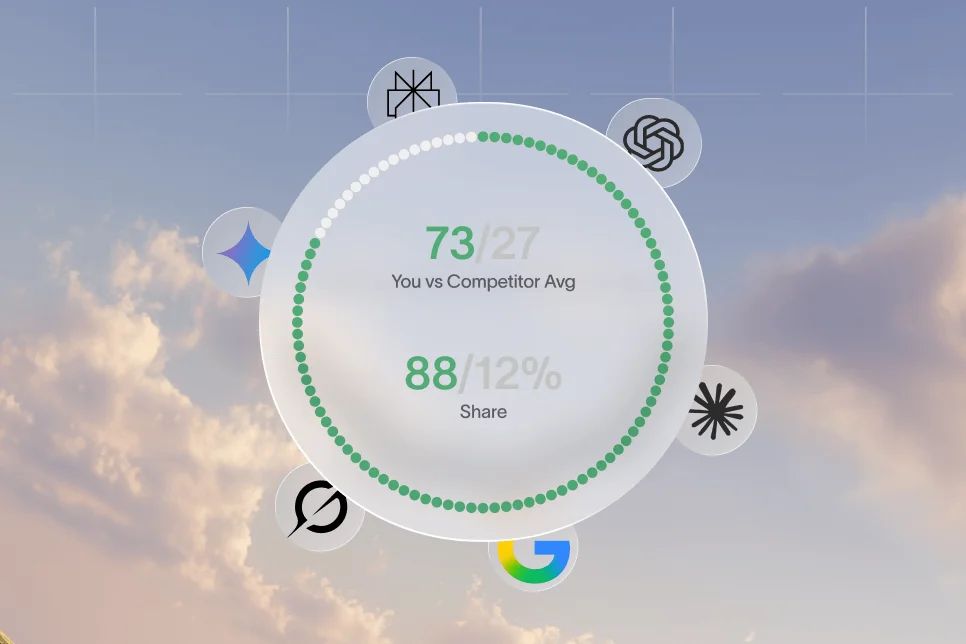
If you want a platform view of how often your brand appears in AI answers, Skayle is built for teams trying to measure search rankings and AI visibility in one place. That’s useful when you need to see whether your trust content is actually being cited, not just published.
The mistakes that quietly damage trust content
The biggest problems are rarely dramatic. They’re usually small structural errors repeated across dozens of pages.
Mistake 1: Writing security copy like homepage copy
Security pages are not brand campaigns.
If every paragraph sounds like positioning language, you give AI engines nothing stable to quote. Write for precision first. Tone can still be clean and confident, but the sentence needs to carry real meaning.
Mistake 2: Hiding specifics behind form fills
Some companies over-gate everything because they’re worried about exposing too much.
That’s understandable, but public trust content should still answer the basics clearly. Keep sensitive details in the review workflow if needed. Put the foundational claims in public HTML so the open web has something authoritative to reference.
Mistake 3: Treating compliance as the same thing as security
A compliance badge is a proof signal, not a complete explanation.
Your documentation should explain operational controls in plain English, then connect those controls to certifications where relevant. Don’t expect a badge alone to carry the meaning.
Mistake 4: Letting docs drift from product reality
Security content often goes stale because no one owns it after launch.
As StudioHawk points out, crawlability and indexability are foundational. But even a perfectly crawlable page is dangerous if it’s wrong or outdated. This is a governance problem as much as an SEO problem.
Mistake 5: Separating trust content from commercial pages
This one hurts conversion more than most teams expect.
When a prospect lands on a pricing, product, or enterprise page and can’t quickly verify security posture, uncertainty creeps in. Link trust content where decision friction actually happens.
That’s also why technical SEO for SaaS should include commercial page relationships, not just doc quality. Search visibility, AI citation, click-through, and conversion are part of the same funnel now: impression -> AI answer inclusion -> citation -> click -> conversion.
How to make security pages easier for humans and machines to trust
You don’t need to overengineer this. You do need discipline.
A strong page usually includes:
- a direct one-sentence answer near the top
- short sections with descriptive subheads
- bullets for scope, exclusions, and verification points
- a visible last-reviewed signal if you can maintain it
- clean links to adjacent control pages
- consistent wording across related pages
As DesignRevision argues in its broader SaaS SEO playbook, content architecture and technical SEO work together. On security pages, architecture is what stops a valid claim from becoming a distorted one downstream.
The formatting choices that help most
A few formatting choices improve extractability more than teams expect:
- Put the primary answer in the first screenful.
- Use question-led subheads when they match real buyer language.
- Keep paragraphs short.
- Avoid burying critical scope notes in tabs or collapsed modules.
- Use tables carefully and only when the comparison is simple.
- Prefer one claim per paragraph over long blended explanations.
This is also where AI answer citability becomes very practical. AI systems are more likely to pull from concise, structured, low-ambiguity passages than from dense brand copy.
If you’re already working on how your company appears across answer engines, our audit guide covers the visibility side of that problem in more depth.
FAQ: the questions SaaS teams usually ask next
Does technical SEO for SaaS really affect security documentation?
Yes. Technical SEO for SaaS is what helps engines access, index, and interpret your security pages cleanly. If the structure is weak, the risk is not just lower rankings. It’s lower accuracy when AI systems summarize your controls.
Should security documentation live on a subdomain or the main site?
In most cases, the main site is the safer choice for canonical trust content. It keeps authority, navigation context, and internal linking tighter. A separate trust center can still exist, but the source-of-truth pages should be easy to discover and connect back to your core site.
What should go on a security overview page?
Your overview page should explain your overall security posture, link to deeper control pages, define certification scope, and route readers to contact or review workflows. Think of it as the hub, not the place where every answer gets compressed into one wall of text.
How detailed should public security pages be?
Detailed enough to answer common buyer and AI questions without exposing sensitive implementation specifics. Explain what the control is, what it applies to, what it doesn’t apply to, and where someone can verify related claims.
How do I know if AI tools are misrepresenting our security posture?
Start by testing recurring prompts about encryption, compliance, retention, backups, and data residency across major AI assistants. Compare those answers with your canonical pages and track where the assistant is citing or inferring. If visibility is unmeasured, you’re operating blind.
What to do this quarter if your trust content is messy
If your security documentation is fragmented, don’t wait for a compliance renewal or an enterprise prospect to force the cleanup. Fix the structure now while the stakes are still manageable.
Start with the pages buyers ask about most. Turn each one into a clean source of truth. Make every major claim definable, scoped, provable, and connected. That is the version of technical SEO for SaaS that protects pipeline, improves AI citation quality, and makes trust easier to verify.
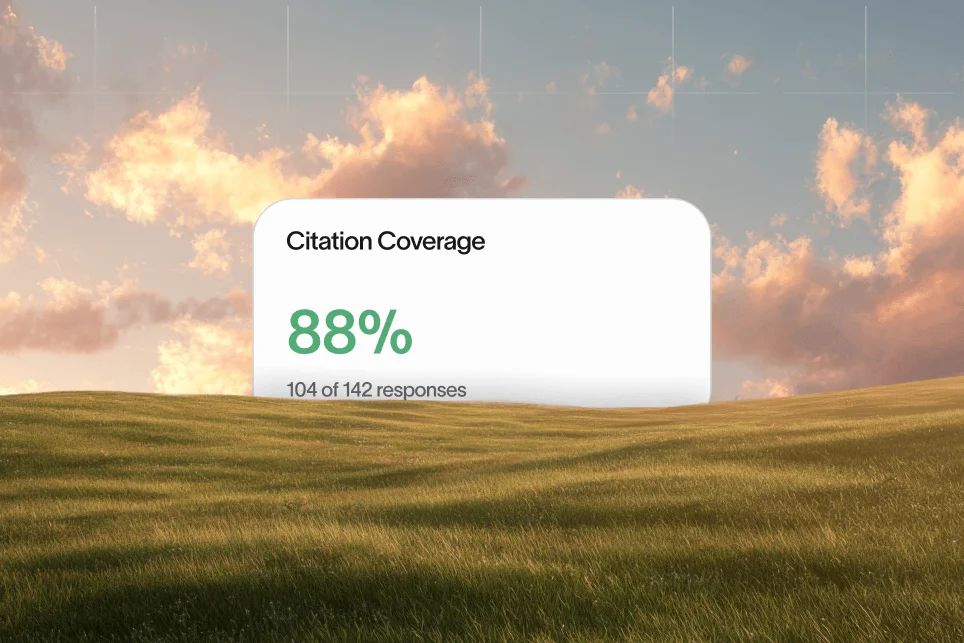
If you want to measure how your brand appears in AI answers and where your citation coverage is weak, Skayle can help you see that clearly. The useful next step is not publishing more vague trust copy. It’s understanding whether the pages you already have are being interpreted the way you intended.
References
- Uproer
- MadX Digital
- Directive Consulting
- Virayo
- WeTalkTheTalk
- DesignRevision
- [The Importance of Technical SEO for SaaS Websites](https://st…