
TL;DR
High-intent comparison queries are repeatable, which makes them ideal for programmatic pages. The win comes from a defensible dataset, a template that forces specificity, and governance that protects indexation, citations, and conversion.
Comparison searches are where buyers stop browsing and start deciding. If you only publish a few one-off “vs” articles, you leave a large surface area of high-intent queries to competitors and affiliates.
Programmatic pages let you cover that surface area without shipping thousands of thin, duplicative pages that never rank or convert.
Programmatic pages are template-driven landing pages generated from a structured dataset, designed to answer a repeatable query pattern at scale without becoming thin content.
Why “vs” and “alternatives” queries are a programmatic goldmine (and why most teams botch them)
Competitive comparisons cluster into repeatable patterns:
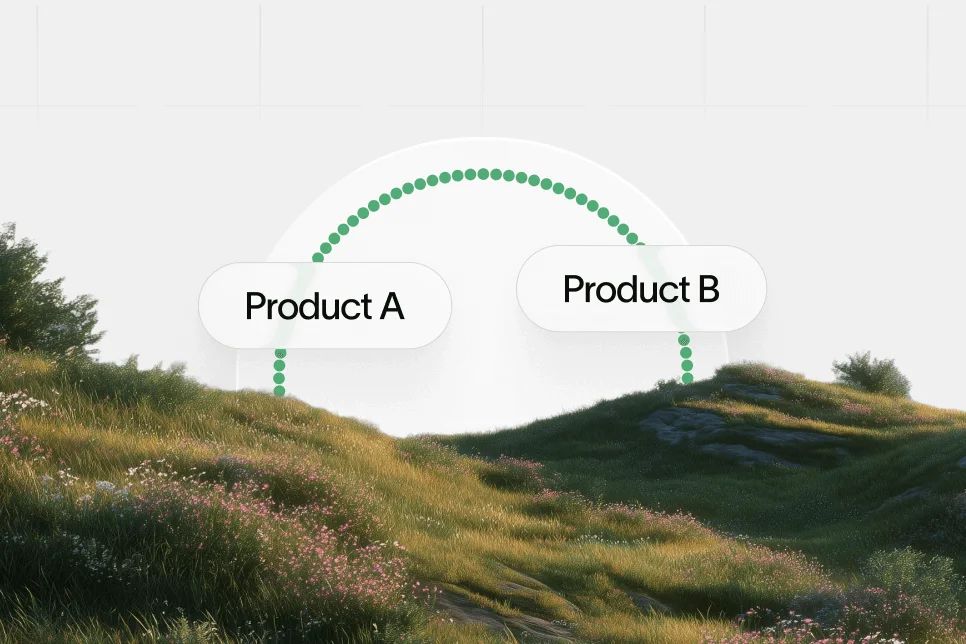
- Direct vs: “Product A vs Product B”
- Alternatives: “Product A alternatives”
- Best for persona: “Product A vs Product B for startups”
- Feature-driven: “Product A with feature X”
- Switching intent: “migrate from Product A to Product B”
The upside is obvious: these queries sit near the decision point, so they tend to convert better than top-of-funnel guides. The trap is just as obvious: most “vs” content is copycat prose built from the same feature lists. It looks identical across the SERP, gives AI systems nothing unique to cite, and gives humans no reason to click.
A practical point of view that holds up in 2026:
- Don’t generate thousands of “A vs B” pages from scraped feature grids.
- Do generate fewer pages first, but make each one data-backed, persona-specific, and structured so it can rank, get cited, and convert.
Many teams discover programmatic SEO through broad examples of template + dataset content. That is accurate, but incomplete. Case study roundups like the ones collected by GrackerAI show that scale is possible—yet the difference between “indexed” and “revenue-producing” is almost always content uniqueness and governance.
What “good” looks like for competitive programmatic pages
A competitive comparison page that earns rankings and citations typically has:
- Unique inputs: first-party product metadata, pricing rules, migration steps, support constraints, security/compliance notes, or real implementation details.
- A stable template: consistent sections across the whole hub so Google (and LLMs) can extract comparable answers.
- A clear decision outcome: “best for X / not for Y,” plus next-step CTAs that match intent.
- Refresh cadence: comparisons rot fast (features change, pricing changes, positioning changes).
If you want a deeper breakdown on how teams quantify where they’re missing AI-driven visibility—not just rankings—start by measuring citation gaps, then letting that drive what comparisons you publish next. Skayle covers that workflow in this citation gap guide.
The data layer that makes programmatic pages defensible (and not thin content)
“Template + AI” isn’t enough. Programmatic SEO works when the dataset itself encodes differentiation.
Search Engine Land frames the central risk clearly: if you scale pages without embedding unique value, you create duplication at scale and invite performance problems. Their guidance emphasizes embedding proprietary data or elements competitors can’t replicate in programmatic pages, which applies directly to comparisons (Search Engine Land).
Minimum viable dataset for vs pages
For a SaaS comparison hub, the minimum dataset usually includes:
- Entity basics: product name, category, short description
- Audience fit: company size bands, industries, typical use cases
- Feature support: boolean + nuance fields (not just yes/no)
- Pricing model: ranges, billing units, common add-ons (avoid claiming exact prices unless you maintain them)
- Integrations: categories + notable constraints
- Implementation: time-to-value bands, onboarding model, migration notes
- Security/compliance: SOC 2, SSO, data residency (only if verified)
- Differentiators: 3–7 fields that are opinionated but grounded in product reality
The dataset is also where you decide what you can safely assert. If you cannot keep a field accurate, don’t publish it as a hard claim. Use ranges, qualifiers, and “typical” patterns, and instrument refreshes.
A contrarian rule that prevents quality collapse
Most teams try to launch with maximum coverage.
A better operating rule is:
- Start with the comparisons you can enrich.
- Expand only when your dataset can support the next slice.
If you generate 2,000 pages with the same 12 fields and no lived detail, you’ve created an indexation and credibility problem. Shopify’s programmatic SEO overview calls out cannibalization and quality risks when scaling templated pages, which shows up quickly in large comparison hubs (Shopify).
How much uniqueness is “enough”?
There isn’t a universal percentage that guarantees safety. But you do need meaningful variation that changes the decision.
Zumeirah’s 2026 guide discusses dynamic comparison formats and warns that scaled pages should maintain significant unique content to avoid becoming low-value at scale (Zumeirah). Treat that as a directional principle: if pages read like clones, they will perform like clones.
In practice, you get uniqueness from:
- Persona overlays (startup vs enterprise, regulated vs non-regulated)
- Workflow-specific comparisons (e.g., “best for outbound sales,” “best for multi-region deployments”)
- Migration paths (steps, pitfalls, prerequisites)
- Decision matrices (weights by persona)
If you want AI systems to cite you, the most valuable uniqueness is structured, extractable reasoning—not longer copy.
A model you can reuse: the Comparison Page Integrity Model
If your comparison hub is going to rank and get cited, you need consistent integrity across thousands of programmatic pages.
The Comparison Page Integrity Model has four parts:
- Data: the dataset is accurate, maintainable, and rich enough to differentiate.
- Differentiation: the page makes a specific, defensible recommendation for a defined persona.
- Decision support: tables, constraints, migration notes, and “not a fit” guidance reduce uncertainty.
- Distribution: internal linking, indexation controls, and snippet-friendly structure make it findable and extractable.
This is intentionally not complicated. It’s a QA lens you can apply before you publish another 200 pages.
Proof that the approach works (when you treat it as infrastructure)
Averi’s 2026 playbook for B2B SaaS programmatic SEO includes a concrete example from Dynamic Mockups: organic traffic grew 220.65%, from 5,520 to 17,700 monthly visitors, after scaling long-tail programmatic pages (reported for Q1 2025 in their write-up) (Averi).
The pattern is what matters:
- Baseline: limited long-tail coverage
- Intervention: structured templates + scalable page generation
- Outcome: significant traffic lift over a defined period
- Timeframe: measured over a quarter
Treat that as evidence that scale can move the needle—then apply the integrity model so those pages also convert and earn citations.
A second proof point: scale is real, but governance is the differentiator
Zumeirah highlights Canva’s scale, noting over 190,000 indexed pages targeting template variations (Zumeirah). That’s not a recommendation to copy Canva’s model; it’s proof that search engines will index massive programmatic inventories when the pages satisfy intent and are maintained.
For SaaS comparisons, the equivalent isn’t “more pages.” It’s “more decision coverage” with a dataset that can withstand scrutiny.
Building high-intent programmatic pages for comparisons: a step-by-step build that doesn’t implode
This is the build sequence that avoids the most common failure modes: thin content, cannibalization, and unmaintainable assertions.
Step 1: Pick comparison query patterns you can win
Start with patterns where you can plausibly provide unique value:
- “A vs B for [persona]”
- “[category] tools for [industry]” where you can supply constraints
- “Alternatives to A” where you can explain switching triggers
SEOClarity recommends identifying structured opportunities—places where queries repeat and can be mapped to a dataset—before building templates (SEOClarity). That’s exactly the lens for competitive comparisons.
Output of Step 1:
- A list of query patterns
- A list of entities (products, personas, industries)
- A mapping between patterns and fields needed to answer them
Step 2: Build the dataset before you design the template
Do not start in a doc. Start in a table.
At minimum, ensure:
- Stable IDs for each entity
- Field types are explicit (boolean, enum, string, numeric, array)
- “Unknown” is a first-class value (so you don’t force hallucinated copy)
If you need a primer on scaling programmatic structures without creating crawl waste, Skayle’s guidance on programmatic infrastructure is worth aligning to before you publish.
Step 3: Design a template that forces specificity
Your template should make it hard to publish vague comparisons. Practical sections that work:
- Summary verdict (2–4 sentences): who each product is best for, and why
- Decision table: 8–15 rows, but rows must be decision-relevant
- Deep dives by persona: “If you are X, prioritize Y”
- Migration notes: prerequisites, risks, common blockers
- FAQ block: short answers matching conversational queries
Backlinko calls out the importance of monitoring page-level engagement and behavior metrics to keep programmatic inventories healthy (Backlinko). That starts with templates that give users what they came for quickly.
Step 4: Add a “decision support” layer that AI can extract
If you want AI Overviews and LLM answers to cite you, make the page extractable:
- Use consistent heading patterns across pages
- Use short answer paragraphs (40–80 words) under the most important questions
- Include a clean comparison table with stable row labels
This is also where structured data matters. If you’re building for citation eligibility, Skayle’s structured data blueprint is the practical baseline.
Step 5: Publish in controlled batches, not a big bang
Ship in batches that let you learn:
- Batch size: 20–100 pages per pattern
- Wait for indexing + performance signal
- Improve dataset fields and template logic
- Expand only after you can refresh and govern what you shipped
Omnius describes the main benefit of programmatic SEO as the ability to create thousands of pages targeting long-tail queries (Omnius). That is true, but the operational reality is that you only want as many pages as you can maintain.
A practical checklist you can run before each batch ships
- Confirm each page has at least 3 persona-specific assertions (not generic feature mentions).
- Confirm the comparison table rows differ materially across at least 30% of pages in the batch.
- Confirm internal links point to the right hub/spoke pages (no orphan comparisons).
- Confirm indexation rules (index/noindex) are consistent with expected demand.
- Confirm analytics events exist for table interactions and CTA clicks.
- Confirm refresh ownership: who updates pricing, integrations, and positioning fields.
This is the difference between “we generated pages” and “we built an asset.”
SEO mechanics that keep comparison hubs crawlable, indexable, and measurable
Programmatic comparison hubs fail for boring reasons: duplicate titles, parameter spam, bad canonicals, and uncontrolled indexation.
Search Engine Land’s programmatic guide emphasizes the role of unique data and careful structure for scaling pages without creating low-quality duplication (Search Engine Land). In competitive comparisons, that translates into explicit technical controls.
Canonicals, near-duplicates, and pattern collisions
Common collisions:
- “A vs B” and “B vs A” both exist
- “A vs B for startups” overlaps “A vs B pricing” with minor differences
- Location or industry modifiers create pages with no meaningful unique content
Controls that work:
- Enforce a single canonical direction (e.g., alphabetical or market-leader-first)
- Only generate modifiers (persona/industry) when the dataset actually changes the recommendation
- Use noindex for “thin modifier” pages until you can enrich them
Internal linking that matches how buyers navigate
Don’t only link comparisons from the blog. Build navigable hubs:
- Category hub → “Best for X” hubs → “A vs B” leaf pages
- Alternatives hub → leaf pages
- Migration hub → leaf pages
If you want a concrete approach to make authority flow across hubs and spokes, Skayle breaks down internal linking for clusters with rules you can operationalize.
Instrumentation: measure beyond rankings
Programmatic comparison pages should be measured like product pages, not like blogs.
Minimum measurement plan:
- Baseline: impressions, clicks, CTR, and conversion rate (demo/trial) per template type
- Targets: improve CTR via better snippets, improve conversion rate via clearer verdicts
- Events: CTA click, table interaction, outbound “compare” interaction, scroll depth
- Segmenting: by query pattern (vs, alternatives, persona)
Backlinko’s monitoring guidance highlights watching engagement and cannibalization signals across programmatic inventories (Backlinko). For comparison hubs, add one more layer: whether pages are being surfaced in AI answers.
For teams serious about that, Skayle’s approach to AI answer tracking makes the measurement problem explicit: you can’t improve what you don’t monitor.
Making competitive comparisons citation-ready for AI answers (GEO/AEO)
AI systems cite sources that are structured, consistent, and useful. They also avoid sources that look affiliate-thin or purely promotional.
If you want comparison pages to show up in AI answers, build for this funnel:
impression → AI answer inclusion → citation → click → conversion
What AI systems tend to cite on comparison topics
In practice, citations tend to go to pages that provide:
- Clear definitions (what the products are)
- Direct answers (which is better for X)
- Extractable tables or lists
- Explicit constraints (“not a fit if…”) that look like expertise
Skayle’s perspective on how GEO differs from classic SEO is detailed in this GEO vs SEO breakdown. The practical takeaway for comparisons is simple: the best citation candidates are pages that read like decision support, not marketing copy.
Structured data recommendations for comparison pages
Structured data won’t fix weak content, but it can help eligible pages be interpreted correctly.
Typical schema types to consider:
- SoftwareApplication for SaaS product entities
- FAQPage for the comparison FAQ block
- ItemList for “alternatives” lists
Validate your JSON-LD and keep it consistent across the hub. If you want schema to be more conversational and aligned to AI extraction, Skayle’s write-up on structured data fixes is a practical checklist.
Refresh loops: comparisons decay faster than blogs
Competitive pages decay when:
- pricing models change
- packaging changes
- integrations change
- a competitor pivots positioning
Zumeirah’s guide emphasizes dynamic updates and freshness for programmatic content (Zumeirah). You don’t need “real-time” updates, but you do need a refresh cadence.
A maintainable cadence:
- Monthly: top 20% traffic pages
- Quarterly: the rest of the indexed comparison set
- On-change: when your own product changes something material
To keep this from becoming a never-ending backlog, treat refresh as part of content operations. Skayle lays out what that looks like in practice in its content refresh playbook.
Common failure modes in programmatic comparison hubs (and how to avoid them)
These are the patterns that repeatedly kill performance.
Failure mode 1: “We scaled pages” but didn’t scale differentiation
Symptom:
- pages rank briefly, then flatten
- “vs” pages cannibalize each other
- conversions stay low because verdicts are vague
Fix:
- add persona overlays and constraints
- add migration and implementation detail
- prune or noindex the modifier pages that don’t change the decision
Failure mode 2: Scraped feature grids dressed up as content
Symptom:
- every page contains the same 10 features
- competitors and affiliates look identical
- AI answers cite someone else
Fix:
- incorporate first-party or operationally verifiable detail
- encode nuance fields (partial support, requires add-on, only in enterprise plan)
- include “not a fit” guidance that demonstrates judgment
Search Engine Land’s point about embedding proprietary elements is the cleanest antidote here (Search Engine Land).
Failure mode 3: Indexation without governance
Symptom:
- thousands of pages indexed
- crawl budget wasted
- internal links sprawl
Fix:
- stage inventory: only index what you can defend and maintain
- build sitemaps by pattern and only submit approved sets
- define clear canonical rules and enforce them in templates
Shopify’s warning about programmatic SEO risks like cannibalization becomes real when governance is missing (Shopify).
Failure mode 4: No measurement of AI visibility, only rankings
Symptom:
- you see rankings improve
- but branded or comparison queries in AI answers cite competitors
Fix:
- track citations by query panel
- prioritize refreshing the pages that should be cited but aren’t
If you want the operational workflow, Skayle’s guide to AI search visibility tools is the clean starting point.
FAQ: programmatic pages for competitive comparisons
How many programmatic comparison pages should a SaaS company publish?
Publish as many as your dataset and refresh process can support. Start with one or two patterns (e.g., “A vs B” and “Alternatives”) and ship in batches so you can measure indexing, cannibalization, and conversions before expanding.
Are programmatic “vs” pages risky for SEO?
They are risky when they are duplicative, thin, or poorly governed. Programmatic SEO guidance consistently highlights risks like cannibalization and quality issues at scale, so indexation controls, canonicals, and unique data are non-negotiable (Shopify, Backlinko).
What should every “A vs B” template include to convert?
A clear verdict for a specific persona, a decision table with meaningful rows, and “not a fit” constraints. Migration notes are an underrated conversion driver because they reduce switching anxiety and signal real-world familiarity.
How do you keep comparison pages accurate when competitors change?
Treat the dataset like a product artifact. Define owners for fields that change (pricing, integrations, packaging), implement a refresh cadence, and monitor performance decay so updates are triggered by signals rather than guesswork.
How do programmatic pages help with GEO and AI citations?
AI systems cite sources that are structured and extractable. Consistent templates, short answer sections, and well-scoped schema can improve the odds your comparisons are used as citations—especially when you provide constraints and decision logic that competitors don’t.
What’s the fastest way to find which comparisons to build first?
Start from query patterns and structured opportunity discovery: map repeatable queries to dataset fields and publish only what you can populate with defensible detail. SEOClarity’s structured opportunity framing is a useful mental model for this initial selection (SEOClarity).
If you want programmatic pages that do more than “exist,” the work is mostly operational: dataset quality, template constraints, indexation governance, and AI visibility measurement.
Skayle was built for that operating model—planning, structured publishing, and visibility tracking in one place. If you want clarity on where you’re currently getting cited (and where competitors are taking those citations), start by measuring your AI search presence, then decide which comparison hubs to build next. You can book a demo to see what that measurement and execution workflow looks like end-to-end.
References
- GrackerAI: 10+ Programmatic SEO Case Studies & Examples in 2026
- Zumeirah: Programmatic SEO In 2026
- Omnius: 6 Best Programmatic SEO Tools For Website Growth in 2026
- Backlinko: Programmatic SEO
- Search Engine Land: Programmatic SEO Guide
- Averi: Programmatic SEO for B2B SaaS Startups (2026)
- SEOClarity: Understanding Programmatic SEO
- Shopify: Why and How To Use Programmatic SEO (2026)