
TL;DR
Ranking does not guarantee LLM citations. Close citation gaps by tracking prompts, diagnosing why competitors get cited, and restructuring pages for extractable definitions, comparisons, constraints, and technical clarity.
AI search doesn’t reward the same thing as traditional SEO. Many teams rank for a query, then discover the AI answer cites someone else—or cites nobody and still steals the click.
Fixing citation gaps requires treating “being extractable and trustworthy” as a first-class ranking outcome, with instrumentation and repeatable content changes.
Why ranking stops short of LLM citations in 2026
A page can rank in the top 3 and still fail to earn LLM citations because answer engines optimize for extraction confidence, not SERP position. They want sources that are easy to quote, unambiguous, and consistent with other trusted sources.
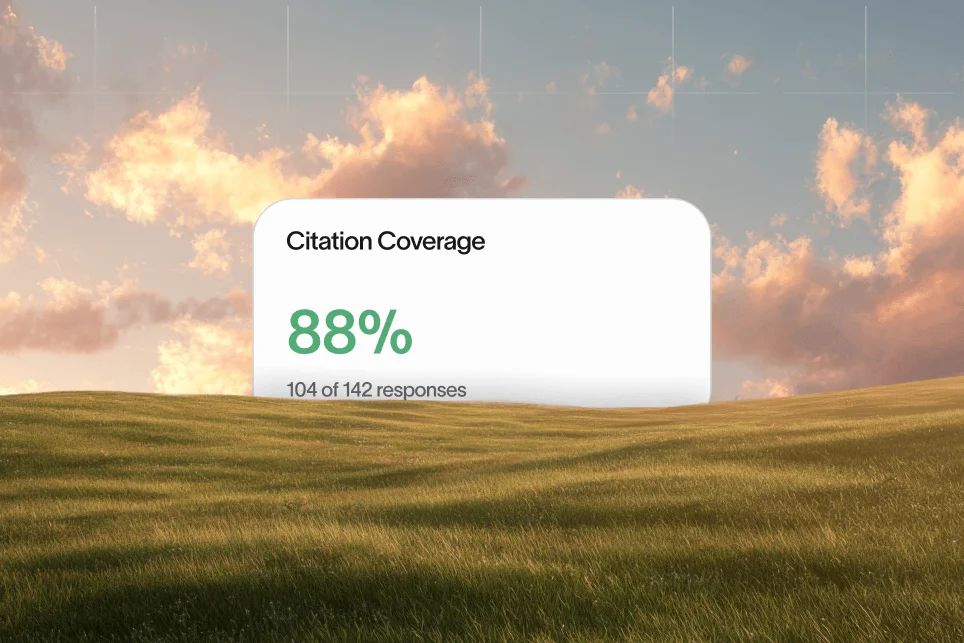
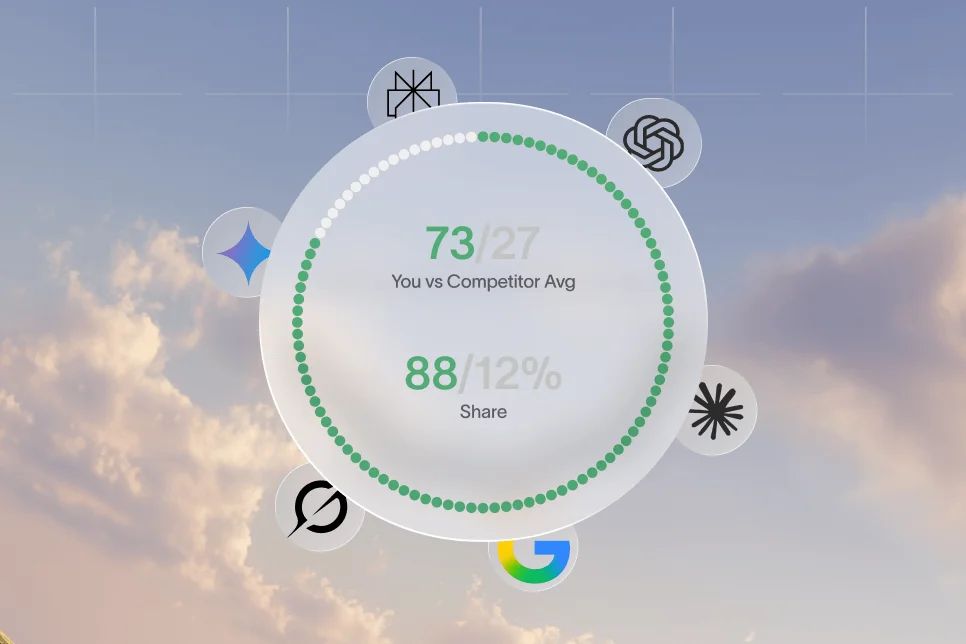
An AI citation gap is the measurable difference between what ranks for a topic and what gets cited in AI answers for that same topic.
The new funnel: impression → inclusion → citation → click → conversion
Traditional SEO funnels assumed “ranking → click.” AI answers insert two gates in between:
- Inclusion: the model decides whether your page is used as a source at all.
- Citation: the model decides whether to attribute your brand with a link/mention.
Only after that do you get the opportunity for a click and an on-site conversion.
This is why teams increasingly pair search analytics with AI visibility monitoring rather than relying only on keyword rank trackers.
Point of view: stop optimizing for “position,” optimize for “extractability”
Ranking improvements alone are a weak lever for LLM citations. The more reliable lever is making pages easy to extract, attribute, and verify.
A practical stance that holds up in audits: if a page cannot be summarized into 2–3 precise sentences without hedging, it is unlikely to be cited—even if it ranks.
What creates citation gaps (common patterns)
Citation gaps tend to come from a small number of structural issues:
- The page answers the query, but not in quotable form (no direct definition, no crisp steps, no scannable comparison).
- Entity ambiguity (unclear product category, unclear “who is this for,” missing terminology consistency).
- Low corroboration (claims without sources, thin explanations, no examples or constraints).
- Extraction blockers (rendering issues, heavy JS, canonical confusion, pagination, or schema gaps).
- Misaligned intent (ranking for an informational keyword while the AI answer is assembling a buyer guide or comparison).
The business case: citations change who gets shortlisted
In 2026, AI answers frequently function as a pre-click shortlist. When the answer engine names “top options,” the brands cited become the default comparison set.
For SaaS teams, that can change:
- Demo consideration (brand is framed before the visitor lands on the site).
- Conversion rates (traffic that arrives after an AI answer is often more “decided”).
- Sales cycles (prospects arrive with pre-formed beliefs about strengths/weaknesses).
This is why teams treat AI visibility as part of demand capture, not a pure SEO vanity metric.
Option A vs Option B: rank-first SEO fixes vs citation-first fixes
Most organizations start by applying familiar SEO playbooks to an AI problem. Some of those changes help. Many don’t.
Below is a practical comparison to choose the right approach per page type.
Comparison criteria that actually predict citation lift
A useful comparison is not “features,” it’s whether the approach improves:
- Answer extraction (can an AI system quote a correct segment quickly?)
- Attribution clarity (does the brand/author/source context remain intact?)
- Topical authority density (does the site have enough connected coverage to be trusted?)
- Verification (does the page cite reputable sources and show constraints?)
Option A: Rank-first SEO fixes (good baseline, limited ceiling)
Rank-first fixes focus on winning the SERP and assume citations will follow.
Typical tactics:
- Expand keyword coverage and subtopics using tools like Semrush or Ahrefs
- Improve internal linking and on-page relevance
- Add FAQs to capture long-tail
- Increase backlinks
Pros:
- Works well when the page currently doesn’t rank.
- Helps discoverability and crawling.
Cons:
- Often fails when the page already ranks but still isn’t cited.
- Can create longer pages without increasing quotability.
Option B: Citation-first fixes (higher leverage for LLM citations)
Citation-first fixes treat the page as an “answer object” first and a web page second.
Typical tactics:
- Add a direct definition and tight step sequence near the top.
- Rewrite key sections into extractable blocks (40–80 words) with constraints.
- Add comparison tables, “when to use / when not to use,” and explicit tradeoffs.
- Implement structured data to disambiguate entities and page purpose.
Pros:
- Designed to close the “ranked but uncited” gap.
- Improves conversion clarity because messaging becomes more explicit.
Cons:
- Requires disciplined editorial and technical QA.
- Can feel “less creative” and more standardized.
Side-by-side table: what changes, who owns it, how it’s measured
| Dimension | Rank-first SEO fixes | Citation-first fixes |
|---|---|---|
| Primary goal | Higher positions & clicks | Inclusion + attribution in AI answers |
| Primary KPI | Rankings, organic sessions | Citation rate, prompt coverage, assisted conversions |
| Owner | SEO lead | SEO + content ops + technical SEO |
| Output | Longer, more comprehensive pages | More extractable, more structured pages |
| Time to see signal | Weeks (SERP movement) | Days to weeks (AI answer changes), then compounding |
| Failure mode | Ranks but not cited | Cited but low click-through if CTA and intent are mismatched |
A practical rule: if a page is already top-10 and still not earning LLM citations, rank-first work is usually not the bottleneck.
The CITE Loop: a repeatable way to close citation gaps
Closing citation gaps is operational, not inspirational. Teams need a loop that can be run across dozens (or thousands) of pages without turning into ad-hoc rewrites.
CITE Loop is a four-step model for LLM citations:
- Capture where and how AI answers talk about the topic.
- Interpret why the model chose other sources.
- Tune the page for extractability, attribution, and verification.
- Expand coverage so the site becomes the default source cluster.
Capture: map prompts to pages, not just keywords
Keyword lists do not translate cleanly into AI answers. Prompts are broader and include comparisons, objections, and “what should I choose” framing.
Capture should include:
- 20–50 prompts per topic (mix informational, evaluative, and “best X for Y”).
- The cited sources in each answer (and whether your brand is mentioned).
- The exact phrasing of the cited snippet.
This pairs well with an AI answer monitoring workflow; Skayle has covered the mechanics of measurement in its AI answer tracking approach.
Tooling that helps on the traditional side:
- Google Search Console for query/page mapping and performance by intent proxies.
- Google Analytics for post-click behavior and conversions.
Interpret: diagnose the reason you weren’t cited
In audits, citation gaps usually fall into one of five diagnoses:
- The page is hard to quote (answers are buried in prose).
- The page is too generic (no unique framing, no constraints, no “when it fails”).
- The entity is unclear (product category, audience, or definitions vary across the site).
- The source looks risky (no author/source signals, thin citations, aggressive claims).
- The page is blocked from clean extraction (technical or rendering issues).
The second diagnosis is the most common. AI answers avoid citing generic content because it is interchangeable.
Tune: make the page easy to extract and safe to attribute
“Tune” is where teams tend to overcomplicate. The most effective edits are often small and structural.
High-yield tuning moves:
- Add a 1–2 sentence definition block within the first screen.
- Add a 3–7 step process block (numbered).
- Add a tradeoff block (“use this when… avoid when…”).
- Add a mini comparison table for common options.
- Add citations to primary sources where possible.
Expand: build citation coverage, not just more pages
Citation coverage improves when a site becomes a coherent cluster. That typically requires:
- A pillar page that defines terms and decision criteria.
- Supporting pages that answer objections and edge cases.
- Consistent internal links that clarify relationships.
This is where many teams get trapped producing volume. The better goal is completeness and connectedness.
A numbered checklist that can be run on every “uncited but ranking” page
Use this to move from diagnosis to edits without a rewrite marathon:
- Extract the answer you want cited into a 40–80 word paragraph near the top.
- Add one table that compares 3–6 options (including “do nothing” or “manual”).
- Add constraints (who it’s for, prerequisites, when it won’t work).
- Add 2–3 external sources for any non-obvious claims.
- Add schema that matches the page purpose (FAQPage, Article, Product, SoftwareApplication when appropriate).
- Confirm indexability and canonical clarity.
- Measure before/after using a fixed prompt set and a 14–28 day window.
The checklist is intentionally boring. Boring wins because it scales.
Technical issues that silently break AI extraction and attribution
If AI systems cannot reliably fetch, render, and interpret the content, editorial improvements won’t stick. Technical SEO becomes “AI extraction QA.”
For deeper technical patterns and fixes, Skayle has a dedicated breakdown on crawl and extraction fixes.
Crawlability and rendering: don’t assume the bot sees what you see
Common blockers:
- Heavy client-side rendering with delayed content hydration.
- Important answers loaded behind interactions (accordions that require JS).
- Fragmented content across tabs or sliders.
Validation steps:
- Use Google Search Central documentation to confirm how Google renders and indexes.
- Inspect URLs in Search Console and compare rendered HTML to browser DOM.
- Run a crawl with Screaming Frog SEO Spider using rendered mode.
Canonicals and duplicates: citation engines dislike ambiguity
AI answers can surface sources across duplicates (UTM variants, parameter pages, near-identical templates). That often dilutes “which URL is the source.”
Checks that matter:
- One canonical per content object.
- Consistent internal links pointing at the canonical.
- Clean handling of faceted navigation and parameters.
Structured data: help the model understand what the page is
Structured data won’t force citations, but it reduces ambiguity.
At minimum:
- Validate schema with Schema.org vocabulary alignment.
- Use FAQPage schema only when the content is truly Q&A.
- For software and tools, evaluate SoftwareApplication/Product schema alignment.
A practical warning: adding schema to a vague page usually doesn’t help. Schema amplifies clarity; it doesn’t create it.
Performance and edge delivery: reliability builds trust signals
Slow or unreliable pages increase the likelihood that extraction fails or partial content is used.
Operational steps:
- Use a CDN such as Cloudflare to stabilize performance globally.
- Monitor uptime and TTFB for content templates.
- Ensure server responses are consistent for bots (no cloaking patterns, no bot-specific broken renders).
Don’t ignore Bing and secondary crawlers
Some AI systems lean on index layers and web snapshots that aren’t purely Google.
At minimum, verify site health in Bing Webmaster Tools. It frequently surfaces crawl issues that correlate with extraction reliability.
Content patterns that earn LLM citations (and still convert)
The pages most likely to earn LLM citations share a recognizable structure: they define, compare, constrain, and prove. They also make it easy for a reader to choose the next step without feeling sold to.
This is where “bridging ranking and being cited” becomes concrete: the same structure that improves extractability also improves conversion clarity.
Pattern 1: define terms like you expect to be quoted
A definition that earns citations:
- Uses the primary term in the first clause.
- States what it is and what it is not.
- Adds one constraint (scope, audience, or environment).
Example (template):
“LLM citations are explicit attributions (links or mentions) that an AI answer gives to the sources it used; they tend to favor pages with clear definitions, verifiable claims, and extractable structure.”
The goal is not to sound smart. The goal is to be quotable.
Pattern 2: include a comparison table even on “boring” SEO pages
AI answers regularly synthesize comparisons. A page without a table forces the model to assemble the comparison from other sources.
Add a table that reflects real buyer tradeoffs:
- Manual research vs SEO suites vs AI visibility monitoring
- “Rank tracking” vs “answer tracking” vs “citation coverage”
- Content refresh vs net-new content
This is also where many teams benefit from a clear GEO lens; Skayle’s perspective on GEO vs SEO outlines why citation mechanics differ from classic SERP wins.
Pattern 3: show constraints and failure cases (contrarian, but effective)
A reliable contrarian stance for citation work:
Do not chase “more words” to earn citations. Add constraints, tradeoffs, and verification instead.
Longer pages often bury the answer. Constraints surface it.
Include:
- When the method fails
- Who should not use it
- What has to be true for it to work
This reduces hallucination risk for the model and increases trust for the human reader.
Pattern 4: add proof blocks without inventing numbers
Many teams want “case studies” but don’t have publishable data. It is still possible to add proof-like specificity without fabricating outcomes.
Use a measurement-backed proof block format:
- Baseline (measured): citation rate across a fixed prompt set; AI answer inclusion count; organic landing CTR; demo conversion rate.
- Intervention (specific): added definition + table + FAQ schema + clarified canonicals; improved extraction reliability.
- Expected outcome (bounded): improved citation share on the prompt set; higher qualified clicks; reduced mismatch traffic.
- Timeframe: 14 days for AI answer changes, 28–56 days for organic behavior stabilization.
Illustrative example (not a performance claim):
- Baseline: 0 citations across 30 tracked prompts for “SOC 2 compliance software pricing.”
- Intervention: added a pricing model table, clarified “what affects price,” added constraints by company size, implemented FAQPage schema, and ensured a single canonical.
- Expected outcome: citations begin appearing for “pricing drivers” prompts first; clicks improve on high-intent prompts; conversion rate is measured against pre-change GA4 baseline.
- Timeframe: monitor weekly for 8 weeks.
Pattern 5: convert the click with “next step” clarity (soft CTA)
AI-referred traffic is often late-stage. It does not need hype. It needs:
- A short “who this is for” block.
- A decision path (e.g., “If you’re evaluating A vs B, start here…”).
- Proof of competence (method, tooling, authorship).
If the page is designed only to rank, it may get cited and still waste the click.
Maintenance: citation gaps re-open as models and competitors change
Citation performance is not a one-time fix. Models update, competitors publish new comparisons, and your own pages drift.
A practical maintenance pattern:
- Re-run the prompt set monthly.
- Refresh top pages quarterly, or sooner when citations drop.
This aligns with a compounding refresh approach; Skayle has outlined a durable model for content refresh loops that applies directly to citation retention.
Where leading teams are focusing in 2026
Across teams investing in AI visibility, the emphasis is moving toward:
- Entity clarity across the site (consistent terminology and positioning)
- Structured, reusable page components (definitions, tables, FAQs)
- Monitoring that turns “lost citations” into a prioritized refresh queue
Vendor ecosystems also matter. AI answers can be powered by or influenced by platforms such as OpenAI, Anthropic, and answer engines like Perplexity. The common thread is that extractable, verifiable content travels farther across all of them.
FAQ: fixing LLM citations and closing citation coverage gaps
How do teams know they have an AI citation gap, not a ranking problem?
If pages rank well for relevant queries but the brand is absent from AI answers for a tracked prompt set, it is usually a citation gap. Ranking problems show up as low impressions and weak positions; citation gaps show up as visibility without attribution.
What’s the fastest on-page change that tends to improve LLM citations?
Add a direct definition and a short numbered process block near the top, then support it with a small comparison table. These elements increase extractability and reduce ambiguity, which are common reasons AI systems avoid citing a source.
Do schema and structured data directly increase LLM citations?
Structured data is rarely a direct “citation boost,” but it reduces misclassification and extraction errors. Schema works best when the page is already clear and useful; it amplifies clarity rather than creating it.
Why do AI answers cite competitors with weaker SEO metrics?
Answer engines often prefer sources that are easier to quote and verify, even if they have fewer backlinks or lower domain authority. Pages with clear definitions, constraints, and comparisons can outperform “SEO-optimized” pages that are verbose or generic.
How should LLM citations be measured without relying on vanity screenshots?
Use a fixed prompt set, record citations/mentions and linked URLs, and track changes on a weekly cadence. Tie the visibility changes to click and conversion behavior in analytics so teams can see whether citations are driving qualified pipeline, not just exposure.
To see how your brand appears in AI answers and where LLM citations are missing, measure citation coverage end-to-end and turn the gaps into a prioritized refresh queue—Skayle is built for that kind of ranking and AI visibility workflow.