
TL;DR
LLM citations shape how AI systems describe your SaaS brand, and fragmented content makes those answers inaccurate. The fix is not publishing more pages first. It is aligning your core pages, proof pages, support content, and external references so AI can cite a clear, current version of your company.
You can spend years tightening your homepage copy, refining your product positioning, and training sales to tell the right story, then watch an AI assistant describe your company in a way that sounds like it skimmed three outdated tabs and guessed the rest. That is not a small branding issue. For SaaS teams, it is a discovery problem, a trust problem, and eventually a pipeline problem.
I have seen this happen in a familiar pattern. A company updates its pricing, changes its ideal customer, launches new features, kills old ones, and publishes content through five different workflows. Google can still rank the site. But AI systems pull conflicting fragments, and the result is sloppy brand representation that no one on the team approved.
Why this problem shows up before most teams notice it
Brand hallucinations happen when AI systems assemble an answer from incomplete, outdated, or inconsistent information about your company.
That usually starts long before anyone flags it internally.
A SaaS company rarely has one clean source of truth. It has a homepage rewritten last quarter, old comparison pages still indexed, stale help docs, forgotten partner listings, product pages that use legacy language, founder interviews from two years ago, and blog posts targeting old categories.
To a human, those inconsistencies are manageable. A prospect can infer what is current.
To an AI system, they are competing signals.
This is why LLM citations matter. According to Stacker, an LLM citation can include your brand name or your website in an AI response, even if the mention is not a clickable link. That definition matters because visibility in AI is broader than referral traffic. If your brand is mentioned incorrectly, you are visible and misrepresented at the same time.
That is the hidden risk.
A lot of teams still think of AI answers as a layer that sits on top of search. In practice, it is becoming its own interpretation layer. Your pages are no longer just ranking assets. They are source material.
If that source material is fragmented, your product story gets distorted.
What bad AI answers actually look like in SaaS
Most brand hallucinations are not dramatic. They are subtly wrong in ways that hurt conversion.
An AI assistant might say your product is best for SMBs when you moved upmarket a year ago. It might describe your pricing as freemium because an old article still mentions a free tier. It might say you compete with the wrong category because your comparison pages and directory listings are split across two different narratives.
That sounds minor until you map it to the funnel:
- An AI answer includes your brand.
- The answer frames you incorrectly.
- The wrong buyer clicks.
- The right buyer bounces because the site does not match the expectation.
- Sales gets low-fit demos and marketing thinks the traffic problem is at the top of funnel.
I have also seen the reverse. A strong-fit buyer reads an AI answer, sees an inaccurate summary, and never clicks at all.
This is why the new path to optimize is not just ranking to click. It is impression -> AI answer inclusion -> citation -> click -> conversion.
If you only measure traffic, you miss the failure happening one step earlier.
The trust penalty is bigger than the traffic penalty
There is another layer here that marketers should not ignore.
According to the research paper Citations and Trust in LLM Generated Responses, user trust is positively correlated with the presence of citations and negatively correlated with the need for manual checking. In plain English: when AI answers show sources, people trust them more. When users have to verify too much themselves, trust drops.
That means inaccurate or weakly grounded citations do more than reduce visibility. They make your brand feel less credible at the exact moment a buyer is trying to form a first impression.
For SaaS, that is serious because your category often already requires explanation. If the buyer is learning your space through AI summaries, you do not get many chances to correct a wrong story.
The content drift that creates citation problems
Most teams do not have a citation problem. They have a content governance problem that shows up as a citation problem.
When I audit these situations, the underlying issues are usually boring:
- Product messaging changed, but old pages still rank.
- Pricing language was updated in-app, not across the site.
- Help docs and marketing pages describe different workflows.
- Comparison content was created for acquisition, not accuracy.
- Category definitions are inconsistent across pages.
- Third-party mentions repeat outdated positioning.
None of this looks catastrophic in isolation.
Together, it creates ambiguity.
AI systems tend to reward clarity, repetition, and source consistency. If your product is described five different ways across your own site, you are effectively asking the model to choose its favorite version.
That is not a strategy.
We have written before about how brands can rank in Google yet still miss AI mentions because of a citation gap. This is the adjacent problem: some brands do get mentioned, but the mention is stitched together from weak source coverage and stale evidence.
A simple way to see the issue faster
You do not need a deep technical audit to spot this.
Run the same core brand prompts across major AI assistants and compare the answers:
- What does this company do?
- Who is it for?
- What are its top alternatives?
- How does its pricing work?
- What makes it different?
Then compare those answers against your current homepage, product pages, pricing page, docs, and sales narrative.
If the summaries vary widely, the issue is not just AI. The issue is that your public content system is not producing a stable source profile.
The five-part source alignment model that reduces AI confusion
Most teams do not need more content first. They need cleaner source alignment.
The model I use is simple: core pages, proof pages, support pages, reference signals, and refresh cadence.
That is not a fancy framework. It is just the minimum structure required to make your brand easier to cite accurately.
1. Core pages define the official story
These are the pages that should answer the basics without ambiguity:
- Homepage n- Product pages
- Solutions pages
- Pricing page
- About page
If your category, buyer, use case, and differentiators are fuzzy here, every downstream citation gets weaker.
Your homepage should not try to sound clever. It should tell the truth in language a machine can extract and a buyer can understand.
2. Proof pages back up the claims
AI systems and buyers both respond better when the narrative has evidence.
That can include:
- Customer stories
- Comparison pages with current positioning
- Use-case pages
- Original research
- Product walkthroughs
You do not need to manufacture statistics. If you do not have hard numbers, use process evidence. Show the workflow, the before state, the change, and the observed outcome you are trying to drive.
According to Ahrefs, earning more LLM citations starts with understanding what is already being cited in your niche and then filling the gaps. That is exactly what proof pages do when they are built intentionally: they give AI systems more grounded, category-relevant material to pull from.
3. Support pages remove ambiguity
Support pages are the connective tissue.
This includes glossary content, help docs, integration pages, feature explainers, onboarding guidance, and FAQs. They are often treated as secondary assets. In AI search, they can become decisive because they answer narrow questions cleanly.
If you want citations, you need answer-ready sections, not just broad positioning statements. That is one reason source anchoring matters, and we covered that idea in more depth in this glossary entry.
4. Reference signals reinforce consistency outside your site
This is the part many teams ignore.
Your site is not the only place AI systems can form a view of your brand. Directory profiles, review sites, partner pages, founder interviews, guest posts, product launch pages, and old category lists all contribute to the public record.
If those references are outdated, your own site has to work harder to override them.
5. Refresh cadence keeps the source graph current
A clean site today can become a fragmented source environment six months from now.
This is why refresh discipline matters. New pricing, renamed features, repositioning, new ICP focus, and deprecated use cases all need coordinated updates. Otherwise, your own content archive becomes the reason AI gets you wrong.
A practical cleanup plan for teams with messy content
If you are dealing with conflicting brand language today, do not start by publishing ten new articles. Fix the source quality first.
Here is the cleanup sequence I would use.
Start with a baseline snapshot
Document how AI assistants currently describe your company across a fixed set of prompts. Save the exact outputs.
Then pull the pages those answers seem to rely on most. You are looking for mismatch, not perfection.
Track four things:
- Accuracy of company description
- Accuracy of ideal customer description
- Accuracy of pricing and packaging language
- Accuracy of competitor/category framing
This becomes your baseline.
Map your public source inventory
List the pages and references that shape perception:
- Primary website pages
- Blog posts with category positioning
- Help center content
- Comparison pages
- Directory and review profiles
- Partner ecosystem pages
- Old launch pages or archived announcements
This sounds tedious because it is. But it is the fastest way to stop guessing.
Rewrite the highest-conflict pages first
Prioritize the pages most likely to be cited or read first:
- Homepage
- Product page
- Pricing page
- Top 3 comparison pages
- Top 5 help or glossary pages
Do not rewrite for style. Rewrite for consistency.
Use the same core product language across all of them. The category should match. The buyer should match. The value proposition should match. Feature naming should match.
Add answer-ready blocks where confusion is common
Short definition blocks, direct FAQs, feature summaries, and use-case clarifiers make a big difference.
A 50-word paragraph that clearly says what your platform does can outperform a long, elegant section that implies it indirectly.
For example:
“[Company] is a platform for mid-market finance teams that automates revenue recognition and reporting across subscription billing workflows.”
That kind of sentence is boring in the best way. It is easy to quote, easy to compare, and hard to misread.
Measure citation quality, not just rankings
This is the part where teams usually fall back to old SEO reporting.
Rankings still matter. Traffic still matters. But in 2026 you also need visibility reporting that tells you whether your brand is appearing accurately in AI answers.
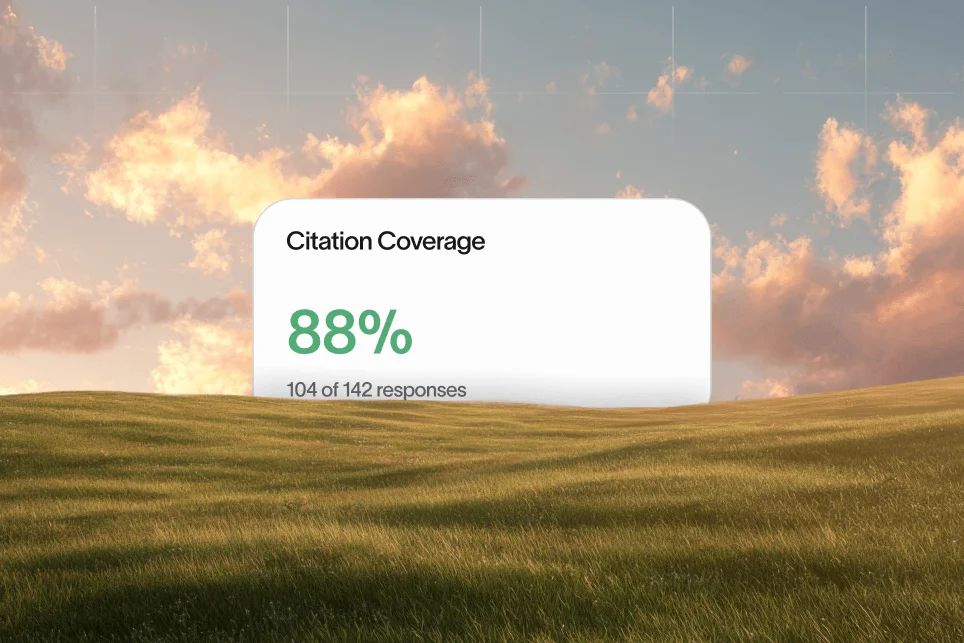
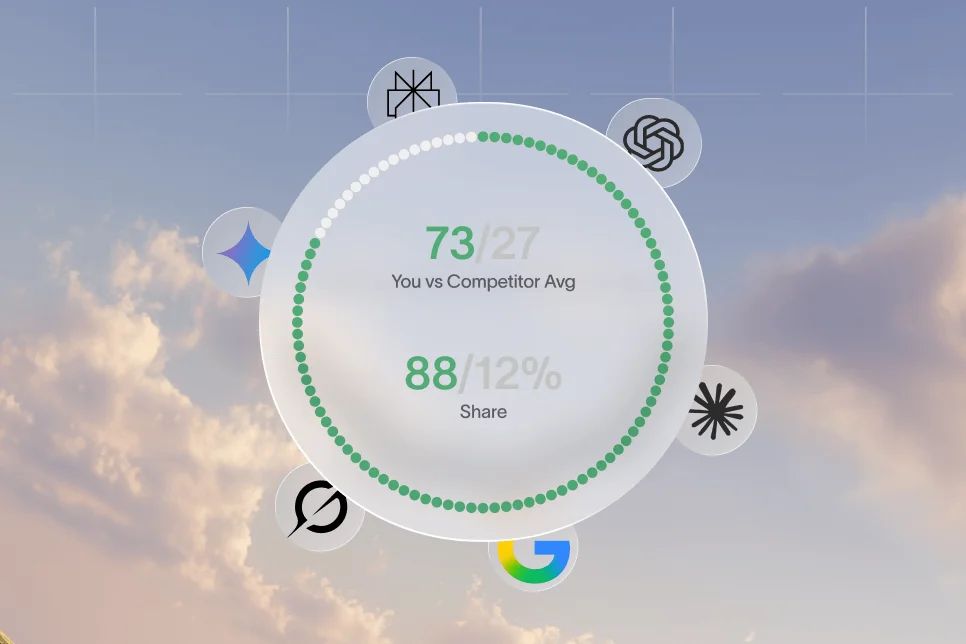
That is where a platform like Skayle fits naturally. It helps teams track how they rank in search and how they show up in AI-generated answers, which is important when the goal is not just more pages, but clearer brand representation and measurable citation coverage. If this is a newer motion for your team, it also helps to understand AI search visibility as its own reporting layer rather than a side effect of SEO.
A mini case study: what changes when you fix the source layer
Let me use a realistic SaaS scenario without inventing numbers.
A B2B software company moves from serving startups to serving multi-location enterprises. The sales team updates its pitch quickly. The site does not.
Baseline:
- Homepage still uses startup-era language.
- Old blog posts refer to self-serve adoption.
- A comparison page frames the product against entry-level tools.
- Directory listings still mention a free plan.
- AI assistants describe the product as a lightweight SMB tool.
Intervention over 6 weeks:
- Rewrite homepage, product pages, and pricing page.
- Update top comparison pages with current category language.
- Refresh help docs tied to onboarding and use cases.
- Clean external directory and partner references where possible.
- Add concise FAQs and definitions on high-intent pages.
- Re-test brand prompts weekly.
Expected outcome:
- AI answers begin to describe the product with more consistent ICP and category language.
- Wrong-fit traffic should decline over time.
- Click quality should improve because the expectation matches the landing experience more closely.
- Sales conversations should require less correction at the start.
That is the right way to think about outcomes here. Not magical visibility spikes. Better source integrity, then better answer quality, then better click quality.
What not to do if you want better LLM citations
Here is the contrarian take: do not respond to bad AI answers by publishing more top-of-funnel content first. Fix your canonical brand sources before you scale.
Publishing more content into a messy source environment often makes the problem worse.
I know why teams do it. More pages feel like progress. More keywords feel measurable. But if your brand story is inconsistent, volume multiplies ambiguity.
These are the mistakes I would avoid:
Chasing output instead of source quality
If ten writers, freelancers, agencies, and AI tools are producing pages from slightly different briefs, your site stops sounding like one company.
That inconsistency does not just hurt conversion. It weakens LLM citations because there is no single stable story to extract.
Treating docs and marketing as separate worlds
Buyers do not care which team published the page. AI systems do not either.
If product docs say one thing and marketing pages say another, you have a source conflict. Fix it operationally, not cosmetically.
Leaving old comparison pages to decay
Comparison pages are often among the clearest pages on a site because they define alternatives, category edges, and differentiators directly.
That also means stale comparison pages can become powerful misinformation sources if they are not refreshed.
Writing for search snippets but not answer extraction
Pages built only to rank can still underperform in AI answers.
You need sections that are easy to quote: short definitions, clean summaries, explicit differentiators, and direct answers to common buyer questions.
This is one reason some teams are moving away from fragmented manual publishing and toward unified systems. We explored the operational tradeoff in this ROI comparison, especially for SaaS teams trying to keep authority and consistency intact as content volume grows.
The technical details that matter without getting overly technical
This topic can get deep fast, but most marketing teams do not need a machine-learning lecture. They need to know which practical details affect whether their content is easy to retrieve and cite.
Here are the high-level pieces that matter.
Clean metadata helps source retrieval
In a technical discussion on Reddit’s r/LocalLLaMA, one practical point stands out: citations depend on maintaining clean metadata such as document name, URL, and page information.
You do not need to build retrieval systems yourself to apply the lesson. The takeaway is simple: clear page titles, stable URLs, unambiguous headings, and well-maintained documents make your content easier to reference accurately.
Explainability matters because users verify less when sources are clear
As discussed in Exploring LLM Citation Generation In 2025, citations improve explainability and make it easier for users to verify whether the information is relevant and factual.
For marketers, that means your page design should support fast extraction:
- Clear headings
- Tight summaries
- Specific claims
- Supporting evidence near the claim
- FAQ sections with direct wording
Credibility still depends on citation quality
The broader logic is not new. As the paper An Exploration of LLM Citation Accuracy and Relevance reinforces, citations exist to support credibility and provide grounding for claims.
The AI layer changes the surface, not the principle.
If your content is vague, inconsistent, or stale, it is harder to cite well. If it is clear, structured, and current, it becomes easier for both humans and machines to trust.
The FAQ buyers and marketers actually need answered
What are LLM citations in plain English?
LLM citations are references in AI-generated answers that point to the sources behind the response. That can mean a linked source, a named website, or even a brand mention, as Stacker explains.
Why does AI get SaaS products wrong so often?
Because most SaaS brands publish information across multiple disconnected sources over time. When those sources conflict, AI systems can assemble an answer that is partially true but commercially misleading.
Do LLM citations affect conversions, or just visibility?
They affect both. If the citation and summary are accurate, the click is more qualified. If the summary is wrong, you either attract the wrong visitor or lose the right one before they ever land on your site.
Is this just an SEO issue?
No. SEO is part of it, but the bigger issue is source consistency across your brand surface.
Think of it as a messaging, governance, and discoverability problem wrapped inside search.
Should we delete old pages that no longer match our positioning?
Sometimes yes, but not automatically.
Start by identifying whether the page still earns traffic, links, or citations. Then decide whether to refresh, consolidate, redirect, or remove it. The goal is not less content. The goal is less contradiction.
How often should we review AI brand accuracy?
Quarterly is the minimum for most SaaS teams. Review sooner if you change pricing, rename features, shift ICP, launch major product updates, or reposition your category.
What kind of pages are most likely to shape AI answers?
Usually the pages with the clearest product definitions and strongest relevance signals: homepage, product pages, pricing, comparison pages, docs, glossaries, and well-structured educational content.
Can one source of truth really improve citation accuracy?
Yes, because consistency compounds.
When your core pages, proof pages, support pages, and external references all repeat the same accurate message, you reduce ambiguity. That makes it easier for AI systems to retrieve and restate your brand correctly.
What a stronger source system looks like in practice
You do not need a massive content operation to improve this. You need a disciplined one.
A stronger source system usually has these traits:
- One current product narrative across site, docs, and sales content
- Defined owners for key pages
- Regular refresh reviews tied to product and GTM changes
- Clear answer blocks on high-intent pages
- Reporting that includes AI answer visibility, not just SERP position
That is why the teams pulling ahead are not necessarily the teams publishing the most. They are the ones reducing contradiction faster than everyone else.
If your brand is your citation engine, then your job is to make the engine easy to read, easy to trust, and hard to misinterpret.
The upside is straightforward. Better LLM citations do not just improve visibility. They improve the odds that the first machine-mediated impression of your company is the one you actually intended.
If you want a clearer picture of how your brand appears in AI answers and where your source coverage is breaking down, measure it directly. Skayle helps SaaS teams see how they rank, where they are cited, and how consistently they are represented across search and AI surfaces. That kind of visibility is the starting point for fixing the problem without guessing.
References
- Stacker — LLM Citations: What They Are and Why They Matter
- arXiv — Citations and Trust in LLM Generated Responses
- Ahrefs — How to Earn LLM Citations to Build Traffic & Authority
- Reddit r/LocalLLaMA — Want to understand how citations of sources work in RAG
- Medium — Exploring LLM Citation Generation In 2025
- ACL Anthology — An Exploration of LLM Citation Accuracy and Relevance
- LLM Citations & How to Earn them to Build Authority in 2026
- Anthropic-Style Citations with Any LLM | by Michael Ryaboy