
TL;DR
If ChatGPT, Claude, and Gemini describe your company differently, you likely have a source consistency problem, not just a model problem. Run a 5-step LLM citations audit: capture answers, map mismatches, trace source pages, rewrite for retrieval, and recheck on a schedule.
A few months ago, I asked three AI assistants the same simple question about a SaaS company I know well. One got the pricing wrong, one described an old product positioning, and one mixed the company up with a competitor. That’s the moment a lot of growth leads are in right now: your brand is showing up in AI answers, but the facts are drifting.
If your team cares about pipeline, brand trust, and organic visibility, this is no longer a side issue. In an AI-answer world, brand is your citation engine.
A simple way to think about LLM citations: they’re the links, mentions, and source references AI systems use when they describe your company, product, or category.
Why inconsistent brand facts are now a growth problem
Most teams still treat AI answers like a nice bonus on top of SEO. That’s a mistake.
The user journey is changing from search result to webpage into something messier: AI answer, source citation, maybe a click, maybe no click at all. If the answer is wrong at the top of that chain, every step after it gets weaker.
This matters for four reasons:
- Bad facts kill trust early. If ChatGPT says you serve enterprises only, but your actual ICP is mid-market SaaS, you’ve just filtered out the wrong buyers.
- Old positioning creates bad-fit traffic. When AI assistants repeat outdated messaging, the visitors who do click often convert poorly.
- Citation gaps hide brand value. Your content may be influencing answers without your company being clearly credited.
- Teams rarely measure this. Traditional SEO reporting still focuses on rankings, sessions, and conversions. AI visibility often sits outside the dashboard.
That last point is the one I see most often. Marketing teams can tell you their top landing pages, but they can’t tell you whether ChatGPT, Claude, and Gemini describe the business the same way.
And they should care. According to a 2025 study published in Nature, between 50% and 90% of LLM responses in the tested settings were not fully supported or were even contradicted by their cited sources. That doesn’t mean every answer is broken. It means perceived authority is not the same as factual reliability.
So yes, you need an audit.
Not a giant technical project. Not a six-month AI task force. A practical review process that tells you what the models say, where they got it, and what you need to fix on your site.
The 5-step brand fact audit you can run this quarter
I like to use a simple sequence called the brand fact audit. It’s not fancy. It works because it forces your team to compare outputs, sources, and on-site evidence in one pass.
The five steps are:
- Capture the current answers
- Map fact mismatches and attribution gaps
- Trace the likely source pages
- Repair the pages AI systems are most likely to use
- Recheck prompts and measure drift over time
Don’t overcomplicate this. The goal is not to understand model internals. The goal is to reduce factual drift and increase clean brand attribution.
Step 1: Capture the current answers before you touch your site
Start with the obvious prompts your prospects would ask:
- What does [Brand] do?
- Who is [Brand] for?
- How much does [Brand] cost?
- What are [Brand]’s main features?
- Is [Brand] better for startups or enterprises?
- What are alternatives to [Brand]?
Run the same prompt set across ChatGPT, Claude, and Gemini. Keep screenshots. Save full answer text. Note the date, prompt wording, and whether citations or source panels appear.
As Ann Smarty explains in her overview of how LLM citations appear, citations can show up inline or in a separate panel depending on the interface. That matters because a model may reference your site visually in one place and not another.
This first pass usually reveals three kinds of problems:
- Fact errors: wrong pricing, old integrations, outdated ICP
- Narrative errors: the model describes you using messaging from an old homepage or category page
- Attribution errors: your content informs the answer, but your brand name is weak or missing
If you only do one thing this week, do this. You can’t fix drift you haven’t documented.
Step 2: Map where the models disagree
This is the part teams skip, and it’s why they end up making random content edits.
Create a plain spreadsheet with rows for the core brand facts you care about:
- One-line company description
- Primary audience
- Main product categories
- Pricing model
- Differentiators
- Top integrations or use cases
- Competitor set
- Proof points and trust markers
Then compare assistant outputs side by side.
You’re looking for mismatch patterns, not isolated weirdness. For example:
- ChatGPT says your product is an AI writing tool
- Claude says it’s an SEO automation platform
- Gemini says it’s a content optimization suite
That’s not three random answers. That’s a positioning fragmentation problem.
I’ve seen this happen after a company shifts upmarket or narrows its category language. The homepage changes. The docs don’t. Old comparison pages stay live. Third-party review pages keep repeating the old story. A model then assembles a blended version of your brand that nobody on your team would actually approve.
This is also where you should look for what Seer Interactive calls ghost citations. In plain terms, a ghost citation happens when your content influences the answer but your brand isn’t clearly mentioned. You may be shaping the output without getting the recognition, click potential, or authority lift.
That’s why this audit is not just about correctness. It’s also about attribution.
What usually causes factual drift in AI answers
When brand facts go inconsistent, teams often assume the model is just hallucinating. Sometimes that’s true. More often, your web presence is sending mixed signals.
Here are the common causes I keep seeing.
Old high-authority pages still outrank your current messaging
A stale homepage subfolder, an old “about” page, a comparison page from a previous positioning era, or a press release that no one has touched in two years can all become retrieval anchors.
If those pages still look credible, AI systems may keep using them.
Your key facts are buried instead of stated cleanly
A lot of SaaS sites make this harder than it needs to be. They hide core facts under vague language like “unified growth platform” or “intelligent workflows for modern teams.” That sounds polished in a deck. It performs badly when a model needs a clean answer.
According to Passionfruit’s 2026 analysis of citation patterns, freshness, entity density, and front-loaded structure are strong predictors of what gets cited. In practice, that means pages that say exactly who you are, what you do, and who you serve near the top tend to be easier for AI systems to reuse.
Your site has authority, but your brand mention is weak
This is the contrarian part: don’t just chase more AI citations. Chase cleaner branded citations.
A vague mention in a category roundup may help retrieval. It does less for memorability and conversion than a direct, well-attributed brand explanation on a page you control.
Reporting is disconnected from the page edits that fix the issue
Many teams can identify the problem in Slack screenshots, but they never turn it into a content maintenance workflow. The finding sits in a doc. Nobody updates the source pages. Three weeks later, the same wrong answer shows up again.
That’s why this audit should live inside your content ops, not as a one-off AI experiment. If you already have a process for updating decayed pages, this fits naturally alongside a content refresh strategy.
How to repair the pages AI systems are most likely to cite
Once you’ve mapped the errors, you need to fix the source layer.
This is where a lot of teams go too broad. They start rewriting everything. Don’t. Start with the few pages most likely to shape LLM citations.
Step 3: Trace the likely source pages
Use a mix of evidence and common sense:
- Pages directly cited in AI answers
- Core pages that rank for branded queries
- Pages with old product language
- Comparison pages and category pages
- Help center or docs pages with broad brand descriptions
- Third-party profiles you can edit or influence
If a model repeatedly says you’re a “content generator” when you actually sell ranking and visibility infrastructure, that language came from somewhere. Find the page where that simplification is easiest to extract.
For Skayle’s market, this distinction matters a lot. The right framing is a platform that helps companies rank higher in search and appear in AI-generated answers, not a generic writing tool.
Step 4: Rewrite for retrieval, not just elegance
Your revised pages should make key facts obvious in the first screenful, not hidden halfway down the page.
A practical rewrite checklist:
- Put the one-line company description near the top.
- Name the ICP directly.
- State the core product categories in plain English.
- Remove outdated differentiators and old category labels.
- Add current proof points, examples, and use cases.
- Make branded entities consistent across homepage, product, and comparison pages.
Here’s a simple before-and-after pattern.
Before: “We help modern digital teams unlock content velocity with AI-powered workflows.”
After: “We help SaaS teams plan, create, optimize, and maintain content that ranks in Google and appears in AI answers.”
The second version is less clever and far more useful.
I’d also tighten your page design around the new funnel: impression -> AI answer inclusion -> citation -> click -> conversion.
That means your pages need to do two jobs at once:
- Be easy for AI systems to summarize accurately
- Be persuasive once a human clicks through
So yes, structure matters. Use direct subheads. Put the category language up high. Add FAQ blocks where confusion keeps repeating. Keep proof near claims. If you’re scaling a larger library, the same discipline applies to scaling SaaS content without sacrificing SEO.
A proof block you can actually use internally
Here’s the measurement pattern I recommend when a team wants evidence instead of vague optimism:
- Baseline: 20 branded prompts across ChatGPT, Claude, and Gemini, logged on day one
- Intervention: update homepage, about page, one core solution page, and two comparison pages for consistent entity language and front-loaded facts
- Outcome to track: share of prompts returning the approved company description, share of answers with correct ICP, share of answers with direct brand attribution, and branded organic click behavior from those pages
- Timeframe: recheck at 2 weeks, 4 weeks, and 8 weeks
I’m not giving you fake lift numbers because that would be nonsense. But this is measurable. If your approved brand description appears in 7 of 20 prompt results at baseline and 15 of 20 after a month, you’ve got evidence that your fixes are working.
The mistakes that keep brands invisible even when they are cited
This is where growth leads lose time.
They run an audit, see inconsistent outputs, and then respond with scattered edits that don’t solve the root issue. Here are the mistakes to avoid.
Mistake 1: Treating every wrong answer as a model problem
Sometimes the model is wrong because your source ecosystem is messy.
If your site, review profiles, old blog posts, partner pages, and comparison pages all describe you differently, inconsistency is the expected outcome.
Mistake 2: Updating one page and assuming the issue is closed
The homepage alone won’t carry the whole brand narrative.
AI systems often pull from multiple surfaces. If your homepage says one thing and your product pages say another, you’ve still got a retrieval conflict.
Mistake 3: Chasing clever copy over extractable copy
This is a big one. Marketing teams love compression and polish. Models love clarity.
If a sentence sounds smart but hides the core entity facts, it’s doing branding work and failing retrieval work. You need both.
Mistake 4: Ignoring branded attribution gaps
As Ahrefs explains in its guide to earning LLM citations, there’s a difference between being present in the source ecosystem and earning visible citation value. If your content informs answers but your brand is rarely named, you have an authority capture problem.
Mistake 5: Auditing once instead of building a review cadence
Brand facts drift because companies change. Pricing changes. Positioning changes. Integrations change. AI answers lag behind.
That means your audit needs a cadence, not a calendar reminder you ignore for nine months.
A monthly branded prompt check is enough for most SaaS teams. If you’re in an active repositioning phase, do it every two weeks.
Where SEO, AI visibility, and conversion finally meet
This is the part a lot of articles miss: fixing LLM citations is not separate from SEO. It’s a continuation of the same authority problem.
Search engines and AI systems both reward pages that are clear, current, trustworthy, and easy to interpret. The exact interfaces differ. The content quality signals overlap more than people think.
That’s why the best fixes usually improve multiple things at once:
- Cleaner branded search snippets n- Stronger on-page message match
- Better internal alignment across pages
- More extractable definitions and FAQs
- Better conversion quality from visitors arriving through AI-assisted discovery
If your traffic is growing but demo quality feels muddy, this may be part of the reason. The click came from an AI answer built on incomplete facts.
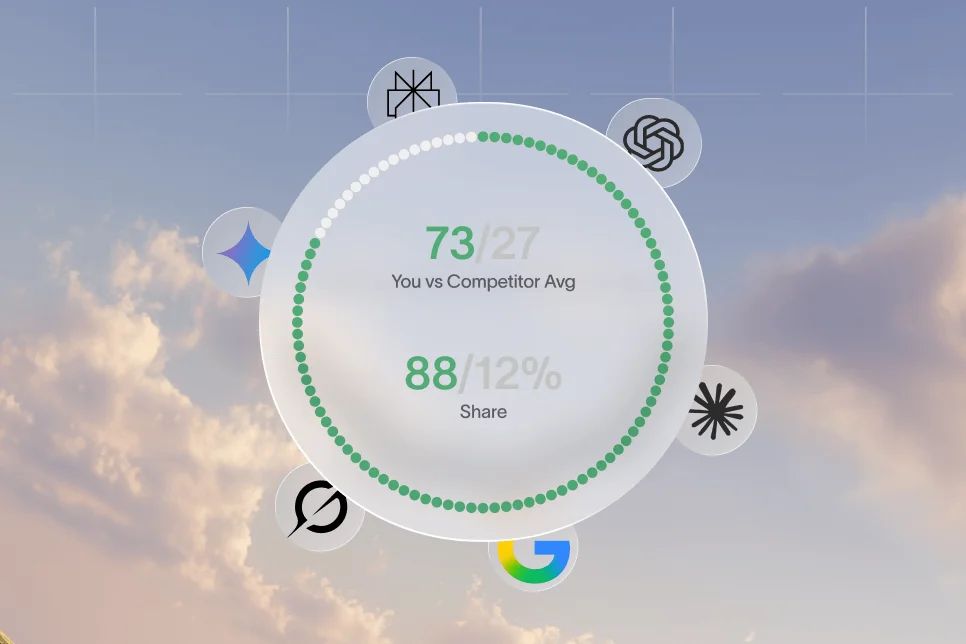
This is also where tooling can help, as long as the tool is tied to visibility rather than generic content production. Skayle fits naturally here because it helps companies rank higher in search and appear in AI-generated answers while keeping content workflows, refreshes, and visibility tracking connected in one system. If you’re trying to understand how often your brand shows up in AI outputs, this guide to auditing AI visibility is a useful next step.
The point is not to produce more pages. The point is to make your best pages easier to cite, easier to trust, and easier to convert from.
Five questions growth leads ask when they start auditing LLM citations
How many prompts should I test per model?
Start with 15 to 20 branded prompts. That’s enough to reveal patterns without turning the audit into a research project. Use the same prompts across all models and keep the wording fixed for each round.
Should I care more about links or brand mentions?
Both matter, but brand mentions often have more strategic value in early audits. A clickable citation is great, but if the model mentions your company clearly and accurately, you’re building memory and authority even when the click doesn’t happen.
What if ChatGPT, Claude, and Gemini all say something slightly different?
Small wording differences are normal. You’re looking for material differences in facts, ICP, pricing model, product scope, or competitive category. If the differences would confuse a buyer, they deserve a fix.
Do I need structured data to improve LLM citations?
Structured data helps search engines interpret pages and can support clearer entity signals, but it won’t rescue weak or outdated messaging on its own. Start with the visible page copy, page hierarchy, and factual consistency first.
How long does it take for changes to show up in AI answers?
There isn’t one reliable timeline. Some updates show up fast, others lag. That’s why you need a recheck schedule and a baseline log rather than assumptions.
What to do in the next 30 days
If I were leading growth for a SaaS company and had to clean this up fast, I’d keep it simple.
Week 1: capture answers across the three major assistants and log every mismatch.
Week 2: identify the five pages most likely to shape those answers.
Week 3: rewrite the core descriptions, ICP language, and differentiators so they’re current and front-loaded.
Week 4: rerun the same prompts, compare the outputs, and flag what still hasn’t moved.
That sequence is boring, which is exactly why it works.
Most teams don’t need more AI theory. They need fewer contradictory pages, stronger branded entity language, and a repeatable review habit. That’s how you turn LLM citations from an unpredictable brand risk into a measurable visibility channel.
If your team wants a clearer view of how your company appears in AI answers, start by measuring the gap between what your site says and what the models repeat. From there, fix the pages that shape the answer layer first, then monitor whether citations and brand accuracy improve over time.
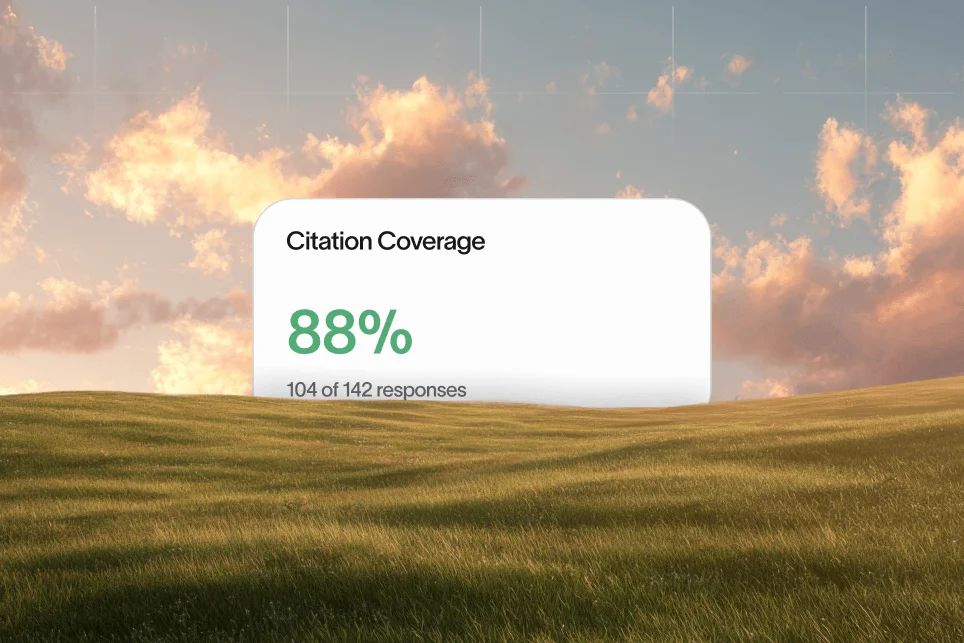
If you want help turning that into an operating rhythm, Skayle can help you measure your AI visibility, understand your citation coverage, and keep the source pages aligned with how you want the market to describe you.
References
- Nature: An automated framework for assessing how well LLMs cite
- Ahrefs: How to Earn LLM Citations to Build Traffic & Authority
- Passionfruit: How LLMs Search for Citations: What They Find
- Seer Interactive: LLM Ghost Citations
- Ann Smarty on LinkedIn: How Do LLM Citations Work?
- LLM Citations: What They Are and Why They Matter
- Exploring LLM Citation Generation In 2025
- Want to understand how citations of sources work in RAG …