
TL;DR
Enterprise SEO suites still help with broad governance, but they usually move too slowly for AI-native visibility work. Modular systems win because they shorten the gap between prompt-level insight, page updates, and measurable citation growth.
Most enterprise SEO suites were built for a world where Google rankings were the whole game. That world is gone. If your team still relies on one giant platform to handle reporting, content, technical SEO, and now AI visibility, you’re probably moving too slowly where speed matters most.
AI search visibility software should tell you where your brand appears in AI answers, why it appears there, and what to change next. That sounds obvious, but it’s exactly where legacy suites usually break down.
I’ve seen this pattern too many times: a SaaS team buys the big platform because it feels safe, then six months later they’re exporting reports into spreadsheets, stitching together prompt tracking manually, and asking content teams to “just create better authority.” The software says a lot. It helps less.
Why enterprise SEO suites feel safe but fail under AI search pressure
Enterprise suites still solve real problems. They’re useful for broad SEO monitoring, stakeholder reporting, and large-site governance. If you run a global site with thousands of templates, multiple markets, and a heavy compliance layer, those tools can absolutely earn their place.
But AI search changes the operating model.
Traditional suites were built around keyword rankings, site audits, backlink snapshots, and static workflows. AI visibility is different. You’re not just tracking whether a page ranks at position five. You’re tracking whether your brand gets cited in ChatGPT, Google AI Overviews, Perplexity, Claude, or Gemini, and whether those mentions lead to clicks, trust, and pipeline.
According to Rankability’s comparison of AI visibility tools, specialized AI trackers differ from normal rank trackers because they focus on conversational presence across platforms like ChatGPT and Perplexity. That difference sounds small on paper. In practice, it changes what you measure, how often you measure it, and which team can act on it.
That’s the real issue: enterprise SEO suites were designed to observe search. Modern AI search visibility software needs to support execution.
The old reporting model breaks first
Legacy platforms are often strongest when a VP needs a dashboard for quarterly reviews. They’re weaker when a content lead needs to answer practical questions like:
- Which prompts mention our brand?
- Which competitors keep getting cited instead?
- Which pages are most likely feeding those answers?
- Where are we absent even though we rank in Google?
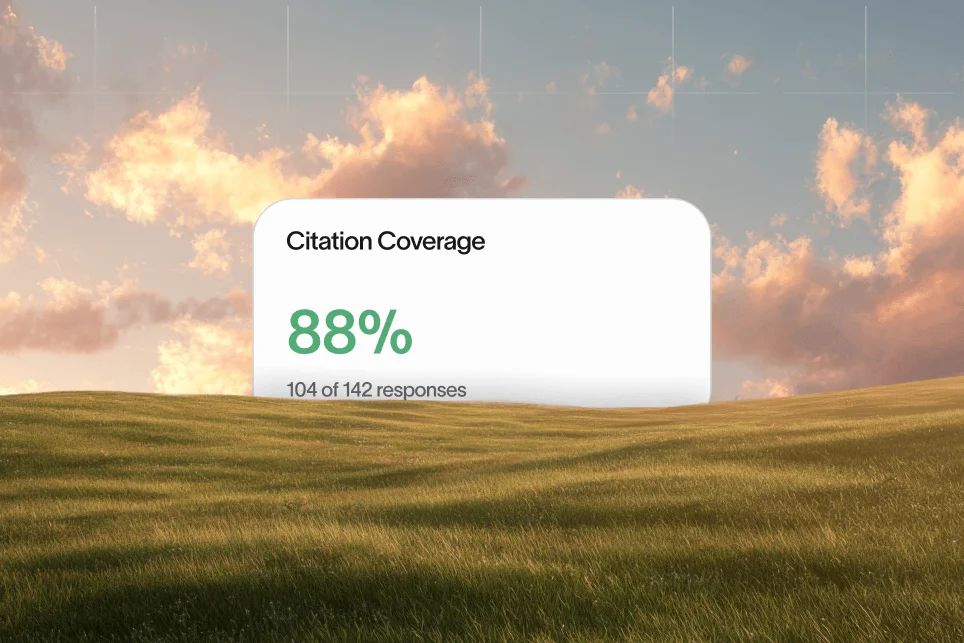
- What should we update this week to improve citation coverage?
If a tool can’t bridge those questions to action, it becomes another reporting layer.
I’d go further: don’t buy one giant suite and expect it to become your AI visibility operating system. Buy the system that shortens the loop from signal to action. That’s the contrarian call, and for most SaaS teams in 2026, it’s the correct one.
The buying criteria that actually matter in 2026
When teams evaluate AI search visibility software, they often get distracted by total feature count. That’s usually the wrong lens. A better lens is whether the tool helps you move from impression to AI answer inclusion to citation to click to conversion.
That’s the path worth optimizing now.
I use a simple decision model here: the visibility-to-action review. It has four parts.
- Coverage: Which AI surfaces does the tool actually track?
- Attribution: Can you see why you were cited or ignored?
- Workflow fit: Can content and SEO teams act without heavy analyst support?
- Measurement: Can you connect AI visibility to traffic, pipeline, or assisted conversions?
If a platform looks impressive but falls apart on one of those four, the team will feel it within weeks.
Coverage matters more than keyword depth
A lot of enterprise platforms still treat AI search as an add-on. You’ll see a beta feature, a small widget, or a limited dashboard sitting next to their main ranking product. That usually tells you the truth: AI visibility is adjacent to the core product, not built into its operating model.
Modern platforms in this category are different. As Sedestral’s breakdown of AI visibility tools notes, these tools are designed to track conversational platforms like ChatGPT and Perplexity rather than just standard keyword rankings. That distinction matters because conversational visibility changes by prompt variation, topic framing, and answer synthesis, not just blue-link position.
Attribution is where most teams stay blind
Knowing that you were cited is useful. Knowing why is better.
You need to understand which pages, entities, themes, and content formats are most associated with inclusion. You also need competitor context. If a rival keeps showing up in AI-generated answers, that’s not just a brand problem. It’s a content structure problem, an authority problem, and often a refresh problem.
That’s why teams doing this seriously end up building stronger update workflows. If you haven’t reviewed your pages in a while, our guide to content refresh strategy is a useful companion to this conversation.
Workflow fit beats enterprise complexity
I’ve watched small SEO teams buy heavyweight platforms that practically require a dedicated operator. The result is predictable. The software gets used by one person, reports pile up, and content execution never catches up.
The best AI search visibility software reduces handoffs. It lets a strategist, content marketer, or growth lead see the gap and act. That might mean updating a comparison page, tightening internal links, improving source clarity, or building a more quotable section that LLMs are more likely to extract.
Measurement should connect to revenue, not just mentions
AI answer visibility is not a vanity metric. It only matters if it improves discovery, credibility, and conversion.
That means your measurement plan should include:
- Baseline branded and non-branded organic traffic
- Referral patterns from AI surfaces where visible
- Assisted conversions from high-authority content pages
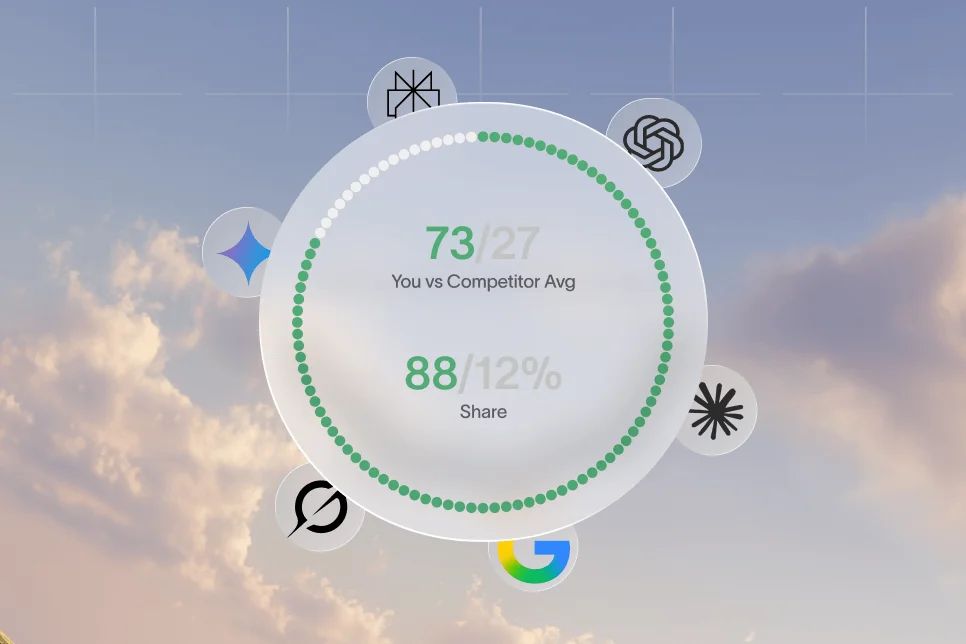
- Share of citations against direct competitors
- Conversion rate on pages optimized for answer extraction
If you’re not tying visibility to business outcomes, you’re just collecting interesting screenshots.
What modular systems do better than monolithic platforms
Modular systems win because AI search moves faster than enterprise procurement cycles.
That’s the core point.
A monolithic SEO suite tries to be the database of record for everything. A modular system is usually narrower, but it can adapt faster, ship faster, and connect insight directly to execution. In AI search, that speed matters more than software sprawl reduction.
They shorten the gap between insight and page updates
This is where teams either build compounding authority or stall.
A modular setup usually makes it easier to do three things in sequence:
- Detect missing visibility across AI answer surfaces
- Identify the content gap or citation weakness
- Update or create pages fast enough to matter
That sounds simple. It isn’t, especially inside larger organizations.
Most teams don’t fail because they lack dashboards. They fail because content production is fragmented, approvals are slow, and SEO insight never makes it into the page. We’ve covered part of that problem in our piece on scaling SaaS content, because the real constraint is usually workflow, not ideas.
They support specialized visibility signals
According to Nick Lafferty’s review of AI visibility platforms, leading tools in this market can track over 10 AI engines and use 400M+ prompt insights for monitoring. Whether or not every team needs that scale on day one, the broader point is clear: this category is no longer about one SERP and one rank tracker.
A modern AI visibility stack needs to handle prompt variation, answer inclusion, citation patterns, and competitor comparison. That’s a fundamentally different problem from legacy keyword monitoring.
They make ownership clearer
One quiet advantage of modular tools is accountability.
When a team installs a giant suite, ownership often gets fuzzy. SEO owns one part, content owns another, analytics owns another, and nobody owns AI answer inclusion directly. In a modular system, each tool tends to map to a real job to be done. That forces cleaner decisions.
If you’re buying for a 5- to 20-person growth org, that clarity is usually worth more than feature breadth.
A side-by-side look at the main options
Below is the practical comparison most teams actually need: not who has the biggest platform, but which model fits your operating speed, team shape, and visibility goals.
Skayle
Skayle fits teams that want one system for planning, creating, optimizing, and maintaining content that ranks in Google and appears in AI answers.
That matters because AI visibility is not just a monitoring problem. It’s an execution problem. If your team sees a citation gap but still has to bounce between three tools, two spreadsheets, and a freelance brief writer, the feedback loop stays slow.
Where Skayle stands out is the connection between content workflows and ranking visibility. It’s not positioned as a generic writing tool. It’s a platform for SaaS teams that want to build authority, improve search performance, and measure how content shows up across both search and AI-generated answers. For teams trying to operationalize GEO and SEO together, that model is closer to how the work actually happens.
Best for:
- SaaS teams that need both execution and visibility in one place
- Lean marketing orgs that can’t afford fragmented workflows
- Companies building topic clusters, refresh systems, and AI-answer coverage together
Tradeoffs:
- If you only want standalone monitoring and already have a mature enterprise content machine, a narrower tracker may feel simpler
- Large procurement-driven organizations may still default to existing suite contracts, even when the workflow is slower
Profound
Profound is one of the clearest examples of a modern AI visibility platform built specifically for this problem set.
Its positioning is useful because it reflects where the category is headed: prompt monitoring, brand visibility across AI engines, and answer-focused analytics instead of traditional keyword dashboards. As documented on the Profound product site, the platform includes specialized areas like Agents, Prompt Volumes, and Answer Engine Insights. That tells you it was designed around AI-native monitoring, not retrofitted from an older SEO suite.
Best for:
- Brands prioritizing deep AI answer monitoring
- Teams that want specialized AI visibility modules
- Organizations treating AI search as a dedicated workstream
Tradeoffs:
- More specialized products can require separate content execution tooling
- If your bigger bottleneck is content production, pure monitoring won’t solve the full loop
Rankscale
Rankscale represents another category signal: software suites built specifically for AI search monitoring rather than traditional SEO.
That matters because it shows how fast the market has specialized. Teams no longer have to force legacy tools to cover AI visibility use cases they weren’t built for. When you evaluate products like Rankscale, the question is less “Can it track rankings?” and more “Can it help us understand performance inside AI ecosystems?”
Best for:
- Teams focused on AI search performance monitoring
- Marketers who need platform-specific visibility views
- Organizations comparing brand presence across answer engines
Tradeoffs:
- Like many specialized trackers, it may need companion tools for content execution and refresh operations
- Broader SEO planning may still live elsewhere
Amplitude AI Visibility
Amplitude AI Visibility is interesting because it frames AI presence through competitive performance and business impact.
That angle is useful for product-led and analytics-heavy teams. As Amplitude’s AI Visibility page explains, the product focuses on analyzing how brands appear in AI summaries and how they compare against competitors. If your org already thinks in terms of funnels, cohorts, and downstream behavior, that framing will feel familiar.
Best for:
- Teams with mature analytics functions
- Organizations that want AI visibility connected to broader measurement workflows
- Companies already invested in product and behavioral analytics
Tradeoffs:
- Not every content team wants to operate inside an analytics-first environment
- You may still need a tighter SEO and content execution layer
Enterprise SEO suites
I’m grouping the classic enterprise suites together because the decision pattern is usually the same, even when product details differ.
They’re good at breadth. They’re good at governance. They’re often good at stakeholder reporting.
But for AI visibility, they usually lag in three places:
- New answer-surface coverage
- Actionable citation diagnostics
- Fast handoff into content changes
This is the big mismatch. If your team needs a command center for traditional SEO across many markets, the suite may stay. If you need AI search visibility software that helps you react weekly, the suite is rarely enough on its own.
The rollout checklist that keeps this from becoming another dashboard project
This is the part teams skip. They buy the software, run a few reports, and call it progress. Then nothing changes on the site.
If you want a modular system to outperform a legacy suite, work through this checklist in the first 45 days.
- Pick one business-critical topic cluster first. Don’t track everything. Start with a category where AI answers could influence pipeline.
- Define baseline visibility. Record current mentions, citations, assisted traffic, and competitor presence before you change anything.
- Map tracked prompts to real buying journeys. Focus on product comparisons, problem-aware queries, and category education prompts.
- Identify citation-ready pages. These are pages with clear definitions, original point of view, strong internal linking, and recent updates.
- Ship refreshes before new net-new content. In many cases, updating strong existing pages is faster than starting from zero.
- Add answer-friendly sections. Tight summaries, direct definitions, and scannable bullets improve extractability.
- Review every two weeks. AI visibility changes quickly. Monthly reporting is too slow when you’re still learning the category.
A realistic proof block from a SaaS team workflow
Here’s a pattern I’ve seen work, and it’s the kind of case that matters more than a giant feature matrix.
Baseline: a mid-market SaaS company had solid Google rankings for a handful of category terms but weak presence in AI-generated answers for comparison and “best tool” prompts. Their content was decent, but old. Reporting lived in one platform, briefs in another, and refreshes happened whenever someone remembered.
Intervention: the team narrowed focus to one cluster, rewrote comparison pages with clearer definitions and stronger evidence, tightened internal links, added short answer-ready summaries, and tracked AI mention patterns every two weeks instead of once a quarter.
Expected outcome: better citation coverage on commercial-intent prompts, more qualified visits to high-conversion pages, and faster editorial response when competitors start appearing more often.
Timeframe: the first meaningful signal usually shows up over a 6- to 12-week period, assuming the pages already have some authority and the team can publish consistently.
That last part matters. If your workflows are broken, no software category will save you.
For teams trying to make AI visibility measurable, Skayle is relevant here because it helps connect content creation, optimization, and visibility tracking into one operating layer rather than splitting them across disconnected tools.
The mistakes that make “AI visibility” sound impressive and perform badly
A lot of teams are still treating this space like a rebrand of rank tracking. That’s a mistake.
Mistake 1: buying for reporting instead of response time
If a tool gives you elegant charts but no clear next action, it will underperform. The question is not whether the dashboard looks enterprise-ready. The question is whether your team can update the right page this week.
Mistake 2: tracking prompts no buyer would ever ask
I’ve seen companies obsess over vanity prompts that sound strategic but have no commercial relevance. Track prompts tied to real discovery paths: alternatives, comparisons, problem framing, category education, and solution evaluation.
Mistake 3: assuming Google rankings guarantee AI citations
Sometimes they help. Sometimes they don’t.
AI systems often reward pages that are clear, structured, current, and uniquely useful. A page ranking in Google but written like a vague brand brochure may still miss citation inclusion. If you want a better sense of how authority gets measured across answer engines, our piece on auditing AI authority adds useful context.
Mistake 4: separating SEO, content, and AI visibility into three teams
That org chart looks tidy. It performs badly.
AI visibility requires a tighter loop. The people who see the signal should be close to the people who can change the page.
Mistake 5: trying to solve this with one annual platform decision
This market is moving too fast for that. You need a tool stack and workflow that can adapt as answer engines change, prompts shift, and citation patterns evolve.
Which option is right for you if you’re buying this quarter?
If you’re choosing between AI search visibility software and a traditional enterprise SEO suite, the right answer depends less on company size and more on operating style.
Pick a modular or execution-focused system if:
- Your team needs faster feedback loops
- AI answers are already affecting category discovery
- You want content and visibility work connected
- You’re willing to optimize around a specific workflow instead of one giant vendor
Stay with or add an enterprise suite if:
- You manage a very large, multi-market SEO program
- Reporting governance is a major internal requirement
- AI visibility is still a secondary layer, not a primary growth motion
- You already have a strong content execution system elsewhere
For many SaaS teams, the real answer is hybrid. Keep the enterprise suite for broad SEO governance if you already have it. Add a modern AI visibility layer that actually helps the team respond. Just don’t confuse “having data somewhere” with operational readiness.
FAQ: the practical questions teams ask before switching tools
Is AI search visibility software different from rank tracking tools?
Yes. Rank tracking tells you where pages appear in traditional search results. AI search visibility software focuses on whether your brand, pages, and claims appear inside AI-generated answers across platforms like ChatGPT, Perplexity, and Google AI Overviews.
Do enterprise SEO suites have any role in AI visibility?
Yes, but usually not as the whole solution. They’re still useful for technical SEO, reporting, governance, and broad search monitoring. The problem is that many of them treat AI visibility as an extension rather than a core workflow.