TL;DR
Scaling AI Search Visibility without new hires is an ops problem: automate monitoring, turn anomalies into tasks, and standardize refresh playbooks. Use a repeatable loop (like VISTA) and track citation coverage alongside GSC/GA4 performance.
The first time a founder asked me why their brand wasn’t showing up in AI answers, my honest response was: we weren’t even measuring the right thing. We had an SEO team, a content calendar, and weekly reports—yet AI Search Visibility was still basically a black box.
AI Search Visibility scales when monitoring is automated and actions are standardized, not when you hire more SEO analysts.
1. Stop treating AI Search Visibility like a weekly report
In 2026, the biggest cost in SEO isn’t content production. It’s attention. If your team needs to manually check rankings, skim SERPs, screenshot AI answers, paste links into Slack, then argue about priorities, you don’t have an SEO problem—you have an operations problem.
AI Search Visibility (ASV) is not the same thing as “rank tracking.” It’s the combined outcome of:
- Whether you appear in AI answers (inclusion)
- Whether you’re named or linked (citation)
- Whether the citation earns clicks (traffic)
- Whether those clicks convert (revenue)
That is a funnel, not a metric.
Why this matters now (and why hiring doesn’t fix it)
When AI answers compress the SERP, the marginal value of “one more blog post” drops. The marginal value of “knowing which page is silently losing citations” goes up.
Hiring tends to expand manual work:
- Another person to check more keywords
- Another person to run more exports
- Another person to build another dashboard that nobody trusts
You end up with more labor but not more leverage.
Point of view (what I’d do if I had to cut headcount)
If you want to scale ASV without new hires, you have to make monitoring boring and automatic. Keep humans for judgment calls: what to fix, what to ship, what to ignore.
Here’s the contrarian stance I’ve learned the hard way:
Don’t hire to “watch” visibility. Automate the watching, and use humans to make the few decisions that actually move rankings and citations.
The funnel you should be optimizing (and why it changes your workflow)
If you design your workflow for the path below, your reporting becomes actionable by default:
- Impression
- AI answer inclusion
- Citation
- Click
- Conversion
The mistake is measuring only step 5 and hoping the top-of-funnel takes care of itself. For instrumentation basics, start with Google Search Console and Google Analytics before you buy yet another reporting tool.
2. Use the VISTA Loop to turn monitoring into actions (not meetings)
Most teams “monitor” by collecting numbers. What you actually need is a loop that converts signals into tasks.
I use a simple model you can repeat across every content cluster:
The VISTA Loop (a framework you can reuse)
VISTA = Visibility snapshot → Intent mapping → Source coverage → Task routing → Authority refresh
- Visibility snapshot: capture what changed (rank, clicks, AI inclusion, citations).
- Intent mapping: classify queries by intent (evaluate, compare, how-to, pricing, alternatives).
- Source coverage: identify which “trusted sources” dominate answers (docs, communities, benchmarks, competitors).
- Task routing: create a default action (refresh, expand, add schema, build internal links, create support page).
- Authority refresh: ship changes that increase cite-ability and conversion, then re-check.
This works because it reduces debate. Every signal has a pre-decided next step.
The practical definition (the one I wish teams used)
AI Search Visibility is your brand’s measurable presence inside AI-generated answers for your target intents, tracked as inclusion + citations + downstream performance.
That definition forces you to connect visibility to outcomes.
What “source coverage” actually means in practice
AI systems don’t cite you because you used the right keyword density. They cite you because your page looks like a uniquely useful source.
Source coverage is answering:
- Are we being out-cited by documentation hubs?
- Are we being out-cited by community threads?
- Are we being out-cited by competitor comparisons?
When you see who dominates, you stop guessing what to publish.
A quick place to ground your structured content decisions is Schema.org (and yes, it still matters in 2026 because it helps machines extract meaning).
The “no new hires” checklist (run this in one afternoon)
- Pick 20–50 queries that represent your revenue intents (not vanity traffic).
- Tag each query with intent (how-to, comparison, pricing, alternatives, integration).
- Assign a “primary page” you want cited for each query.
- Add one extraction-friendly block to each page (definition, steps, table, or checklist).
- Add internal links from 3–5 supporting pages to the primary page.
- Add or validate relevant structured data (FAQ, HowTo where appropriate, Product/SoftwareApplication when accurate).
- Set alert thresholds (more on this below) so drops create tasks automatically.
- Schedule a re-check cadence (daily for high-intent, weekly for the rest).
If this feels like “process,” good. Process is how you scale without headcount.
3. Build an ASV dashboard that pings you (not the other way around)
The fastest way to reduce SEO overhead is to stop asking people to “remember” to check things.
You want a system where:
- data flows in automatically
- anomalies trigger alerts
- alerts create tasks
- tasks are tied to pages (not abstract metrics)
The minimum viable stack (boring, reliable, cheap)
You can build a solid ASV monitoring spine with:
- Google Search Console for queries, pages, clicks, impressions
- Google Analytics 4 for engagement and conversion events
- BigQuery if you need storage + joins at scale
- Looker Studio for dashboards stakeholders actually open
- Slack for delivery (alerts where humans already live)
If you prefer to avoid a warehouse early on, start with exports and automate later. But design as if you’ll warehouse it.
The “proprietary benchmark” I use to prevent dashboard theater
I don’t rely on generic KPIs like “average position.” They hide pain.
Instead, I set page-level triggers that create work:
- Traffic trigger: if a page loses 15%+ clicks week-over-week (GSC), create a refresh task.
- Query trigger: if a high-intent query drops 3+ positions for the mapped page, inspect SERP changes.
- CTR trigger: if impressions hold but CTR drops materially, rewrite title/meta and tighten above-the-fold.
- Indexing trigger: if a page falls out of the index or gets canonicalized unexpectedly, escalate to technical SEO.
Are these numbers magic? No. They’re operational thresholds that stop you from arguing.
How to route alerts into work without new meetings
Use an automation layer—either Zapier or Make—to turn “alert” into “task.”
A simple workflow I’ve used:
- Daily pull from GSC (page + query clicks, impressions)
- Compare to 7-day trailing baseline
- If trigger fires, send Slack message to #seo-alerts
- Automatically create a ticket in Jira or a card in Notion
- Assign owner based on page type (product page vs blog vs integration)
Here’s the part most teams skip: the ticket must include the exact next step. Not “investigate.” Something like:
- “Refresh section X with 2026 steps and add FAQ schema”
- “Add comparison table and link to pricing page”
- “Rewrite intro to match ‘best’ intent and add definition block”
That’s how you remove human overhead.
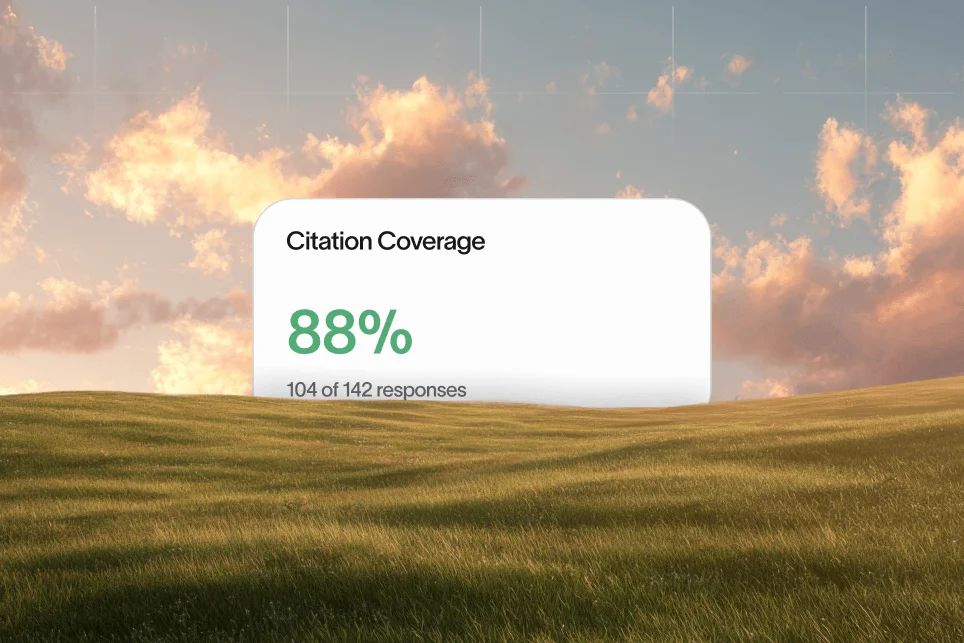
4. Automate citation coverage checks with a small prompt harness
Rank tracking tells you where you stand in Google. Citation tracking tells you whether AI systems treat you as a source.
Most teams try to do this manually by asking a chatbot questions and screenshotting results. That doesn’t scale.
What you’re actually measuring (keep it simple)
For each target query, capture:
- Was your brand mentioned? (yes/no)
- Was your domain cited/linked? (yes/no)
- Which page URL was cited? (exact URL)
- Which competing sources showed up repeatedly?
This becomes a coverage map. Coverage maps create priorities.
A lightweight way to run it daily or weekly
You don’t need a huge engineering project. You need repeatability.
- Store your query set in a sheet or database
- Send queries to an LLM via API (pick your provider)
- Parse the response for citations/links/brand mentions
- Save results with timestamps
If you’re prototyping, you can use:
- OpenAI API or Anthropic for query execution
- A simple script (Python/Node) or a no-code scenario in Make
Pseudo-structure (keep it deterministic):
Input: query, target_brand, target_domain
Prompt: Answer the query. Include 3-7 sources as citations (URLs). Be concise.
Output fields: brand_mentioned, domain_cited, cited_urls, top_sources
Important: you’re not trying to “game” the model. You’re building a monitoring harness that shows you where you’re absent.
Make pages easier to cite (this is where content teams win)
The pages that earn citations tend to have:
- a clear definition early
- steps or lists that can be extracted
- a table that compares options
- a small proof block (even qualitative)
- obvious authorship and update dates
This is also where technical hygiene matters: make sure canonical URLs are clean, structured data is valid, and you’re not accidentally noindexing key pages. Tools like Screaming Frog are still the fastest way to catch “we broke the basics” issues.
Don’t skip governance (yes, even for a scrappy harness)
Two rules I apply:
- Keep query sets stable for at least 4 weeks so you can see trends.
- Record model/provider + prompt version so changes don’t look like “visibility shifts.”
If you don’t version your harness, you’ll chase ghosts.
5. Turn refresh work into a system (so visibility compounds)
Most teams under-invest in refreshes because refresh work feels endless. The fix is to standardize refresh types and timebox them.
When you automate monitoring, refreshes stop being “a big project.” They become routine maintenance that protects AI Search Visibility.
The refresh types that consistently move ASV
I bucket refreshes into five templates:
- Intent alignment refresh: rewrite intro/headers to match what the SERP is rewarding now.
- Citation block refresh: add a definition, checklist, or comparison table that AI can extract.
- Trust refresh: add author attribution, update date, references, and sharper positioning.
- Internal link refresh: add 5–10 contextual internal links from relevant pages.
- Conversion refresh: improve CTAs, add proof elements, remove friction.
You can run these without new hires because each template is repeatable.
Proof block blueprint (use expected outcomes, measured properly)
Because I’m not going to pretend every team gets the same lift, here’s how I structure proof without lying to yourself:
- Baseline: page has 12-week median of X clicks/week, Y conversions/week, Z citation coverage.
- Intervention: apply “Intent alignment + Citation block + Internal link refresh.”
- Expected outcome: improve CTR and stabilize rankings; increase assisted conversions.
- Timeframe: 14–28 days for early signals; 6–10 weeks for compounding.
- Instrumentation: GSC for clicks/queries, GA4 for conversion events, your citation harness for coverage.
If you want a concrete target, set one you can defend (example: “recover the last 4 weeks of lost clicks” or “increase conversion rate by 10% relative”). The key is measurement discipline, not hero numbers.
Design details that matter for citation → click → conversion
AI answers can cite you and still send junk traffic if your page is hard to trust.
I’ve seen conversion drop after ASV improves because pages were written like blog posts instead of decision assets. Fixes that tend to help:
- Put the “answer” in the first screen (40–80 words).
- Add a skimmable table (pricing factors, integration steps, comparison criteria).
- Use consistent H2/H3 hierarchy so machines and humans can scan.
- Make your primary CTA match the intent (demo for comparison/pricing, docs for how-to).
If you’re doing performance work at scale, basic delivery still matters. Cloudflare is a common baseline for CDN + caching, and it removes a whole category of “why is this page slow” surprises.
Common mistakes that quietly kill AI Search Visibility
- Mistake: tracking only rankings. You’ll miss losing citations while rankings look stable.
- Mistake: building dashboards without triggers. If nothing creates a task, you’re just collecting numbers.
- Mistake: refreshing content without intent diagnosis. You’ll add words but not relevance.
- Mistake: writing for keywords, not extractability. AI systems cite structures: definitions, steps, tables.
- Mistake: ignoring internal links. Citations often follow authority signals, and internal links shape authority.
If you want to go deeper on the operational side, we’ve shared practical methods for measuring AI visibility and building content systems that stay current without ballooning headcount.
6. The questions your CFO will ask about ASV (FAQ)
How do I prove AI Search Visibility is improving if tools disagree?
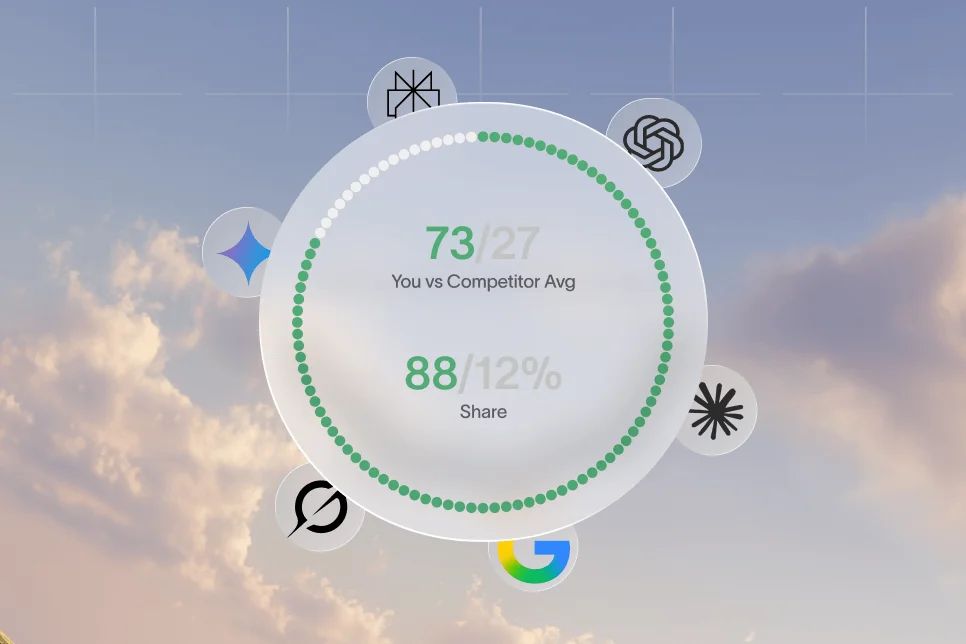
Define ASV with 3–4 metrics you control: (1) citation coverage on a fixed query set, (2) GSC clicks/impressions on mapped pages, (3) conversion rate from AI-influenced landing pages, and (4) share of branded mentions. If vendor numbers conflict, your own harness + GSC/GA4 becomes the source of truth.
How many queries do I need to track to make this meaningful?
Start with 20–50 queries tied to revenue intents (pricing, alternatives, comparisons, integrations). That’s enough to see coverage gaps and trend direction without creating busywork. Expand only after your alert-to-task workflow is stable.
What’s the fastest “first win” when we have zero citations?
Pick one high-intent page and make it cite-able: add a crisp definition, a short checklist, and a comparison table, then strengthen internal links pointing at it. You’re trying to become the obvious reference for one intent before you chase breadth.
Do we need programmatic SEO to scale ASV?
Not always. Programmatic pages help when intent is templated (integrations, locations, use cases), but they also create maintenance load. Get the monitoring + refresh system working first, then decide where templating creates compounding value.
Should we change our content voice to sound more “authoritative” for AI?
Don’t fake authority with tone. Earn it with structure and proof: clear definitions, step-by-step guidance, and references to primary sources. AI systems tend to cite pages that are uniquely useful and easy to extract, not pages that sound corporate.
What’s the smallest team that can run this?
One SEO lead plus part-time support from content (for refreshes) can run the loop if monitoring is automated and tasks are templated. The system is what scales—headcount is just a multiplier.
If you want to scale AI Search Visibility without adding new hires, start by making monitoring automatic and decisions repeatable—then measure citation coverage the same way you measure pipeline. If you want, we can show you how Skayle approaches ASV tracking end-to-end so you can see how you appear in AI answers—what would you want to measure first: citations, clicks, or conversions?