
TL;DR
If you only track rankings and traffic, you can spend heavily and still lose AI search visibility. Audit 20 high-intent prompts, track citations weekly, and rebuild pages around extractable answers plus decision criteria.
I’ve watched smart SaaS teams burn months of content budget on pages that look “fine” in GA and even rank… but never get pulled into AI answers. The worst part is nobody notices until the pipeline feels weird and attribution gets noisy. By then, you’ve already paid for the wrong inventory.
Here’s the uncomfortable truth: if your content can’t be extracted into a clean, trustworthy answer, it won’t earn AI citations—no matter how well it ranks.
Why pages can rank and still be invisible in AI answers
AI search visibility isn’t just “do we appear on page 1.” It’s whether systems like Gemini, ChatGPT, Perplexity, and Google AI Overviews choose to use your site as a source.
That choice is brutally selective.
LLMs and AI Overviews reward pages that are:
Easy to extract (clear structure, direct answers, stable HTML)
Easy to trust (consistent entities, credible framing, up-to-date coverage)
Easy to cite (clean attribution targets, not buried in fluff)
Meanwhile, a lot of B2B SaaS content is still written for a 2019 funnel: grab a keyword, write a 2,000-word explainer, sprinkle “best practices,” and call it done.
According to LLM Pulse’s GEO metrics breakdown, classic SEO metrics like rankings and clicks no longer describe your real competitive position in AI-driven discovery. You need visibility metrics that reflect mentions, citations, and coverage.
My point of view (and the pivot most teams resist)
Stop shipping pages that exist to “capture traffic.”
Start shipping pages that exist to “resolve decisions.”
AI answers are decision compression. If your page doesn’t help the model confidently recommend, compare, or define something, it’s a dead end.
The Citation Ladder (a simple 4-step test you can reuse)
When I’m auditing a content library for AI search visibility, I run every priority page through this:
Eligibility: Can bots render/crawl it and extract the main answer reliably?
Extractability: Does the page give a direct, quotable answer in the first screenful?
Authority fit: Does it show real expertise (entities, specifics, constraints, tradeoffs)?
Conversion continuity: If we do get cited, does the landing experience finish the job?
If you fail steps 1–2, you won’t show up.
If you fail step 3, you’ll show up inconsistently.
If you fail step 4, you’ll “win” visibility and still lose revenue.
A 60-minute baseline audit you can run this week
You don’t need a six-week research project to spot wasted spend. You need a consistent test.
Pick 20 high-intent prompts buyers actually ask (category, alternatives, “best for X,” “how to do Y,” “pricing,” “integrations,” “security”).
For each prompt, record:
Who gets mentioned
Who gets cited
Which URLs get cited
Repeat the same 20 prompts weekly for 4 weeks.
Track two numbers:
Mention rate (did you appear?)
Citation rate (did your site get linked as a source?)
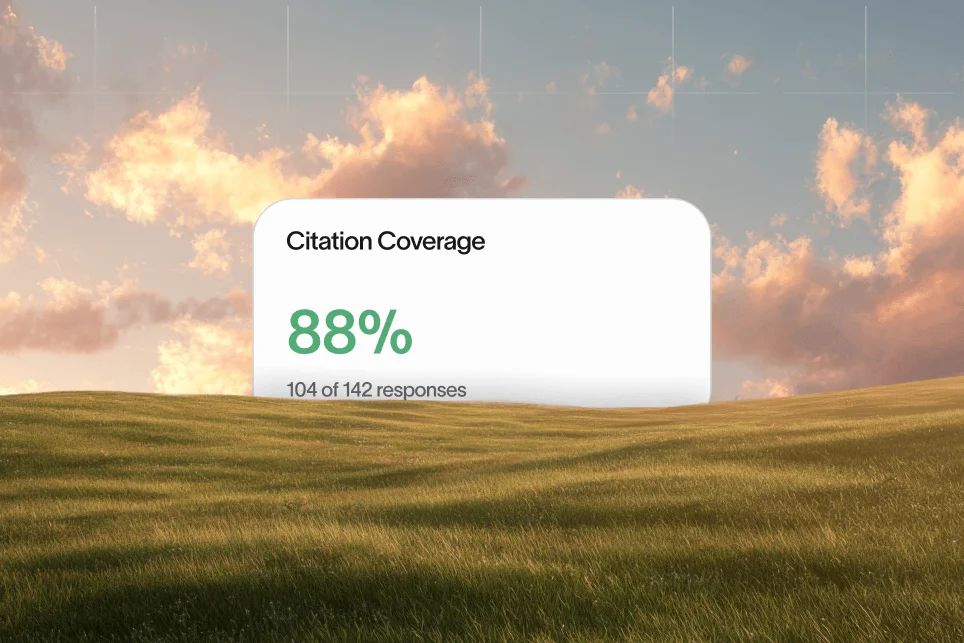
Recomaze suggests a practical benchmark of 40%+ mention rate across 20 monthly queries in their guide to AI search visibility metrics. If you’re nowhere near that, your content production is likely misaligned with how AI answers get built.
If you want the “Skayle lens” on this, we’ve gone deeper on how to quantify gaps and fixes in our guide to AI citation coverage.
1) You’re measuring rankings and traffic, not citations and coverage
This is the most common budget leak because it doesn’t feel like a mistake. Your dashboards look healthy. Your SEO tool shows upward movement. Your writers are shipping.
But AI systems can ignore you while Google rankings stay stable.
AirOps calls out citation frequency as one of the clearest signals of authority in AI search in their overview of AI search metrics. If you’re not tracking citations at all, you’re basically managing a channel you can’t see.
What it looks like in practice
Your team celebrates “top 3” rankings.
Sales says “prospects keep mentioning competitor X.”
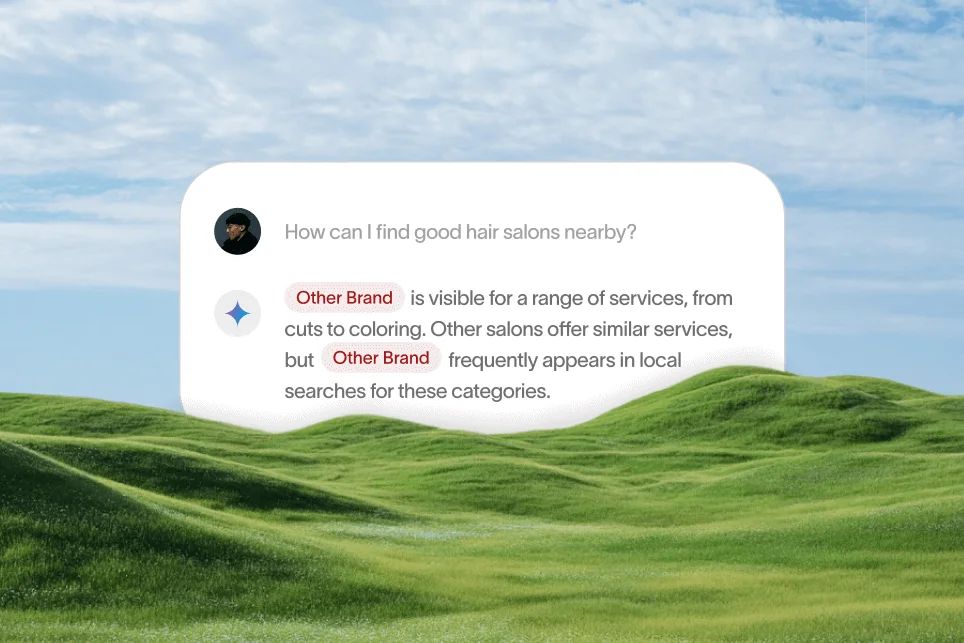
You search the same prompt in AI tools and your brand is missing.
When you do appear, it’s a non-commercial page (a glossary, a random blog).
That’s not a content velocity problem. That’s a measurement problem.
What to measure instead (without reinventing analytics)
Use a small set of GEO-style metrics:
Citation rate per prompt set (cited in X of 20 prompts)
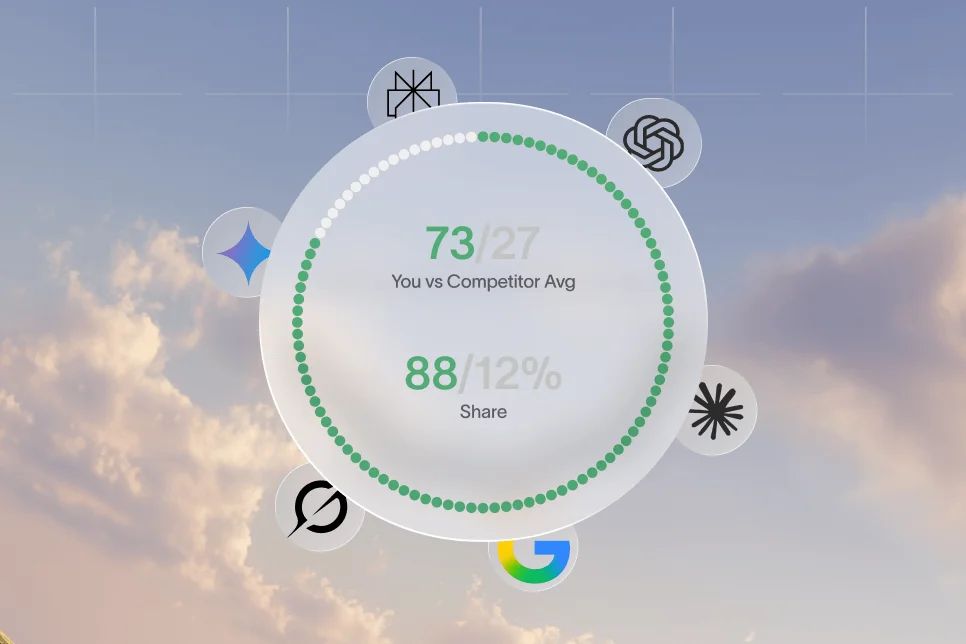
Share of voice in citations (your citations vs competitors)
Coverage by intent (are you cited for “how it works,” “best for,” “pricing,” “security,” “alternatives”?)
LLM Pulse frames brand visibility as frequency + distribution + coverage in their GEO metrics guide. The key word is distribution.
A single citation spike doesn’t mean you’re winning.
Tactical fix: build “citation targets,” not just keywords
For your next 10 pages, write down the citation target before the keyword:
“We want to be cited for: best SOC2-ready help desk for fintech.”
“We want to be cited for: how to implement SSO with SCIM provisioning.”
Then structure the page so the answer is extractable:
A direct definition in the first 80 words
A short list of steps or criteria
Explicit constraints (“works if…”, “fails if…”, “avoid if…”)—AI loves constraints because they reduce hallucination risk
If you’re new to this shift, start with the difference between classic SEO and GEO in our breakdown of GEO vs SEO.
2) You show up once, then vanish (inconsistency is a real signal)
Founders often tell me, “We got cited in ChatGPT last week.”
That’s nice. It’s also not the game.
The game is: can you stay cited when the same question gets asked again next week, with a slightly different phrasing?
AirOps reports that only 30% of brands remain visible from one AI answer to the next, and only 20% across five consecutive answers in their write-up on AI search metrics. If your visibility is sporadic, you don’t have an “AI presence.” You have a lucky screenshot.
The hidden cause: your content doesn’t have a stable point of view
Inconsistent visibility usually comes from one of these:
The page answers the question, but doesn’t do it distinctly
Your site has conflicting definitions across multiple pages
Your “best of” / “alternatives” pages are thin or biased in obvious ways
Your entities aren’t consistent (product names, feature names, categories)
AI systems like stable meaning.
If your site reads like five different writers describing five different products, models won’t trust it enough to cite it consistently.
A quick test: re-ask the same question 10 ways
Pick one high-value prompt, like:
“Best payroll software for startups”
Now rephrase it 10 ways:
“Payroll tool for seed-stage SaaS”
“Payroll platform with contractor support”
“Payroll software that handles multi-state taxes”
If you only show up on one phrasing, you’re not a category source. You’re a keyword coincidence.
Tactical fix: unify your definitions and decision criteria
Do two things:
Create a canonical definition for your category terms.
Create canonical decision criteria for comparisons.
Then reuse them.
This is where structured publishing systems matter more than “write better.” If your workflow is fragmented, your pages drift.
We’ve written about how fragmented workflows kill consistency—and how to fix them—in our piece on AI content workflow gaps.
Common mistake I see (and the tradeoff)
Teams try to force consistency by banning writer autonomy.
Don’t.
Instead, standardize:
Entities (product names, category names)
Page components (definition box, decision criteria list, “when not to choose” section)
Internal links that reinforce the hub
Let writers bring voice and examples inside that structure.
3) Your CTR tanks when AI Overviews appear, and you pretend it’s seasonality
This is the “we’re still ranking, so we’re fine” trap.
When AI Overviews appear, the SERP becomes a new product. And your page can get pushed into “background reading.”
Column Five Media cites data showing organic CTR drops about 70% when Google AI Overviews appear in their roundup of AI search visibility stats.
If your team is still budgeting content based on old CTR expectations, you’ll keep funding pages that can’t win the new click economy.
What it looks like in your dashboards
Rankings are stable
Impressions are stable or up
Clicks are down hard
Conversions from organic start drifting
The naive reaction is “SEO is getting worse.”
The accurate reaction is: your page is no longer the primary interface.
The pivot: optimize for citation, then design for the post-citation click
The funnel you’re optimizing now is:
impression → AI answer inclusion → citation → click → conversion
When you finally get the click, the visitor is different.
They’re pre-educated.
They’ve seen competitors.
They want the next step.
Tactical fix: build “citation-to-conversion continuity”
When someone lands from an AI citation, they should immediately see:
The exact concept they asked about (not a generic hero)
A short confirmation of fit (“If you’re doing X, this will work because Y”)
Proof artifacts (security, integrations, uptime, case studies)
The next action that matches intent (demo, pricing, docs)
This is also where technical choices matter. If the AI system cites a URL that redirects, loads slowly, or renders weirdly, you lose the benefit.
If you want a checklist for the crawl/extract side, use our guide to technical AI visibility fixes.
A measurement plan that doesn’t require perfect attribution
You can prove this is happening without guessing:
Segment organic landing pages where AI Overviews are common (query set)
Track click-to-demo rate per landing page
Track assisted conversions from those pages over 30 days
You’re not trying to “get CTR back.”
You’re trying to be the cited source and the best landing destination.
4) You’re getting traffic, but it’s the wrong kind (AI visitors behave differently)
This one is subtle.
You might still be getting organic visits. The content team points to sessions as proof of value.
But the quality gap tells you the page is irrelevant to AI-driven discovery.
Column Five Media reports that AI search visitors convert 4.4× better than traditional organic search visitors, citing Semrush, in their post on AI search visibility stats.
They also note that AI-referred visitors can spend up to 3× longer on-page and tend to use 15–23 word queries, which is a different intent shape than classic keyword SEO.
So if your content is built around short head terms and generic explainers, you can get volume and still miss the high-intent AI layer.
What it looks like
Lots of visits to TOFU pages (“what is X”)
Low demo intent
High bounce on product pages because the message doesn’t match the AI answer context
AI traffic tends to arrive already aligned to a job-to-be-done.
If you can’t “continue the conversation,” you’ll waste the click.
Tactical fix: publish pages that answer long, specific questions
Here are content types that tend to map better to AI queries:
“How to…” with clear steps and constraints
“X vs Y” with decision criteria and edge cases
“Best for…” pages with explicit fit boundaries
Implementation docs that are readable and structured
Search Engine Land’s 2026 guide to generative engine optimization reinforces that AI-focused optimization is about being a credible, extractable source—not just having a page that exists.
The contrarian stance (with the tradeoff)
Don’t spend your next quarter writing more “ultimate guides.”
Spend it building 20–50 pages that remove purchase friction:
pricing explanations n- security summaries
integration walkthroughs
migration plans
competitor comparisons that don’t read like propaganda
Tradeoff: you’ll publish fewer pages.
Payoff: you’ll publish pages that are citeable and convertible.
Proof you can generate internally (no guessing)
Run this simple before/after test:
Baseline (2 weeks): pick 10 high-intent prompts and log where your brand is mentioned/cited.
Intervention (2 weeks): publish or refresh 3 pages specifically built for those prompts (direct answers, criteria lists, constraints).
Outcome (next 4 weeks): re-run the prompt set weekly and track mention/citation rate shifts, plus demo conversion rate on those landing pages.
If nothing moves, you didn’t choose the right prompts—or your site has eligibility issues.
5) You can’t explain the ROI, so you default to vanity metrics
This is where budget gets wasted quietly.
A team can keep producing content indefinitely if the reporting feels positive. Rankings up. More pages. More impressions.
But Seer Interactive makes the point directly: AI visibility can become a vanity metric if you can’t connect it to business outcomes.
The founder version of that is: “We’re doing AI search now.”
The operator version is: “We’re increasing the percentage of high-intent prompts where we’re cited, and those cited clicks convert.”
What it looks like
You track “mentions” but not whether you’re cited
You track “citations” but not which pages earn them
You track “share of voice” but not which intent buckets matter
Also, you probably don’t have a plan for what happens when the model misrepresents you.
If you’re serious about AI search visibility, you need a feedback loop: measure → fix → republish → re-measure.
A checklist to stop wasting budget next month
Use this as a gating checklist before approving any new content spend:
Prompt ownership: Which prompt set does this page exist to win?
Answer block: Is there a direct 40–80 word answer that can be quoted?
Decision support: Are there criteria, steps, or constraints (not just prose)?
Entity clarity: Are product/category terms consistent with your other pages?
Citation readiness: Is the page crawlable, indexable, and stable to extract?
Conversion continuity: Does the page match the likely “post-AI click” user state?
If you can’t answer these, you’re buying lottery tickets.
How to pick tools without turning this into a software shopping spree
You don’t need 12 tools. You need one way to measure, and one way to execute.
Onrec’s overview of AI visibility tools in 2026 is useful for understanding what tool categories exist (monitoring, citation analysis, domain scoring).
TEAM LEWIS also covers competitor-focused monitoring options like Rankshift.ai in their list of AI search visibility tools.
My advice: pick a measurement approach that lets you answer two questions every week:
Which prompts did we gain or lose citations on?
Which pages will we change because of that?
If reporting doesn’t trigger action, it’s theater.
For a deeper operational approach, Skayle’s own view is that you need a system that connects monitoring to execution—see our guide to AI search visibility tooling and our workflow for LLM citation audits.
FAQ: what founders ask once they run the audit
How many prompts do we need to track to get a real signal?
Start with 20 prompts that map to revenue intent. Recomaze’s benchmark of tracking 20 monthly queries for mention rate is a practical starting point, not a ceiling.
Do citations depend on authority or just publishing more?
Authority still matters, but frequency without distinct usefulness usually produces inconsistent visibility. Stable definitions, clear criteria, and trustworthy structure tend to create more persistent citations.
If AI Overviews kill CTR, should we stop investing in SEO?
No. It changes the target from “rank and win clicks” to “get cited and win the right clicks.” The CTR drop is a warning sign that your content must compete inside the AI layer.
What’s the fastest type of page to improve AI search visibility?
High-intent comparison and implementation pages often move faster than generic TOFU explainers because they match the decision-shaped prompts AI users ask.
How do we know whether AI visibility is actually driving pipeline?
Track cited landing pages as a segment, then measure demo rate, assisted conversions, and sales cycle velocity from those sessions. If you can’t connect visibility to business movement, you’re stuck in vanity metrics.
What to do next (without adding headcount)
If you take nothing else from this: the content you ship in 2026 has to be designed for extraction, citation, and post-citation conversion. Otherwise you’re paying for pages that might rank, but won’t matter.
If you want a simple next step, run the 20-prompt baseline audit, pick the three prompts that map closest to revenue, and rebuild those pages around direct answers + decision criteria.
If you’d rather not do the manual work every week, Skayle is built to help you measure AI search visibility, identify citation gaps, and turn that into an execution plan. You can start by measuring your current coverage using our workflow for finding citation gaps.
What’s one prompt your best buyers are asking AI tools right now where you suspect your brand should be showing up—but isn’t?