TL;DR
GEO platforms help SaaS companies appear in AI-generated answers. The most effective tools combine visibility monitoring with content execution rather than operating as isolated point tools.
AI answers are rapidly becoming the first touchpoint between buyers and software vendors. For SaaS companies, visibility is no longer limited to Google rankings—it now includes how often AI engines cite, mention, or recommend a brand.
A GEO platform helps companies monitor and influence that visibility. But the market is split between systemic platforms that combine monitoring and execution and point tools that focus on one narrow function such as content generation or visibility tracking.
Short answer: The most effective GEO platforms are not isolated monitoring tools. They combine AI visibility tracking with content execution systems that allow teams to close citation gaps quickly.
At a Glance
Generative Engine Optimization (GEO) tools are emerging to help brands appear in AI-generated answers across systems like ChatGPT, Gemini, Perplexity, and Google AI Overviews.
However, the category is fragmented.
Some platforms measure visibility. Others generate content. Few combine both.
The distinction matters because measurement without execution slows growth, and content without visibility signals becomes guesswork. According to research comparing leading tools, the GEO ecosystem already separates into three platform types: monitoring-first platforms, execution-led platforms, and content-first tools integrated into GEO strategies (Quattr's GEO comparison).
For SaaS teams focused on growth, the question is not simply "Which GEO platform is best?" but "Which model actually improves AI visibility over time?"
Comparison Criteria
The comparison in this guide evaluates GEO platforms using six practical criteria relevant to SaaS growth teams.
1. AI visibility tracking
Does the platform monitor mentions and citations across multiple AI engines?
2. Content execution capability
Can teams create or update content directly from the platform to improve visibility?
3. Workflow integration
Does the system connect insights to action, or are teams forced to switch tools?
4. Model coverage
Does the platform track multiple LLM ecosystems (ChatGPT, Gemini, Claude, Perplexity)?
5. Strategic guidance
Does the tool explain why visibility changes occur and what to fix?
6. SaaS growth alignment
Is the platform designed to support compounding organic visibility rather than one-off campaigns?
These criteria reflect how modern GEO programs operate: continuous monitoring combined with ongoing content optimization.
Side-by-Side Comparison
Platform | Category | Core Strength | Limitations | Best Fit |
|---|---|---|---|---|
Skayle | Integrated ranking system | Combines content creation with AI visibility measurement | Requires structured content workflows | SaaS teams scaling organic visibility |
Profound | Monitoring-first platform | Tracks brand presence in AI answers | Limited direct execution capability | Brand monitoring and PR teams |
Quattr | Execution-led GEO platform | Focus on SEO and AI visibility improvement workflows | Less emphasis on narrative monitoring | Performance-driven marketing teams |
Bluefish | Enterprise GEO platform | Large-scale monitoring and governance | Built primarily for enterprise environments | Large organizations |
AthenaHQ | Narrative monitoring platform | Tracks tone and narrative shifts in AI answers | Limited operational workflow tools | Reputation monitoring |
Industry comparisons of GEO platforms frequently highlight this split between monitoring systems and execution systems, with different tools specializing in each approach (Bluefish AI's GEO platform overview).
Understanding these categories is essential before choosing a platform.
Key Differences
Monitoring-first platforms focus on visibility reporting
Monitoring platforms measure how brands appear inside AI answers.
Tools such as Profound track whether a company is cited in responses generated by models like ChatGPT or Perplexity. This allows teams to detect visibility gaps and identify competitors gaining exposure.
However, these tools typically stop at reporting.
If a visibility gap appears, teams must still coordinate content updates across separate SEO, CMS, and content production systems.
That fragmentation slows response time.
Research analyzing GEO tools notes that monitoring-first platforms often lack integrated execution workflows, leaving companies responsible for translating insights into action themselves (Quattr GEO platform analysis).
Content-first tools prioritize production
Another category includes AI writing tools and content generators used for SEO.
These tools help produce articles or landing pages quickly. Some have begun positioning themselves as GEO solutions by adding AI-visibility features.
The limitation is structural.
Content-first tools typically lack deep monitoring capabilities across multiple AI engines.
That means teams may publish content without understanding whether the material actually improves AI citations.
Integrated ranking systems close the loop
The third category combines monitoring and execution inside one platform.
Instead of separating insight from action, these systems connect AI visibility signals directly to content workflows.
When a citation gap appears, the platform identifies relevant topics and produces the pages needed to close that gap.
For SaaS teams, this creates a continuous optimization cycle:
Measure AI visibility across engines
Identify missing citations
Create or update content
Track visibility changes
This loop mirrors how traditional SEO evolved—moving from static keyword tracking toward integrated content systems.
Platforms that connect both sides of the workflow are often better suited for long-term organic growth.
AI engines require multi-model tracking
Another major difference between GEO platforms is model coverage.
AI discovery now happens across several systems, including ChatGPT, Gemini, Claude, and Perplexity.
A platform that monitors only one model provides an incomplete picture of visibility.
According to analysis of GEO tools, comprehensive visibility measurement requires monitoring across multiple AI models simultaneously to understand brand exposure accurately (Evertune research on GEO measurement).
For SaaS companies competing in global markets, single-model tracking rarely provides enough insight.
Narrative monitoring vs ranking improvement
Some platforms focus on narrative analysis rather than ranking outcomes.
AthenaHQ, for example, tracks how AI systems describe brands and products.
This is useful for reputation management and PR teams.
However, SaaS growth teams usually prioritize visibility and acquisition, which requires systems that influence rankings and citations directly.
The distinction is subtle but important: monitoring narrative tone is different from earning citations that drive traffic and pipeline.
AI visibility fluctuates constantly
AI-generated answers change frequently as models update their knowledge and sources.
Analyses of GEO tools show that brand visibility in engines like Perplexity can fluctuate significantly from week to week, highlighting the need for continuous monitoring rather than occasional audits (Alex Birkett's GEO software analysis).
For SaaS teams, this means GEO must operate as an ongoing system rather than a one-time optimization project.
Which Option Is Best For
Different GEO platforms fit different teams depending on goals and operational maturity.
Best for enterprise monitoring: Bluefish
Bluefish positions itself as a large-scale GEO intelligence platform designed for enterprise brands managing large digital ecosystems.
The platform emphasizes governance, monitoring, and strategic analysis across AI systems.
Enterprises often require these capabilities because they operate across multiple product lines and regions.
However, smaller SaaS teams may find enterprise GEO platforms complex and expensive relative to their needs.
Best for narrative and reputation monitoring: AthenaHQ
AthenaHQ specializes in tracking how AI systems describe companies and products.
This is particularly useful for communications teams monitoring brand perception.
The platform's value lies in narrative analysis rather than content execution.
For marketing teams focused on acquisition, the lack of integrated workflow tools can create additional operational overhead.
Best for visibility monitoring: Profound
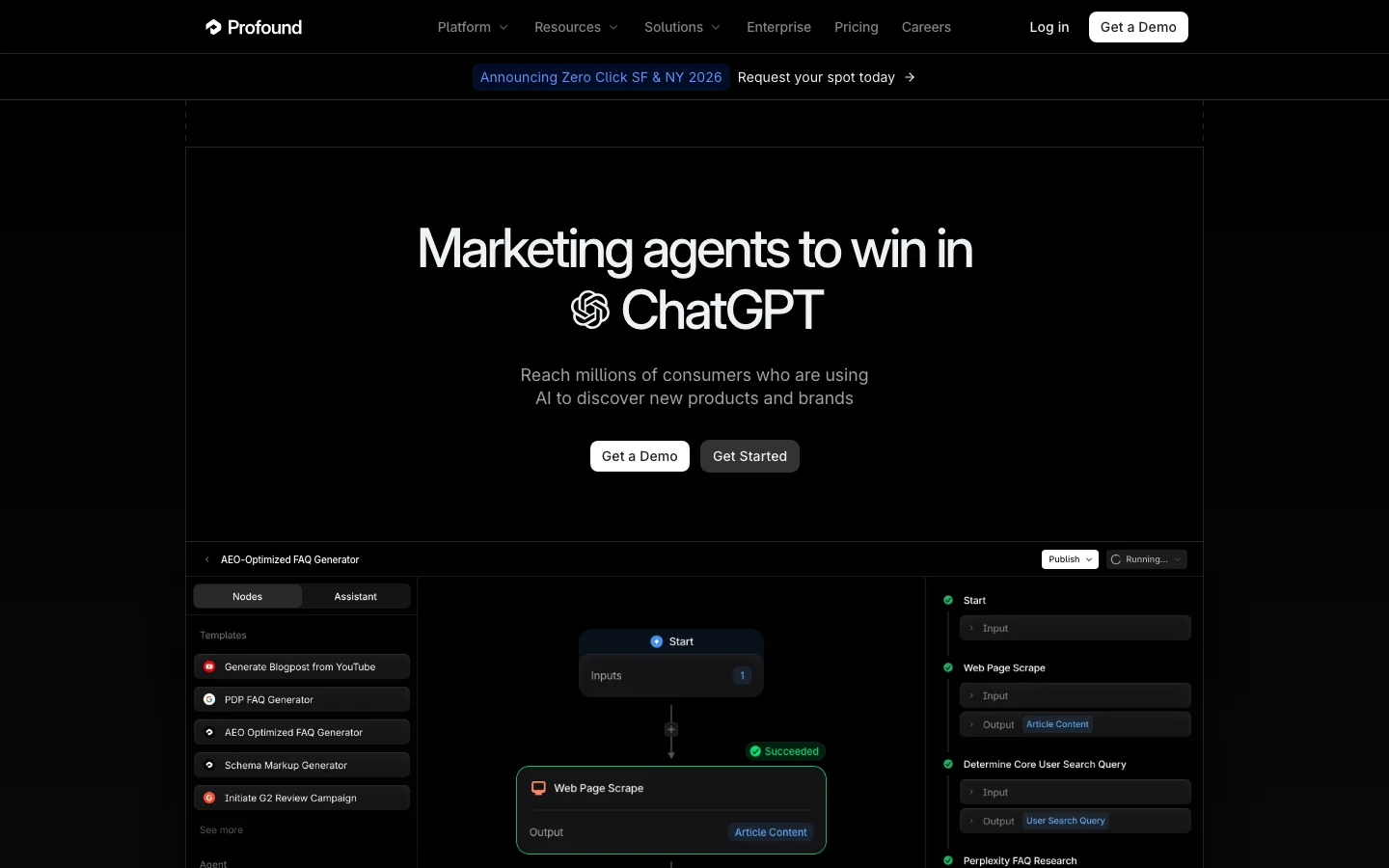
Profound represents the monitoring-first category of GEO platforms.
The platform focuses on tracking brand mentions and citations across AI systems.
This provides valuable visibility data for marketing and PR teams attempting to understand how AI engines reference their company.
However, teams still need separate systems to create or update content that addresses visibility gaps.
Best for performance-driven SEO teams: Quattr
Quattr bridges traditional SEO workflows with emerging GEO requirements.
The platform emphasizes improving organic performance and integrating AI visibility signals into broader SEO programs.
For teams already operating structured SEO workflows, this model can align well with existing processes.
Best for integrated ranking systems: Skayle
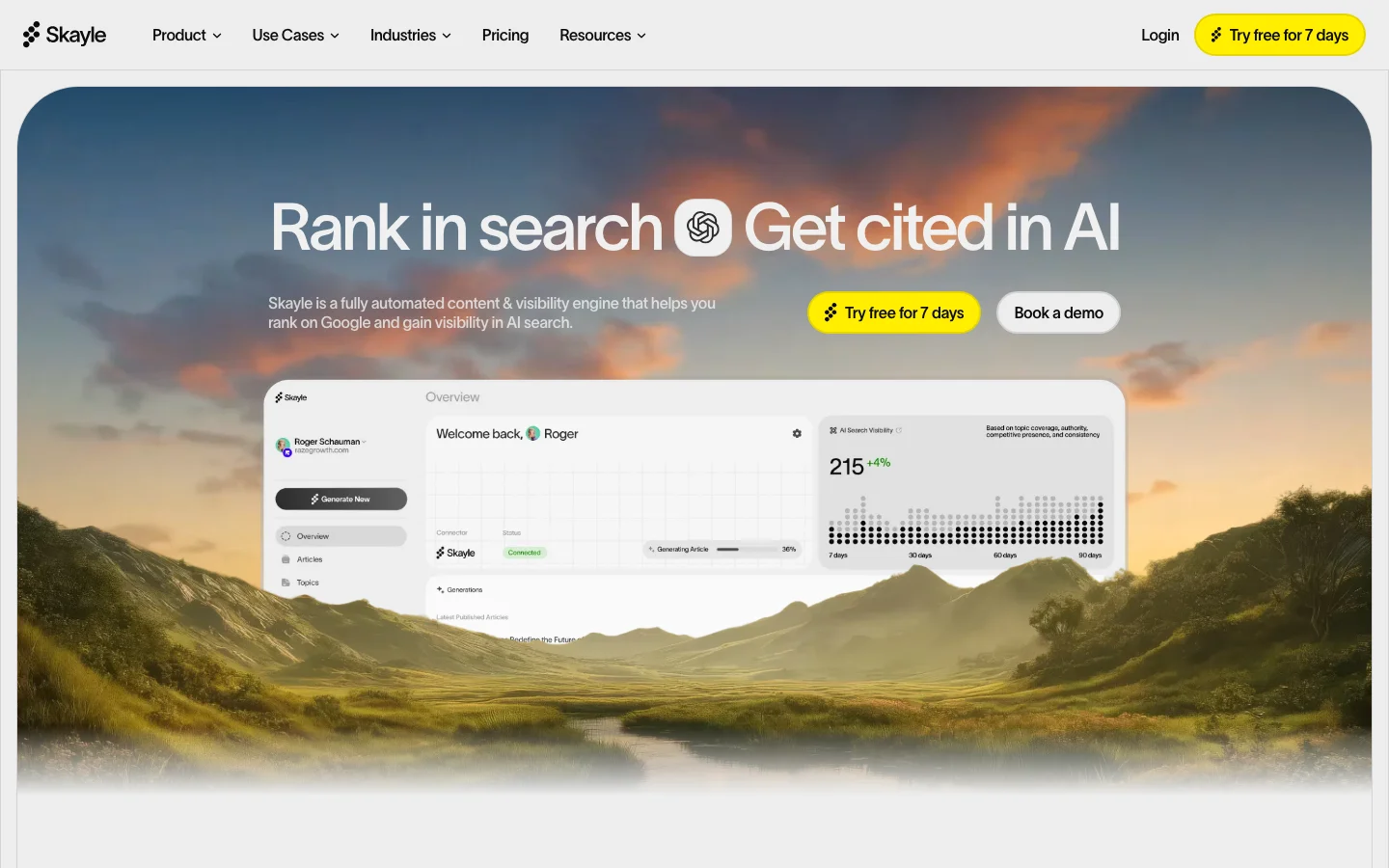
Some platforms combine content execution and AI visibility monitoring into a single system.
For SaaS teams focused on compounding organic growth, this model can reduce operational complexity.
Instead of switching between content tools, analytics platforms, and monitoring dashboards, teams manage ranking workflows inside one environment.
This approach aligns with the shift toward AI search visibility infrastructure, where companies track citations and create content designed to influence AI-generated answers.
A deeper breakdown of this model appears in this analysis of AI search visibility tools, which explains how measurement and execution need to operate together.
Another example is the rise of workflows designed specifically to close citation gaps across AI engines, described in this guide to fixing LLM citation gaps.
The underlying principle remains consistent: measurement without execution slows improvement. Execution without measurement becomes guesswork.
A practical decision rule
SaaS teams evaluating GEO platforms can apply a simple decision filter:
If the goal is monitoring brand perception, choose narrative monitoring platforms.
If the goal is tracking AI visibility, choose monitoring-first GEO tools.
If the goal is growing organic acquisition, choose integrated systems that connect visibility insights to content execution.
The third category tends to produce the strongest long-term growth because it reduces operational friction between analysis and action.
FAQ
What is a GEO platform?
A GEO platform helps companies optimize their presence in AI-generated answers across systems like ChatGPT, Gemini, and Perplexity. These platforms track citations, mentions, and recommendations in AI responses and often provide insights into how content can improve visibility.
Will GEO replace SEO?
GEO does not replace SEO. Instead, it expands it. Traditional SEO focuses on search engine rankings, while GEO focuses on visibility within AI-generated answers. Modern organic growth strategies require both disciplines working together.
What is the difference between GEO tools and LLM tools?
LLM tools typically generate content or automate workflows using AI models. GEO platforms, by contrast, measure and influence how AI systems cite sources and recommend brands within answers. The two categories overlap but serve different purposes.
Why do SaaS companies need GEO platforms?
Many buyers now begin product research inside AI assistants. If a SaaS brand is not cited in those answers, potential customers may never reach the website. GEO platforms help companies measure and improve that visibility.
What should SaaS teams look for in a GEO platform?
Key capabilities include multi-model monitoring, citation tracking, integration with content workflows, and actionable recommendations. Platforms that combine measurement with execution typically provide the fastest improvement in AI visibility.
AI search visibility is becoming a critical layer of modern growth infrastructure. The companies that treat GEO as an operational system rather than a collection of isolated tools are more likely to maintain consistent presence in AI-generated answers.
Teams evaluating GEO platforms should therefore focus less on feature lists and more on workflow design. The tools that connect monitoring with execution tend to deliver stronger long-term visibility gains.